Absolute Risk: What It Means and How It Impacts Your Health Decisions
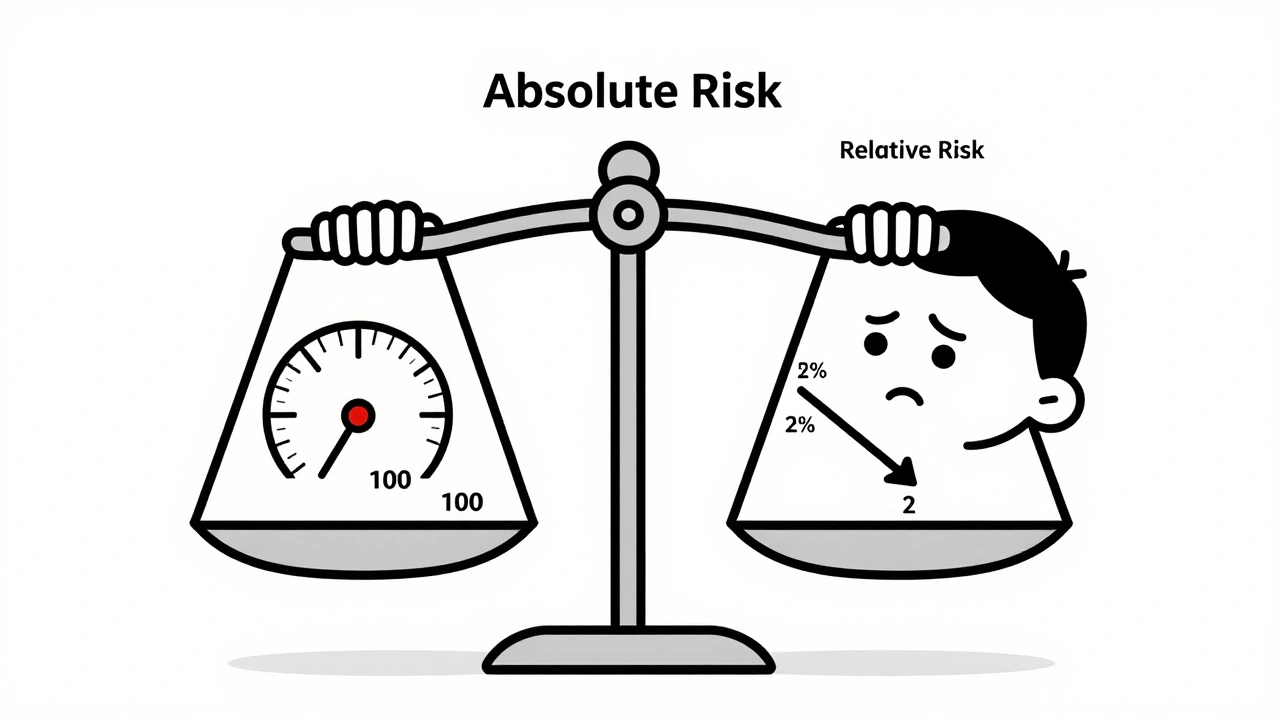
When you hear that a drug reduces your risk of heart disease by 50%, it sounds amazing—until you realize that your absolute risk, the actual chance of getting a disease or experiencing an event over time was only 2% to begin with. That 50% drop? It means your risk went from 2% to 1%. That’s not nothing, but it’s not a miracle either. Absolute risk tells you the real number—the actual probability you’ll face a health problem—without any fancy math hiding behind it. This is the number that should guide your choices, not the flashy percentage your doctor or ad might highlight.
People often mix up absolute risk with relative risk. Relative risk compares two groups: "People who take this pill have 40% less risk than those who don’t." But that doesn’t tell you how many people are actually helped. Absolute risk answers: "Out of 100 people like me, how many will have this problem?" That’s the number that matters when you’re deciding whether to take a drug with side effects, get a screening test that might lead to unnecessary procedures, or change your lifestyle. For example, in the post about PSA screening controversies, the real issue isn’t whether the test finds cancer—it’s how many men will be harmed by overdiagnosis and overtreatment based on misleading relative risk numbers. Absolute risk cuts through the noise.
Knowing your absolute risk helps you see what’s actually at stake. Take medication restart after a break. If you’ve stopped opioids for a few weeks, your tolerance drops. Your absolute risk of overdose skyrockets if you take your old dose. That’s not theoretical—it’s deadly. The same goes for cyclosporine monitoring: doctors track blood levels not because they want to be precise, but because even small changes in absolute risk can mean the difference between a working transplant and kidney failure. In diabetes medications for seniors, a drug that lowers blood sugar by 20% sounds good—until you realize it increases the chance of a dangerous low by 5%, and 5% of older adults who crash don’t recover. That’s absolute risk in action.
Most health advice skips the numbers and gives you opinions. But real decisions need real numbers. The posts here don’t just list drugs or conditions—they show you how risk plays out in real lives: the liver damage from black cohosh, the breathing danger when gabapentin and opioids mix, the hidden dangers of look-alike generics. These aren’t abstract concepts. They’re numbers tied to real outcomes. You’ll find clear breakdowns of who’s at risk, how much, and why. No fluff. No hype. Just the facts you need to decide what’s right for you.