
Lipid Medication Absorption Calculator
How Your Meal Affects Medication Absorption
Select your medication and enter your fat intake to see how it impacts absorption.
Results
Enter your meal details to see your potential absorption increase.
When you take a pill with a fatty meal, it’s not just about comfort or taste-it can make the medicine work better. For many drugs, especially those designed to treat chronic conditions like high cholesterol, organ transplant rejection, or fungal infections, eating fat isn’t optional. It’s part of the treatment plan. This isn’t folklore or old wives’ tales. It’s science-specifically, the food effect in pharmacokinetics.
Why Fat Matters for Some Pills
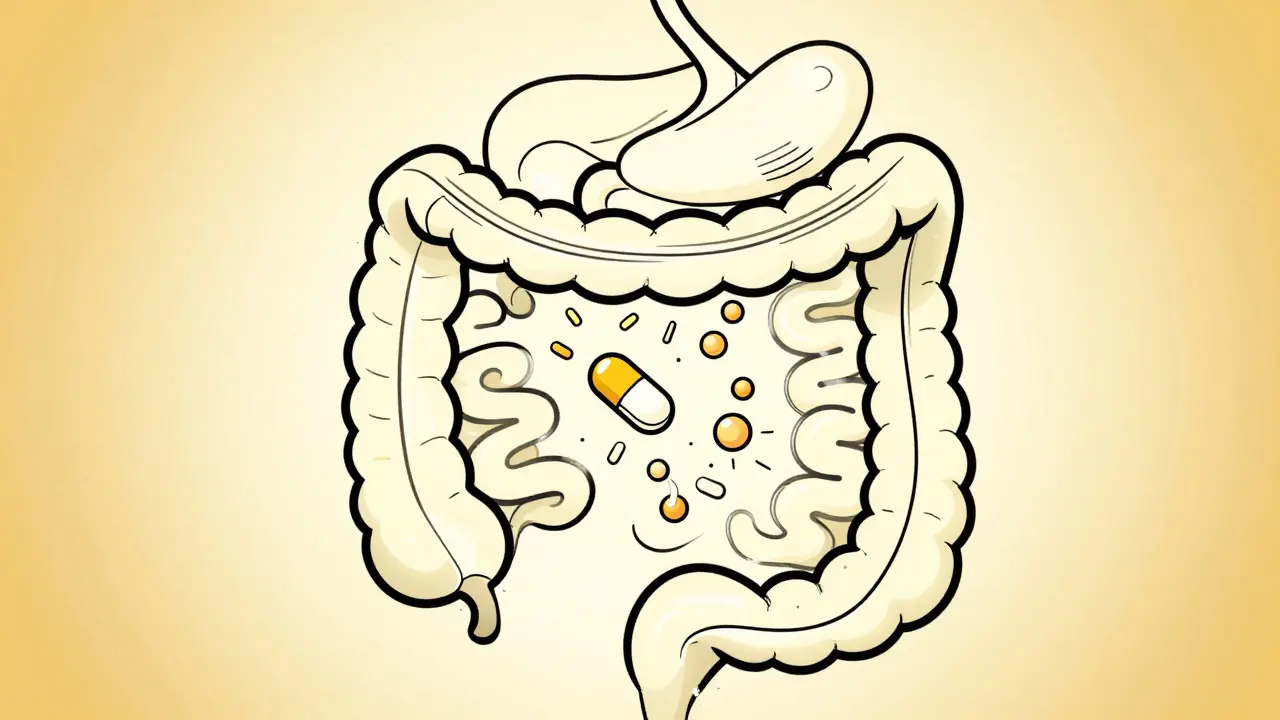
Not all medications need food to work. But for about 70% of new drugs in development, solubility is a major problem. These are drugs that don’t dissolve well in water, which means your gut can’t absorb them efficiently. That’s where lipid-based formulations come in. These are specially engineered medicines that use fats, oils, and surfactants to help the drug dissolve and get into your bloodstream. Think of it like this: if your drug is a rock, and your gut is a dry riverbed, the drug just sits there. But if you add fat, it’s like pouring oil into the riverbed-the rock floats and moves. Lipid-based systems mimic what happens naturally when you eat a fatty meal. Your body releases bile and digestive enzymes that break down fats into tiny particles called micelles. These micelles trap the drug molecules and carry them across the intestinal wall. This isn’t theoretical. Drugs like cyclosporine (used after transplants) and fenofibrate (for triglycerides) show 20% to 300% higher absorption when taken with food. The Neoral version of cyclosporine, for example, delivers 20-30% more drug into the blood than the older Sandimmune version-simply because it’s formulated with lipids that respond to dietary fat.How Lipid-Based Formulations Work
These aren’t just pills with extra oil. They’re precision-engineered systems. Most use a mix of:- Medium-chain triglycerides (MCTs) like Capmul MCM-these digest faster than long-chain fats, breaking down in 15-30 minutes instead of over an hour.
- Surfactants like Tween 80 or Cremophor EL-these help the oil and water mix, forming tiny droplets (100-300 nanometers) that keep the drug dissolved.
- Cosolvents like Transcutol HP-these prevent the drug from crystallizing inside the formulation.
- Slower stomach emptying-gives the drug more time to dissolve.
- More bile flow-increases the number of micelles to carry the drug.
- Lymphatic transport-some drugs bypass the liver entirely, reducing first-pass metabolism and boosting effectiveness.
When Fat Helps-And When It Doesn’t
This works best for drugs that are poorly soluble but highly permeable (BCS Class II) or poorly soluble and poorly permeable (BCS Class IV). That’s why drugs like itraconazole (Sporanox oral solution) absorb 2.8 times better in lipid form than in capsules-even when taken on an empty stomach. But not all drugs benefit. Drugs that need acid to dissolve, like bisphosphonates (used for osteoporosis), actually work worse with food. The fat slows down stomach emptying, which keeps the drug in a low-acid environment too long. Same goes for drugs that are already highly soluble (BCS Class I)-like metformin or atenolol. Adding fat won’t help them, and might even delay absorption. There’s also a big difference between taking a fatty meal with a regular tablet versus a lipid-based formulation. With a standard tablet, food can cause wild swings in absorption-sometimes helping, sometimes hurting. But lipid-based versions are designed to reduce that variability. One study showed a 68% drop in food effect variability for BCS Class II drugs formulated as self-emulsifying systems (SEDDS) compared to plain tablets.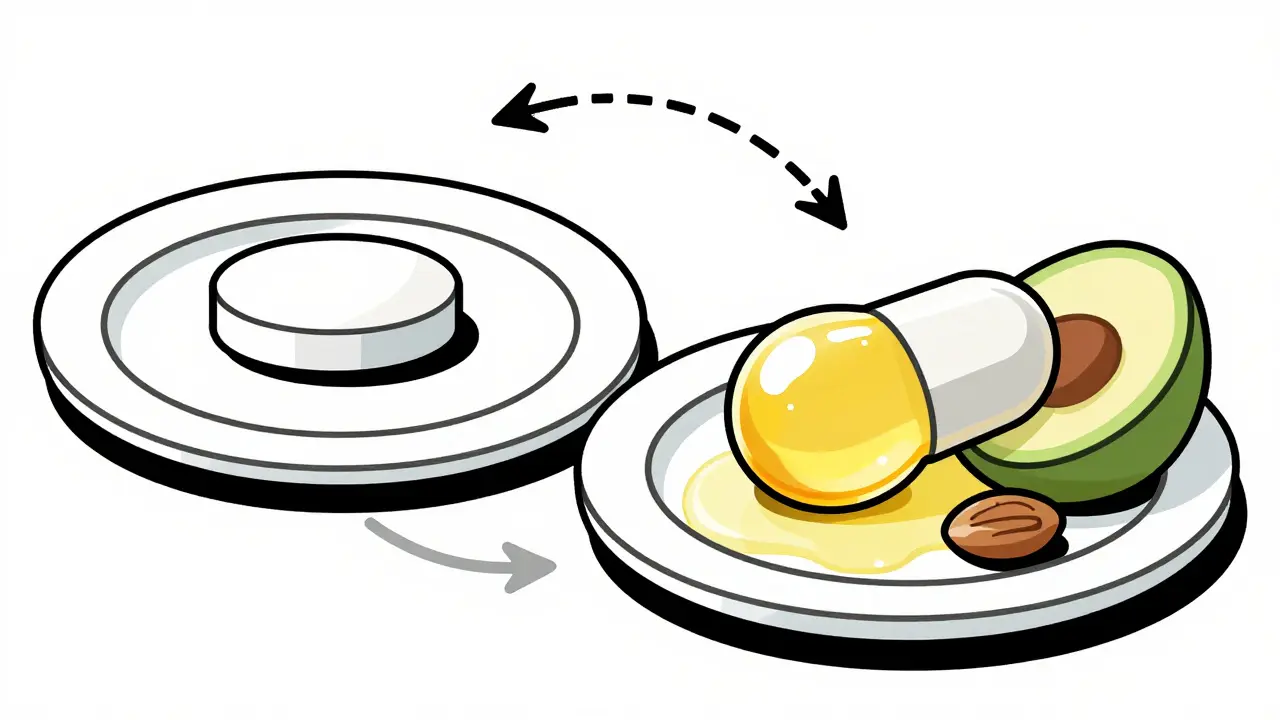
Real Patient Experiences
People who take these medications daily notice the difference. On Reddit’s r/pharmacy community, users report:- “Switching to Neoral eliminated my need to time meals around my dose.” - u/TransplantSurvivor
- “Tricor doesn’t give me the stomach cramps like Lopid did.” - u/CholesterolWarrior
The Hidden Challenges
Developing these formulations isn’t easy. It takes 18-24 months-longer than standard pills-because scientists have to test dozens of lipid combinations for each drug. They use phase diagrams, in vitro lipolysis models, and biorelevant dissolution tests to find the perfect mix. One compound might need 80-100 different lipid trials before they get it right. Even then, results vary by person. People with Crohn’s disease, cystic fibrosis, or gallbladder removal often have reduced bile production. That means the lipid system might not work as well for them. As Dr. Gordon Amidon from the University of Michigan warns, “The variability in human lipid digestion presents significant challenges for consistent performance.” Packaging is another hurdle. These formulations are usually in soft gelatin capsules because they’re sensitive to heat, moisture, and light. That adds cost and complexity. And while big companies like Gattefossé and BASF offer detailed technical guides, smaller manufacturers often don’t.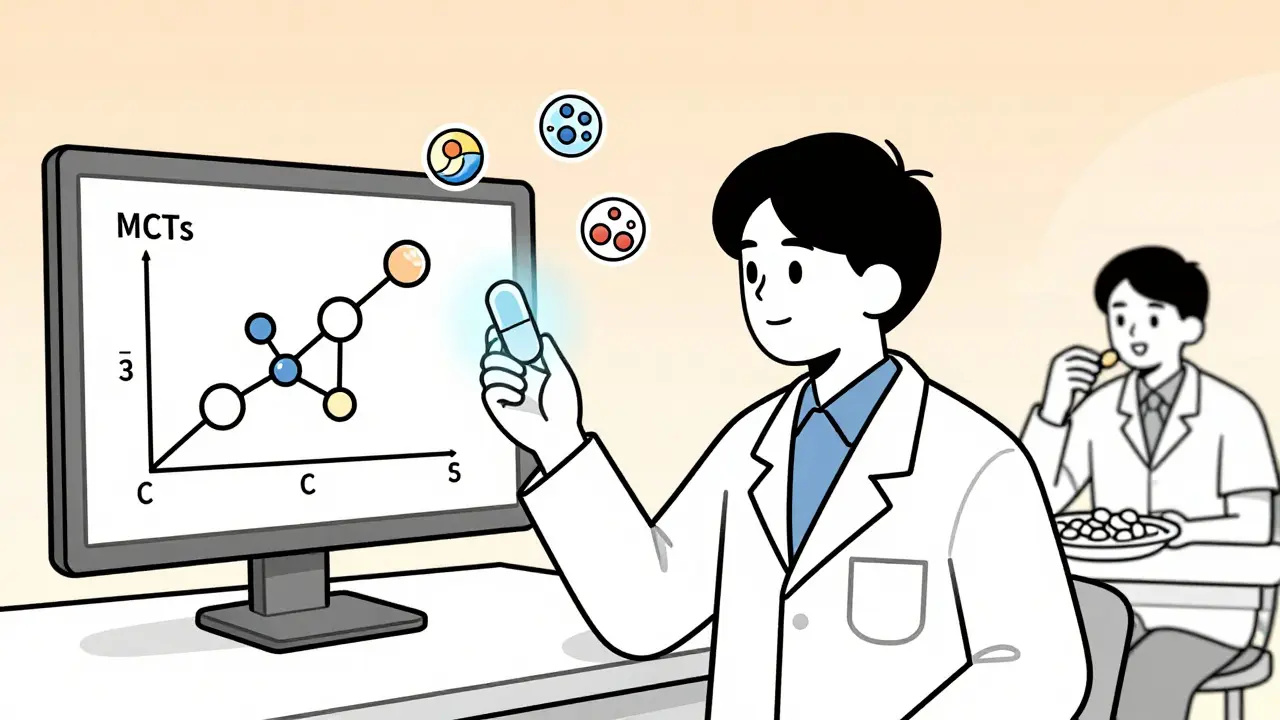
What’s Next?
The field is evolving fast. In March 2023, Matinas BioPharma’s LNC technology delivered 92% bioavailability for amphotericin B-up from just 30% with traditional forms. The FDA approved Vybar® in 2022, a fenofibric acid formulation that boosts absorption by 45% and eliminates food effects entirely. Researchers at MIT are testing “smart lipid capsules” that adjust drug release based on real-time pH and enzyme levels in the gut. Imagine a pill that knows whether you ate a salad or a burger-and responds accordingly. There’s also a push for sustainability. Some lipid components still come from fish oil or synthetic sources. The European Federation for Pharmaceutical Sciences is calling for plant-based alternatives to reduce environmental impact.What You Should Do
If you’re on a lipid-based medication:- Follow the label. If it says “take with food,” take it with a meal that includes at least 10-15 grams of fat-think eggs, avocado, nuts, or olive oil.
- Don’t assume all fats are equal. MCTs (coconut oil, milk fat) work faster than long-chain fats (butter, red meat), but any dietary fat helps.
- Don’t skip meals to save calories. For these drugs, food isn’t a distraction-it’s part of the dose.
- If you’re struggling with side effects or cost, talk to your pharmacist. There may be generic alternatives or patient assistance programs.
Final Thought
Lipid-based medications turn a simple biological response-digesting fat-into a powerful tool. What was once an unpredictable variable (food) is now a controlled factor in drug delivery. This isn’t magic. It’s chemistry, biology, and engineering working together to make medicine more effective, safer, and more predictable. And for patients who need it, that difference isn’t just scientific-it’s life-changing.Do all medications need fatty foods to work?
No. Only medications that are poorly water-soluble-especially those classified as BCS Class II or IV-benefit from fatty meals. Drugs like metformin, atenolol, or amoxicillin don’t need food to be absorbed. In fact, some, like bisphosphonates, absorb worse with food. Always check the label or ask your pharmacist.
Can I take lipid-based drugs on an empty stomach?
Some can, but not all. Lipid-based formulations like Sporanox oral solution or Neoral are designed to work even without food because they contain their own fat carriers. But for others, like older versions of fenofibrate or cyclosporine, taking them without fat can reduce absorption by up to 50%. When in doubt, follow the instructions on the label.
Is there a difference between eating butter vs. olive oil with my pill?
Yes, but not always significantly. Medium-chain fats (like coconut oil or milk fat) digest faster and may trigger absorption quicker. Long-chain fats (like butter or olive oil) work too, but take longer. For most people, any dietary fat over 10-15 grams will do the job. The key is consistency-don’t alternate between high-fat and low-fat meals randomly.
Why are lipid-based drugs more expensive?
They cost more because of complex manufacturing, specialized ingredients, and delicate packaging (usually soft gel capsules). Development takes 18-24 months, compared to 12-15 for standard pills. Plus, the lipids, surfactants, and cosolvents used are more expensive than plain lactose or starch. Generic versions are often cheaper, but not always available.
Can I use supplements like fish oil or MCT oil to boost absorption?
It’s not recommended. While fish oil or MCT oil contain fats that could theoretically help, they’re not formulated with the right surfactants or cosolvents to stabilize the drug. You risk inconsistent absorption, underdosing, or even toxicity. Always use the medication as prescribed-with the food or formulation it was tested with.
What if I have trouble digesting fat?
If you’ve had gallbladder removal, Crohn’s disease, pancreatic insufficiency, or cystic fibrosis, your body may not produce enough bile or enzymes to break down lipid-based drugs properly. Talk to your doctor. You might need enzyme supplements (like Creon) or an alternative formulation. Never assume the drug will work the same way without proper digestion.
Are lipid-based drugs the future of oral medicine?
For poorly soluble drugs, yes. With 74% of new drug candidates having solubility issues, lipid-based systems are becoming essential. Their ability to enhance absorption, reduce food variability, and improve patient tolerance gives them an edge over alternatives like amorphous solid dispersions. New innovations-like smart capsules and plant-based lipids-are making them even more promising for the next decade.
Jason Shriner
so like... if i take my cyclosporine with a donut, is that basically a sacrament now? i mean, i thought church was on sunday, but apparently it's breakfast with a side of pharmaceutical fat.
Alfred Schmidt
This is LIFE-CHANGING information!! Why aren't doctors screaming this from the rooftops?! I've been taking my fenofibrate on an empty stomach for YEARS thinking it was 'healthier'-and now I find out I was sabotaging my own lipid profile?! This is medical malpractice!!
Sam Davies
How quaint. We’ve known since the 1970s that lipids enhance bioavailability-what’s novel here is the marketing department’s ability to rebrand ‘fat helps drugs work’ as ‘cutting-edge science.’
Still, I suppose if you’re paying $1,200 for a bottle of Sporanox, you’d rather believe you’re taking a bespoke elixir than a glorified oil capsule.
Christian Basel
BCS Class II/IV drugs + lipid-based SEDDS = enhanced permeability and reduced first-pass metabolism. The physicochemical rationale is solid, but the clinical translation is still hampered by inter-individual variability in bile salt secretion and GI motility.
Also, the cost-benefit ratio is questionable when generic plain tablets exist. Pharma’s playing the ‘precision medicine’ card to justify premium pricing.
Alex Smith
So let me get this straight-if I eat avocado toast with my cyclosporine, I’m not just having breakfast, I’m activating a bioengineered drug delivery system? That’s kind of beautiful, honestly.
It’s like our bodies are these tiny, ancient alchemists who figured out fat = magic portal for medicine… and then Big Pharma came in and turned it into a $1,200 capsule.
Also, if you’ve had your gallbladder out, you’re basically running a drug delivery system on low battery. That’s not a glitch-it’s a design flaw in modern medicine.
Michael Patterson
Yall need to stop being so lazy and just read the damn label. I’ve been on Neoral since 2015 and I take it with bacon because I’m not some hippie who thinks ‘healthy fats’ mean kale. It works. Period. If you don’t follow instructions, don’t complain when your transplant gets rejected. You’re not special. Your body doesn’t deserve better. Just take the pill with fat and shut up.
Also, fish oil supplements? No. Just no. You’re not a chemist. You’re not a pharmacist. You’re a guy who thinks coconut oil is a cure for everything. Stop it.
Matthew Miller
Let’s be real-this whole lipid-based drug thing is just a scam to sell more expensive pills. The science is real, sure, but the price gouging? That’s corporate greed dressed up as innovation. If you’re paying $1,200 for a drug that should cost $50, you’re being robbed. And the FDA lets this happen because they’re in bed with Big Pharma.
Also, ‘smart capsules’? That’s not the future-that’s a dystopian nightmare where your pill judges your diet. Next thing you know, your meds will text you for not eating enough avocado.
Madhav Malhotra
In India, we’ve always known that taking medicine with ghee or coconut oil helps. My grandmother used to say, ‘If the medicine doesn’t taste like food, it won’t work.’ Now science finally agrees. It’s nice to see tradition and technology meeting in the middle.
But yes-cost is a huge problem. Many of us here can’t afford Sporanox. We use the capsule version and just add a spoon of oil. It’s not perfect, but it’s what we can do.
Priya Patel
Okay but imagine if your pill could just… know you ate a salad and adjust? That’s like having a little medicine fairy in your gut. I’m obsessed. Also, I just took my fenofibrate with peanut butter toast and felt like a genius. Also, I love that this is science but also feels like witchcraft. I’m here for it.
Jennifer Littler
As someone who works in pharmacovigilance, I’ve seen the data: lipid formulations reduce variability in absorption by up to 68%. That’s not trivial-it means fewer adverse events, fewer dose adjustments, fewer ER visits.
But the real barrier isn’t science. It’s access. Patients on Medicaid or in rural areas often get the generic version and are told ‘take with food’-but they have no idea what ‘food’ means. This needs better patient education. Not just labels. Real guidance.
Sean Feng
Take it with fat. That’s it. No more. No less. Stop overthinking it. You don’t need a PhD to understand that oil helps pills absorb. Just eat something greasy and move on.