
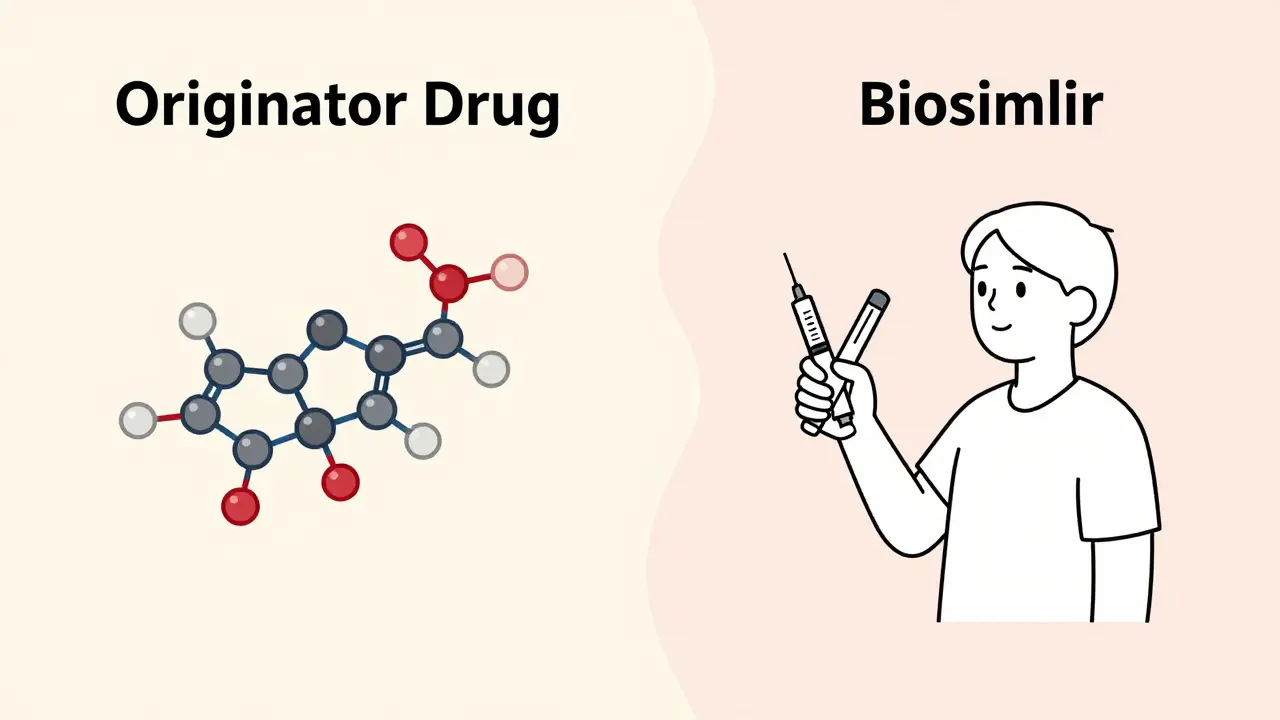
When you’ve been on a biologic drug for years-maybe infliximab or adalimumab-to manage rheumatoid arthritis, Crohn’s disease, or psoriasis, your body gets used to it. Your symptoms are stable. You know the injection schedule. You’ve learned how to store the pen. Then your doctor says: "We’re switching you to a biosimilar." It’s not a generic. It’s not the same drug. But it’s supposed to work the same. What happens next?
What Exactly Is a Biosimilar?
A biosimilar isn’t a copy like a generic pill. Generics are chemically identical to their brand-name counterparts. Biosimilars are made from living cells-human, animal, or microbial-and are incredibly complex. Even tiny changes in how they’re made can affect how they behave in your body. That’s why regulators like the FDA and EMA don’t call them "identical." They say they’re "highly similar" with no clinically meaningful differences in safety, purity, or potency. The first biosimilar approved in the U.S. was Zarxio (filgrastim-sndz) in 2015. Since then, 37 biosimilars have been cleared for 11 different reference products. Most of them target tumor necrosis factor (TNF) inhibitors-drugs used for autoimmune diseases. These are the most common biologics in use, and also the most expensive. That’s why switching is happening so fast.Why Switch at All?
Cost. Plain and simple. Originator biologics like Humira (adalimumab) used to cost over $2,000 a month in the U.S. Biosimilars launched at 35% lower prices in 2023. In Europe, where adoption is higher, biosimilars now make up 67% of the filgrastim market. Health systems are under pressure to cut spending. With $178 billion in biologic patents expiring by 2025, switching is inevitable. But it’s not just about saving money. More patients get access. If a hospital can save $1 million a year on biologics, that money can fund new clinics, hire more nurses, or cover treatment for people who couldn’t afford it before.What Does the Evidence Say About Safety?
Thirty-two randomized trials and 48 real-world studies from 2016 to 2023 show one clear thing: switching from an originator to a biosimilar doesn’t increase risk of serious side effects, hospitalizations, or death. Take the NOR-Switch study-481 patients with inflammatory arthritis or IBD switched from originator infliximab to its biosimilar CT-P13. After a year, 52.6% stayed on the biosimilar. The originator group had 60% retention. The difference wasn’t statistically significant. That means the drop wasn’t because the biosimilar failed. It was because some people felt worse-even when lab tests showed no change. Another study looked at patients who switched twice: originator → biosimilar → another biosimilar. Immunogenicity (the body making antibodies against the drug) stayed low: just 3 cases per 100 patient-years. Trough levels-the amount of drug in your blood-didn’t change meaningfully. No spikes in flare-ups. No new safety signals. The FDA analyzed 22 switching studies involving over 5,700 patients. No increase in serious adverse events. No increase in treatment discontinuation. The EMA concluded: "Switching between reference medicine and biosimilar or between biosimilars is not expected to compromise safety or efficacy."But Why Do Some Patients Stop Taking It?
Here’s the twist: it’s often not the drug. It’s the mind. A 2021 study in Frontiers in Psychology found that 32.7% of patients reported new or worsening symptoms after being switched-without any clinical reason. They felt different. Their pain returned. Their fatigue got worse. But their DAS28 scores (a standard arthritis measurement) were unchanged. Blood tests were normal. Their doctors couldn’t explain it. This is called the nocebo effect-the opposite of placebo. If you believe a change will make you feel worse, your brain can make it happen. Reddit threads from patients with rheumatoid arthritis are full of posts like: "I switched to the biosimilar and suddenly I couldn’t get out of bed." But when they switched back, they felt fine. Then they switched again-and the same thing happened. Real discontinuation rates vary. In non-medical switches (where the change is made by a pharmacy or insurer without doctor input), 4-18% of patients stop the drug. In medical switches (where the doctor decides and explains why), discontinuation drops to under 7%. Injection reactions, skin rashes, or mild nausea do happen-but they’re rare. In one study of adalimumab biosimilars, 14.3% of patients reported dermatologic side effects versus 10.7% on the originator. That’s a small difference, but enough to make some patients quit.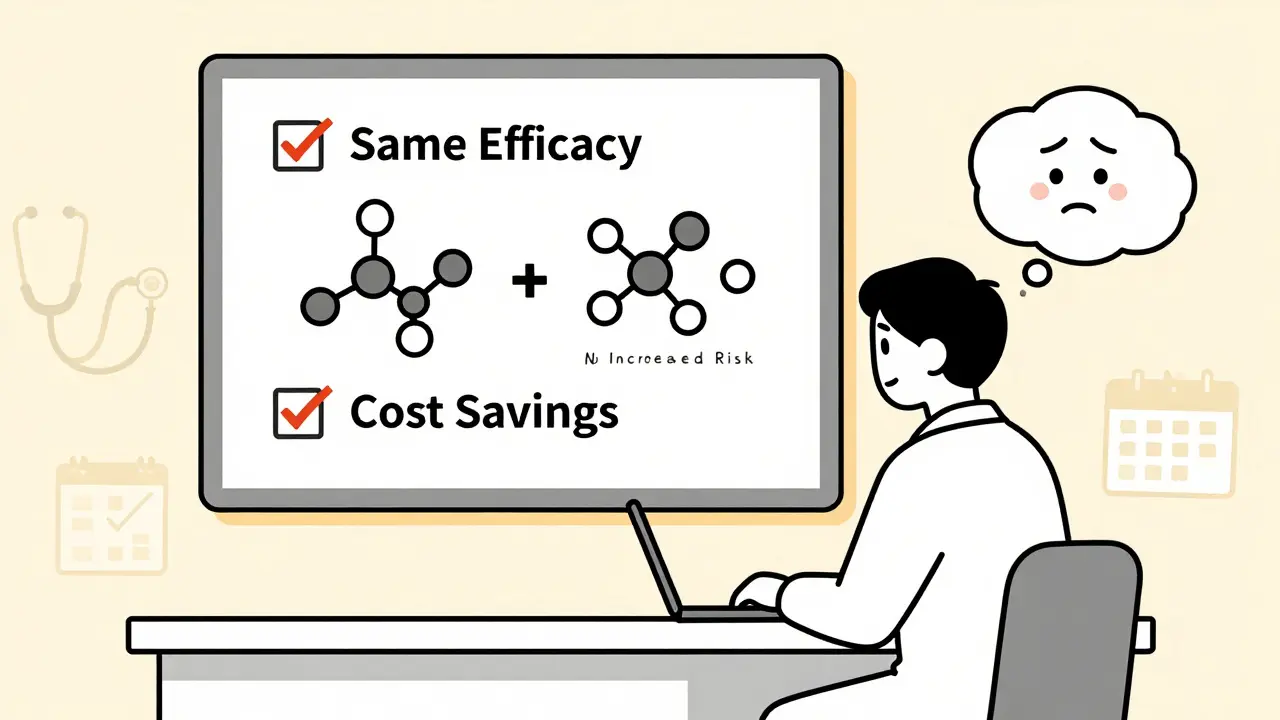
What About Switching Between Biosimilars?
This is the new frontier. Once you’re on a biosimilar, can you switch again? To another one? The data is mixed. In a German study, 100 patients switched from one biosimilar to another and 90% stayed on treatment. No flares. No immunogenicity spikes. But a Spanish study of IBD patients found 15.3% stopped after switching from CT-P13 to SB2-higher than the 8.7% in patients who never switched. Trough levels were nearly identical. So why did they stop? Some said they "didn’t feel right." Others had minor GI symptoms. No one had a confirmed flare. The key difference? The Spanish group was switched without counseling. The German group had structured education and follow-up.How Do You Make a Switch Work?
It’s not just about the science. It’s about the conversation. The PERFUSE study showed that with proper communication, discontinuation rates dropped from 18% to just 6.4%. Here’s what works:- At least 20 minutes of pre-switch counseling-no rushed explanations.
- Use visual aids: show the molecular similarity data, explain the approval process.
- Let patients ask questions. Don’t assume they understand "biosimilar" means "safe."
- Involve them in the decision. Say: "This is what the evidence says. How do you feel about trying it?"
- Follow up at 4, 8, and 12 weeks. Check disease activity scores. Ask how they’re feeling-not just lab values.
Where Does This Stand Globally?
Europe leads. The EMA allows automatic switching. Pharmacists can substitute without asking the doctor. That’s because regulators trust the data. The U.S. is slower. The FDA only designates a biosimilar as "interchangeable" if it can be switched back and forth without increasing risk. The first interchangeable adalimumab biosimilar (Cyltezo) got that status in 2024. But most U.S. insurers still require prior authorization. And many doctors still hesitate. In Australia, where I’m based, biosimilar uptake is growing but uneven. Some hospitals have mandatory switches. Others still use originators unless cost forces a change. The Therapeutic Goods Administration (TGA) follows EMA standards-so the science is solid. The challenge is trust.
What’s the Bottom Line?
Switching from an originator biologic to a biosimilar is safe for most people. The data is overwhelming. No increased risk of flare-ups. No new side effects. No loss of effectiveness. But safety isn’t just about numbers. It’s about how you feel. And if you’ve been on the same drug for five years, changing it-even to something better-can feel scary. The real barrier isn’t science. It’s perception. Patients need to be heard, not just informed. Doctors need to take time. Systems need to support that time. If you’re stable, have low disease activity, and your doctor explains why the switch makes sense-you’re likely to do just fine. In fact, you might end up saving your health system money-and helping someone else get the treatment they need.What If I Don’t Want to Switch?
You have the right to say no. But you need to understand the consequences. Some insurers will deny coverage for the originator if a biosimilar is available. You might have to pay full price out-of-pocket-thousands of dollars a year. Some clinics won’t prescribe the originator at all. If you’re in a flare, have unstable disease, or have had multiple drug changes in the past, talk to your doctor. There’s no rush. Switching is safest when your condition is quiet.What’s Next?
The NOR-SWITCH II study followed patients for two years after multiple switches. 89.2% stayed on treatment. That’s more than most people expect. As more biosimilars enter the market, and as interchangeability becomes standard, switching will become routine. Like choosing a generic statin. The science is there. The cost savings are real. The question isn’t whether we’ll switch-it’s whether we’ll do it right.Is a biosimilar the same as a generic drug?
No. Generics are chemically identical copies of small-molecule drugs, like aspirin or metformin. Biosimilars are made from living cells and are highly similar-but not identical-to their reference biologic. They’re more complex, harder to replicate, and require extensive testing to prove they work the same way in the body.
Can switching to a biosimilar cause my disease to flare up?
Large studies show no increase in disease flares after switching from an originator biologic to a biosimilar. In fact, retention rates are above 85% at one year. If a flare happens after a switch, it’s more likely due to natural disease progression, stress, or other factors-not the biosimilar itself. The nocebo effect-where patients expect to feel worse-can also cause perceived flares.
Are biosimilars less effective than the original drug?
No. Clinical trials and real-world data consistently show biosimilars match the originator in effectiveness. For example, in inflammatory bowel disease, 90.6% of patients maintained remission after switching from one biosimilar to another. Trough drug levels, antibody formation, and disease activity scores remain unchanged.
Why do some doctors still hesitate to switch patients?
Some doctors worry about patient anxiety or rare adverse events reported anecdotally. Others are unfamiliar with the data or face pressure from pharmaceutical reps. But guidelines from the FDA, EMA, and major medical societies now support switching. The biggest barrier isn’t science-it’s communication. Doctors who take time to explain the switch see far better outcomes.
Can I switch back to the originator if I don’t feel well?
Yes. If you experience new or worsening symptoms after switching, your doctor can switch you back. Many patients do. But it’s important to rule out other causes first-like infection, stress, or non-adherence. Lab tests and disease activity scores help determine if the issue is truly the drug or something else.
Is it safe to switch between different biosimilars?
Current evidence suggests it is. Studies like the 2022 Lauret et al. trial showed no increase in immunogenicity or adverse events after multiple switches between biosimilars. However, switching without proper counseling increases the risk of discontinuation. Structured education and monitoring are key to success.
Will my insurance cover the biosimilar?
In most cases, yes. Most health plans now require patients to try a biosimilar first if one is available. Some insurers even refuse to cover the originator unless there’s a documented medical reason. Always check with your plan, but expect the biosimilar to be the default option.


Chris & Kara Cutler
Switched to the biosimilar last year and honestly? Life’s easier now. Less stress, less $$$, same results. 🙌
Rachel Liew
i just want to say thank you for writing this. my mom was terrified to switch and you made it feel safe. she’s been on it 8 months now and her joints dont hurt anymore. ❤️
Melissa Melville
So let me get this straight - we’re swapping a $2000/month drug for a $1300 one… and people are freaking out? 🤦♀️ I switch my shampoo brands and my hair doesn’t fall out. Why is this any different?
Bryan Coleman
i read the nor-switch study. data’s solid. but i get why ppl are nervous. been on humira for 7 years. it’s not just a drug - it’s part of my routine. the fear isn’t about the science. it’s about losing control.
franklin hillary
This isn’t about drugs it’s about trust. We live in a world where your phone updates and breaks your favorite app so why would you trust a company that says this new version is the same but cheaper? The system broke trust first. The biosimilar didn’t. The algorithm did. The insurance did. The paperwork did. The silence did.
Ishmael brown
I switched. Felt weird. Got a rash. Switched back. Felt fine. Switched again. Rash again. Coincidence? Maybe. Or maybe the biosimilar is just a placebo with a cheaper label. 🤔
June Richards
This whole post is just pharma propaganda. Biosimilars are a money grab. They cut corners. You think the FDA checks every batch? LOL. I’ve seen the reports. The data is cherry-picked. Don’t be fooled.
Lu Gao
Actually, the Spanish study you cited? It had a 15.3% discontinuation rate - but only because patients weren’t counseled. The German study? 90% retention. So it’s not the drug. It’s the lack of human interaction. 📚
Naresh L
In India, we don’t have access to most biologics. When we do, it’s the biosimilar. We don’t have the luxury of choice. But the outcomes? Similar. The science is global. The fear? Local.
Jaden Green
Let’s be real - this isn’t medicine. It’s corporate efficiency dressed up as progress. You’re not saving lives. You’re saving margins. And patients are being treated like cost centers. The FDA doesn’t care how you feel. They care about the p-value.
Angel Fitzpatrick
You know who benefits from biosimilars? Big Pharma. They own both the originator AND the biosimilar. It’s the same company. They just rebrand the same vial. You think they’d let a cheaper version live if it wasn’t profitable? Wake up. The switch isn’t about cost - it’s about control.
Nicki Aries
I just want to say - if you’re reading this and you’re scared? It’s okay. Talk to your doctor. Bring a friend. Write down your questions. You’re not alone. And you deserve to feel safe. 💛
Ed Di Cristofaro
My doc just sent me a letter. "Switch to biosimilar or pay full price." No chat. No explainin’. So I said no. And now I’m paying $2K a month. Guess who’s the real villain here?
Lilliana Lowe
The claim that biosimilars have 'no clinically meaningful differences' is statistically misleading. The margin of error in trough levels is ±12%. That’s not negligible when you’re treating autoimmune disease. This post reads like a marketing brochure.