
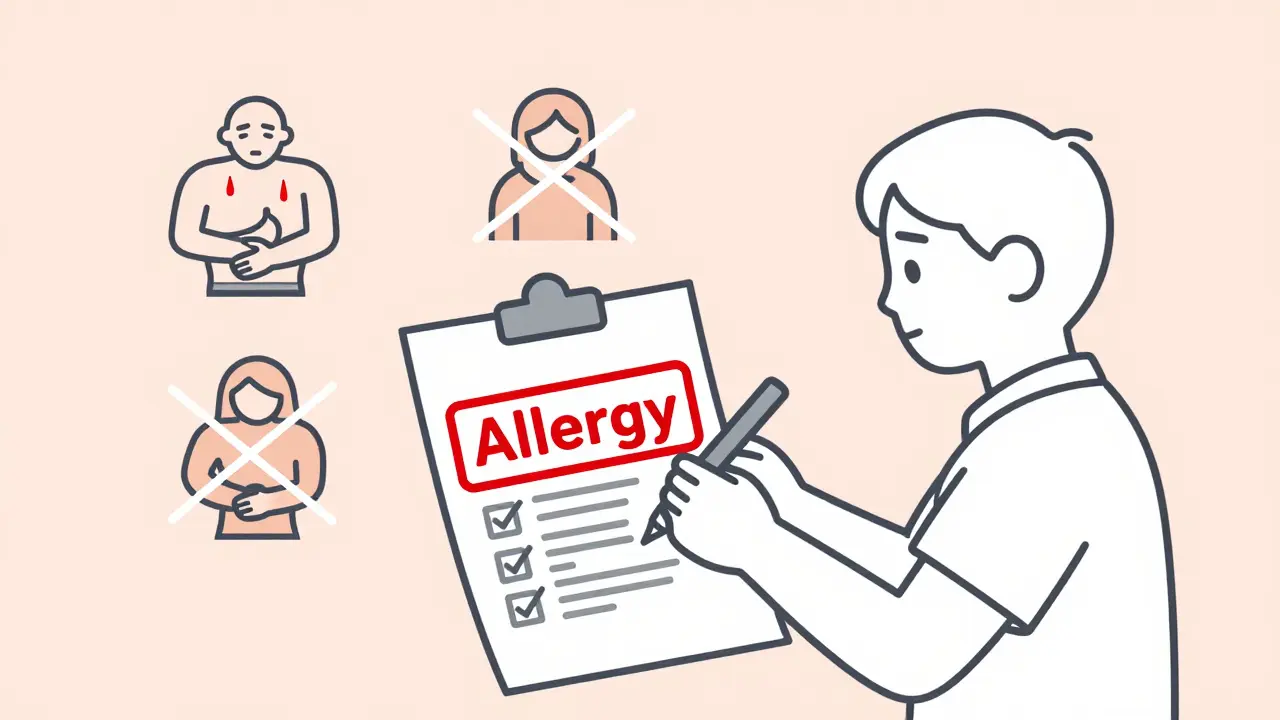
More than 10% of people in the U.S. say they’re allergic to penicillin. But here’s the truth: 9 out of 10 of them aren’t. That’s not a typo. Most people who think they have a penicillin allergy don’t actually have one. And that misunderstanding is putting their health-and the health of everyone around them-at risk.
Why So Many People Think They’re Allergic to Penicillin
Penicillin was the first real antibiotic miracle. Discovered in 1928, it saved millions of lives starting in the 1940s. But back then, doctors didn’t always explain side effects clearly. If you got a rash after taking penicillin, you were told, "You’re allergic." Maybe you had a stomach ache. Maybe you felt dizzy. Maybe the rash went away in a few days. But the label stuck. And now, decades later, you’re still avoiding penicillin-even if you haven’t taken it since you were a kid. The problem? That label isn’t just inconvenient. It’s dangerous. When doctors can’t use penicillin, they reach for stronger, broader antibiotics. These drugs kill more than just the bad bacteria. They wipe out the good ones too. That’s how infections like C. difficile and MRSA spread. Studies show people with a penicillin allergy label have a 50% higher chance of getting MRSA and a 35% higher chance of C. difficile than people without the label.What a Real Penicillin Allergy Looks Like
Not every bad reaction is an allergy. A true penicillin allergy is your immune system overreacting. There are two main types: immediate and delayed. Immediate reactions happen within an hour. These are the scary ones. Swelling in your throat, lips, or tongue. Trouble breathing. A sudden drop in blood pressure. That’s anaphylaxis. It’s life-threatening. You need epinephrine right away. If you’ve ever had this, you likely have a real allergy. Delayed reactions show up hours or days later. The most common is a flat, red rash that spreads across your body. It’s itchy but not usually dangerous. But some delayed reactions are serious: Stevens-Johnson Syndrome, Toxic Epidermal Necrolysis, DRESS. These affect your skin, liver, or blood. They’re rare but need hospital care. If your reaction was just nausea, diarrhea, or a headache? That’s not an allergy. That’s a side effect. If you got a rash as a kid and never had another one? You probably outgrew it. Eighty percent of people who had an IgE-mediated reaction lose their sensitivity after 10 years without exposure.How to Find Out If You Really Have a Penicillin Allergy
The only way to know for sure is to get tested. And it’s not complicated. First, a skin test. A tiny amount of penicillin is placed under your skin. If you’re allergic, you’ll get a red, itchy bump-like a mosquito bite but faster. If that’s negative, you get an oral challenge. You swallow a small dose of amoxicillin (a penicillin-type drug) and are watched for an hour. If nothing happens? You’re not allergic. This isn’t some high-tech lab procedure. It’s done in doctor’s offices and clinics. The risk of a reaction during testing is extremely low-far lower than the risk of using the wrong antibiotic later. If both tests are negative, your chance of anaphylaxis drops to near zero. Same as someone who’s never claimed an allergy.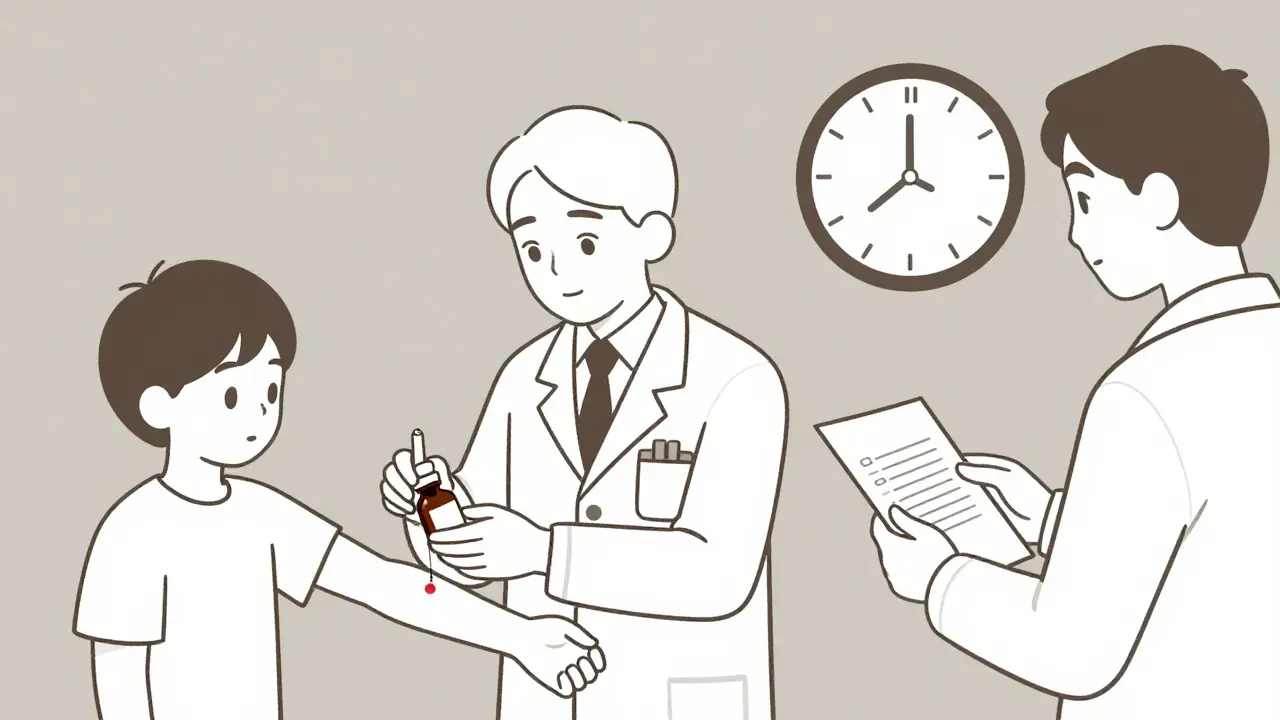
Who Should Get Tested
You don’t need to test everyone. But if any of these sound like you, you should talk to your doctor:- You were told you’re allergic to penicillin as a child-and haven’t taken it since.
- You had a rash after penicillin, but no trouble breathing or swelling.
- You’ve avoided penicillin for years but need antibiotics for an infection.
- You’re scheduled for surgery and your doctor says they can’t use the best antibiotic because of your "allergy."
- You’ve had multiple infections that didn’t respond to standard treatments.
What Happens After You’re De-Labelled
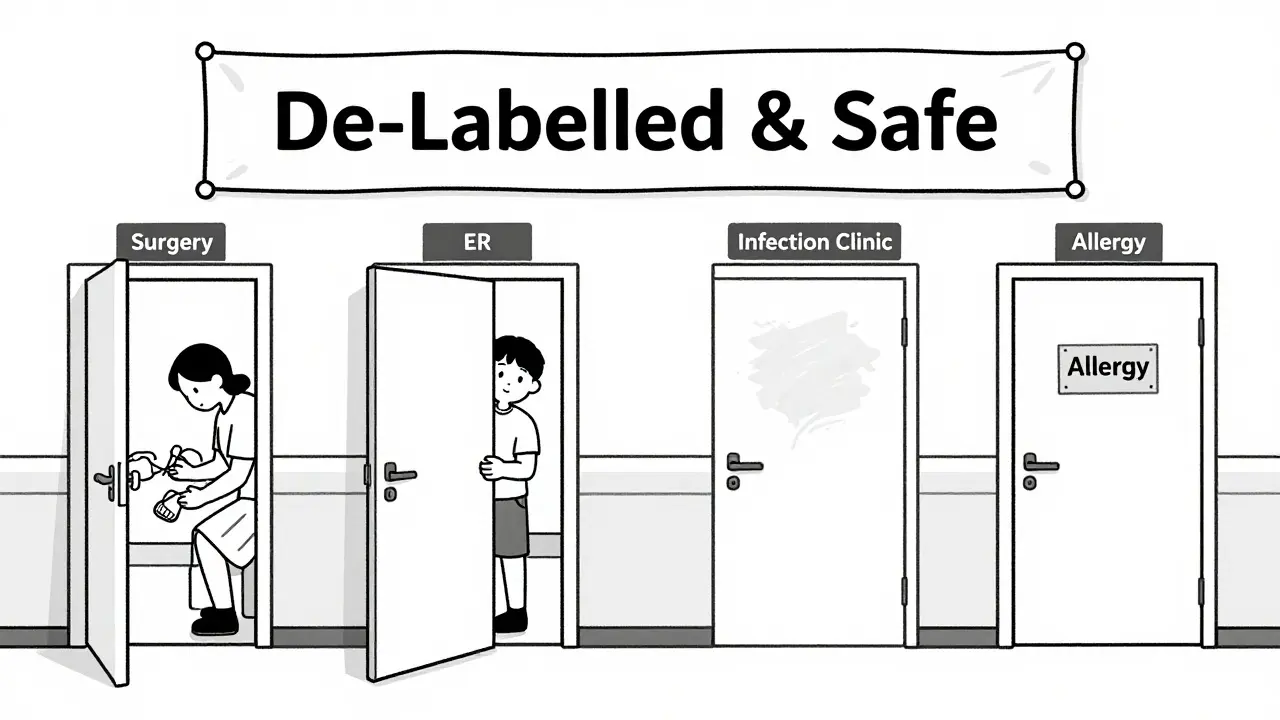
If testing clears you, your allergy label gets removed. That’s it. No more "penicillin allergy" on your chart. No more avoiding penicillin, amoxicillin, or even some cephalosporins. Your doctor should document the test results in your medical record. You should get a note too. Keep it in your phone or wallet. And consider a medical alert bracelet-just in case you’re ever unconscious and need emergency care. This isn’t just about you. It’s about antibiotics staying effective. When we use narrow-spectrum drugs like penicillin instead of broad-spectrum ones, we slow down the rise of superbugs. Every time we correctly de-label a penicillin allergy, we help protect the next person who needs antibiotics.What to Do Right Now
If you’ve ever been told you’re allergic to penicillin:- Look at your medical records. What exactly was the reaction? Was it documented?
- Ask your doctor: "Could I have been mislabeled?"
- If you’re healthy and haven’t had a severe reaction in 10+ years, ask about testing.
- If you’ve had anaphylaxis or a severe skin reaction, see an allergist. Don’t guess.
- Don’t avoid penicillin just because your mom or your cousin said they were allergic. Your body is different.
Why This Matters Beyond Your Own Health
Mislabeling penicillin allergies isn’t just a personal problem. It’s a public health crisis. The CDC estimates that fixing this one issue could save the U.S. healthcare system $1.2 billion a year. Fewer hospital stays. Fewer resistant infections. Fewer expensive drugs. Fewer deaths. In hospitals, surgeons used to give vancomycin or clindamycin to patients with penicillin labels-drugs that are harder on the body and less effective at preventing surgical infections. After implementing allergy testing programs, hospitals saw a 30% drop in surgical site infections. That’s because they could go back to using cefazolin, the gold standard. By 2025, half of U.S. hospitals will have formal penicillin allergy assessment programs. Australia is starting to follow. But you don’t have to wait for the system to catch up. You can take action today.What to Do If You Have a Real Allergy
If you’ve had a confirmed anaphylactic reaction or a severe skin reaction to penicillin, you still need to avoid it. But even then, you’re not out of options. Third- and fourth-generation cephalosporins and carbapenems are safe for most people without IgE-mediated symptoms. Your doctor can choose alternatives based on your specific history. Always tell every healthcare provider you see-dentists, ER staff, pharmacists. Wear a medical alert bracelet. Keep a written note in your phone. In an emergency, seconds matter. And if you’re ever in doubt-call 911 or go to the ER. Swelling, trouble breathing, or a sudden drop in blood pressure? Don’t wait. Epinephrine saves lives.Final Thought: Your Allergy Label Might Be Outdated
Penicillin allergies aren’t like peanut allergies. They don’t last forever. Most people who think they’re allergic aren’t. And if you are, you can still live a full, healthy life with the right care. Don’t let a label from 20 years ago limit your treatment options today. Talk to your doctor. Ask about testing. Get the facts. You might be surprised what you find out.Can I outgrow a penicillin allergy?
Yes. About 80% of people who had an IgE-mediated penicillin allergy lose their sensitivity after 10 years without exposure. Even if you had a reaction as a child, you may no longer be allergic. Testing can confirm this.
Is a rash always a sign of penicillin allergy?
No. Many rashes that appear after taking penicillin are not allergic. Viral infections, especially in children, can cause rashes that coincide with antibiotic use. If the rash is flat, not itchy, and goes away in a few days, it’s likely not an allergy. Only a doctor can tell the difference.
Can I take cephalosporins if I’m allergic to penicillin?
For most people, yes. First-generation cephalosporins like cefazolin are safe for low-risk patients. Even for those with a history of mild reactions, the cross-reactivity risk is less than 2%. If you’ve never had anaphylaxis or a severe skin reaction, you can likely take cephalosporins safely-especially after testing.
What if I need antibiotics right now and can’t wait for testing?
If you have a high-risk history, avoid penicillin and related drugs. Your doctor can use alternatives like clindamycin, vancomycin, or fluoroquinolones. But if your history is low-risk (e.g., a childhood rash), you may still be able to take penicillin under supervision. Never assume you’re allergic without knowing your history.
How do I get tested for a penicillin allergy?
Start by asking your primary doctor or pharmacist. They can refer you to an allergist or immunologist. Testing involves skin tests and a supervised oral challenge with amoxicillin. It usually takes 1-2 hours and is very safe. Most insurance covers it, especially if you’re scheduled for surgery or have recurrent infections.
Is penicillin allergy testing available in Australia?
Yes. Major hospitals and allergy clinics in Perth, Sydney, and Melbourne offer penicillin allergy testing. The practice is growing, especially in surgical and infectious disease departments. Ask your doctor if they can refer you to a local allergy service.
Can I take amoxicillin if I’m allergic to penicillin?
Amoxicillin is a type of penicillin. If you have a true penicillin allergy, you should avoid it. But if your allergy was mislabeled, you may tolerate amoxicillin just fine. Testing with amoxicillin is part of the standard challenge process to confirm safety.
What should I do if I have a reaction after taking penicillin?
If you have swelling of the face, lips, or throat, trouble breathing, dizziness, or a rapid heartbeat, call emergency services immediately. Don’t wait. If you have an epinephrine auto-injector, use it. For mild rashes or stomach upset, stop the medication and contact your doctor. Never ignore symptoms-especially if they’re new or worsening.


Neil Thorogood
So let me get this straight - I’ve been avoiding penicillin since I was 7 because I got a rash after amoxicillin… and now you’re telling me I’m basically a walking medical myth? 😱 I feel like I’ve been ghosted by my own immune system. Also, can we talk about how my mom still calls me "Penicillin-Phobic Neil" at Thanksgiving? 🙃
Jessica Knuteson
Labeling is a social construct. The body does not recognize categories. The word allergy is a linguistic artifact imposed by medical institutions to simplify complexity. You are not allergic. You are a pattern in a dataset. The system misclassified you. Now it wants you to reclassify yourself. Who benefits? The pharmaceutical industry. The hospital system. Not you.
Robin Van Emous
I love how this post breaks things down so clearly. I had no idea that a simple rash could be mistaken for an allergy. My cousin thought she was allergic because she got a little red spot after penicillin when she was five - and now she’s on expensive antibiotics for every infection. I’m going to ask my doctor about testing. It just makes sense to double-check these things. Thanks for sharing!
Angie Thompson
OMG I just realized I’ve been living a lie 😭 I thought I was allergic because I threw up after penicillin at 12. Turns out that’s just my stomach being dramatic. I’m scheduling a test this week!! My doctor said I could’ve been using the BEST antibiotics for years and I just… avoided them because I was scared. So glad I read this. Also - can we make a #DeLabelPenicillin movement? 🙌💉
Geoff Miskinis
How quaint. The American healthcare system has reduced a complex immunological phenomenon to a checklist for lazy GPs. Of course 90% of these "allergies" are misdiagnosed - because the average physician spends 7 minutes per patient and doesn't bother to differentiate between a viral exanthem and IgE-mediated anaphylaxis. The real issue isn't the patients. It's the systemic incompetence.
Betty Bomber
My grandma had a rash after penicillin in the 50s. Never took it again. Now she’s 82 and just had knee surgery - they gave her vancomycin. She was in the hospital for 10 days with C. diff. I wish someone had told her this back then.
Mohammed Rizvi
Interesting. In India, we don’t have this problem much - doctors rarely label people without proper testing. But here in the US, it’s like once you’re tagged, you’re branded for life. I’ve seen people avoid antibiotics because of a childhood rash. That’s not caution - that’s fear passed down like a family recipe. Time to update the recipe.
eric fert
Okay, but let’s be real - if 90% of people aren’t allergic, then why does the medical establishment still treat everyone like they’re walking time bombs? Why isn’t there a mandatory re-evaluation every 10 years? Why do we still have those stupid penicillin allergy wristbands in ERs? Why is it easier to just say "no penicillin" than to actually look at the chart? And don’t even get me started on how insurance won’t cover testing unless you’re having surgery - as if your health only matters when you’re on the table. This isn’t progress. It’s negligence dressed up as protocol.
Allie Lehto
people need to stop being so careless with their health labels. i had a friend who said she was allergic to penicillin because she got a headache once. a HEADACHE. and now she’s got antibiotic-resistant infections because she refused to take anything that might work. it’s not just about you - it’s about the bacteria evolving because of dumb decisions. you’re not special. you’re just lazy. get tested. stop being a walking superbug incubator. 💔
Napoleon Huere
There’s a deeper truth here - we live in a world that loves to assign labels to protect us from uncertainty. But biology doesn’t care about labels. It cares about evidence. A rash at age six is not a life sentence. An immune system is not a static thing. It evolves. It forgets. It relearns. To cling to a diagnosis from childhood is to confuse memory with truth. We are not our past reactions. We are our present capacity for healing. Let go of the label. Let your body speak again.
Aishah Bango
My daughter got a rash after amoxicillin. We didn’t think twice - we just avoided all penicillin. Now I’m reading this and I realize we might’ve just condemned her to worse infections for life. I’m scheduling her test tomorrow. I feel awful. But also… relieved. Thank you for this. I wish I’d known sooner.