
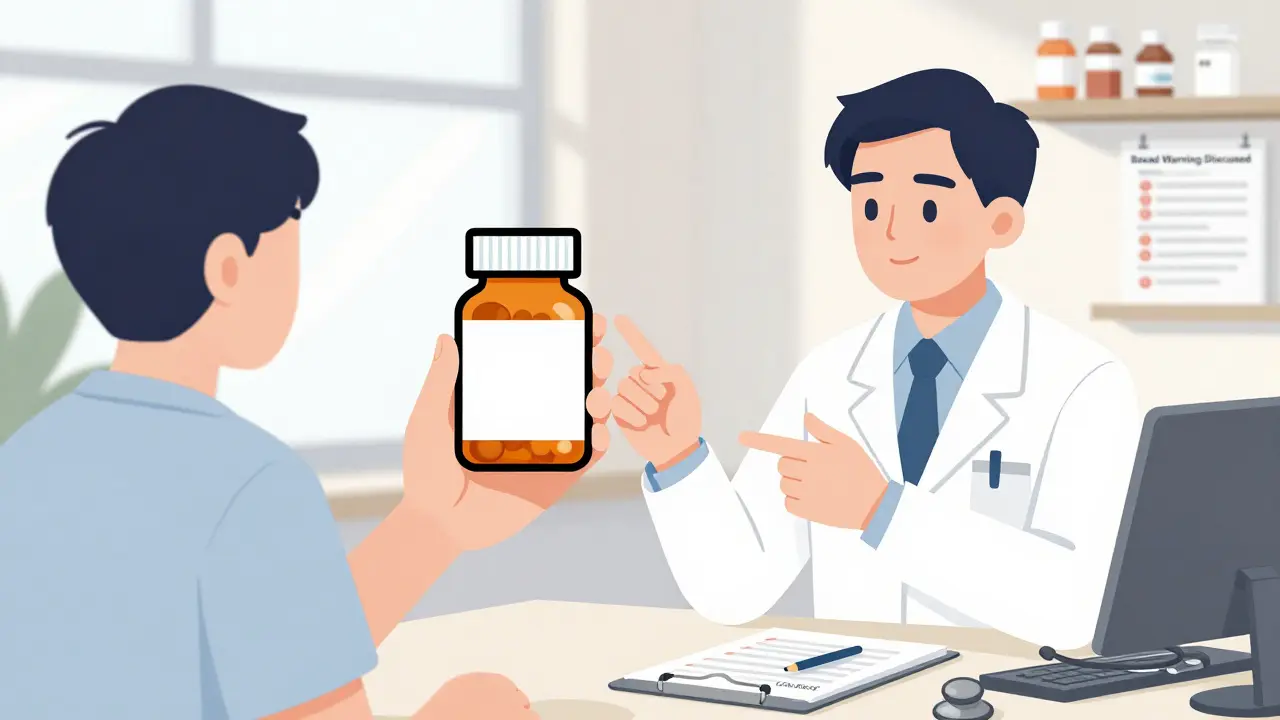
When your doctor prescribes a new medication, you might notice a bold, black-bordered box on the pill bottle or in the patient information leaflet. This isn’t just a design choice. It’s the FDA boxed warning - the strongest safety alert the U.S. Food and Drug Administration can issue. And if you’re taking a drug with one, it means something serious could happen. Not everyone gets hurt. But the risk is real enough that the FDA requires doctors to talk about it - clearly and directly - before you start the medicine.
What Exactly Is a Boxed Warning?
A boxed warning, often called a "black box warning," is the FDA’s most serious safety notice. It appears at the very top of a drug’s official prescribing information, surrounded by a thick black border and written in bold text. This isn’t a suggestion. It’s a legal requirement built into the drug’s approved label. The FDA introduced this system after the thalidomide disaster in the 1960s, when a drug meant to help with morning sickness caused severe birth defects in thousands of babies. Since then, the black box has become the gold standard for flagging life-threatening risks.
As of 2022, more than 400 prescription drugs carry this warning. That’s about 10-15% of all medications on the market. These aren’t rare or experimental drugs - they include common treatments for depression, diabetes, cancer, and heart conditions. Some of the most widely used drugs with boxed warnings are:
- Antidepressants - linked to increased risk of suicidal thoughts in children, teens, and young adults
- Antipsychotics - can cause life-threatening reactions in elderly patients with dementia
- Isotretinoin (Accutane) - causes severe birth defects; requires enrollment in a strict monitoring program
- Methotrexate - can cause fatal liver and bone marrow damage without regular blood tests
- SGLT2 inhibitors - increased risk of serious urinary tract infections and genital infections, added in 2023
The warning doesn’t say "don’t take this." It says, "Here’s what could go wrong - and here’s how to prevent it."
Why Do These Warnings Exist?
Clinical trials - the studies done before a drug is approved - involve only a few thousand people over a few years. That’s not enough to catch every possible side effect. Many dangerous reactions only show up after millions of people start using the drug. That’s why 70% of boxed warnings are added after the drug is already on the market.
For example, the warning for rofecoxib (Vioxx) - a painkiller later pulled from shelves - came too late. The FDA had issued a warning in 2005, but by then, over 80 million people had taken it. The drug was linked to heart attacks and strokes. That’s why the FDA now uses real-world data from the Sentinel Initiative - a system that tracks health records of over 300 million Americans - to spot dangers faster.
Boxed warnings are also used to force companies to put in place strict safety programs. Take isotretinoin - a powerful acne drug. Because it causes birth defects, patients must enroll in the iPLEDGE program. That means monthly doctor visits, negative pregnancy tests, and signing forms before each refill. It’s a hassle - but it’s saved thousands of babies from serious harm.
How Is This Different From Other Warnings?
The FDA uses several types of safety alerts, but boxed warnings are the top tier:
- Boxed warnings - legally required, printed on the label, and must be discussed with patients before prescribing.
- Drug Safety Communications - public alerts issued after a new risk is found. These are not part of the official label.
- Label changes - updates to the drug’s information that don’t include a black box.
- Medication Guides - simpler handouts given to patients, often written in plain language.
Think of it this way: a Drug Safety Communication is like a news alert. A boxed warning is like a court order. It’s part of the drug’s official rules. If a doctor prescribes a drug with a boxed warning without discussing it, they could be held legally responsible.
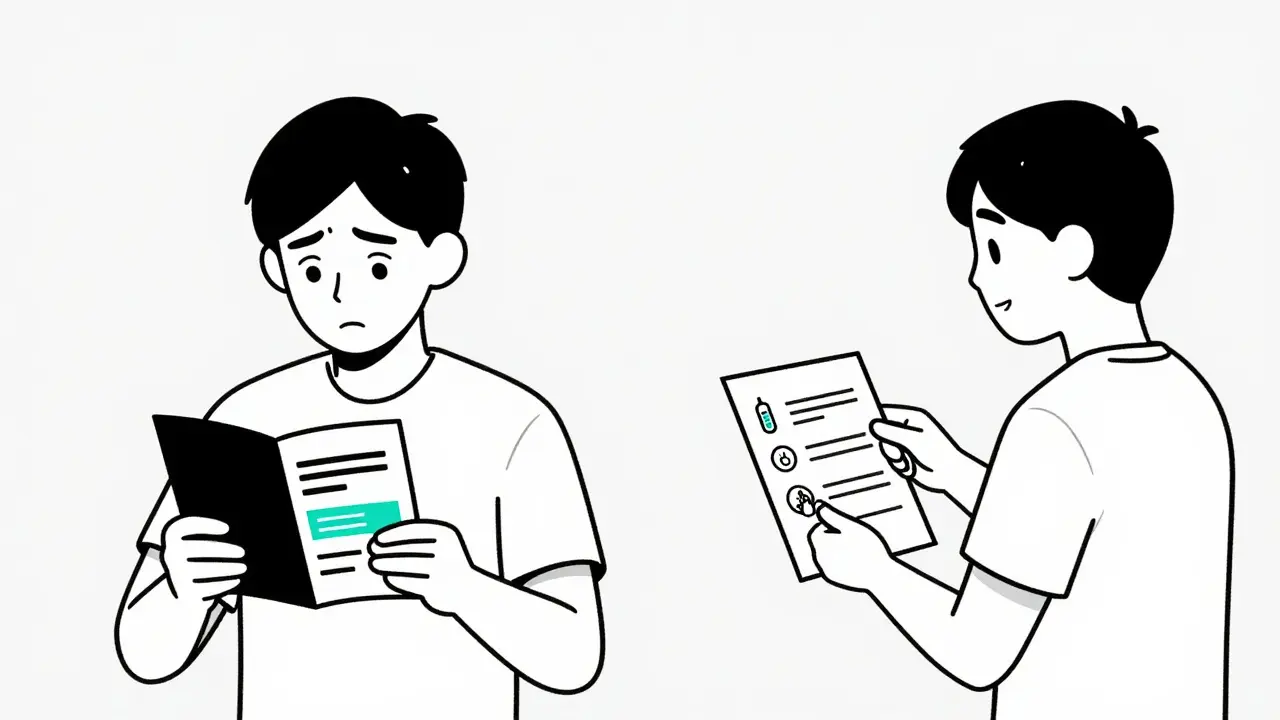
What Should You Do If Your Drug Has a Boxed Warning?
Don’t panic. Don’t stop taking it. But do ask the right questions.
According to a 2022 survey by the National Patient Safety Foundation, 41% of patients with a boxed warning thought it meant they shouldn’t take the medicine at all. That’s wrong. For many people, the benefits far outweigh the risks - if they’re monitored properly.
Here’s what to ask your doctor:
- What’s the exact risk? Is it liver damage? Heart attack? Suicide? Don’t settle for "serious side effects."
- Am I at higher risk? Age, other medications, genetics, or existing conditions can make you more vulnerable.
- What signs should I watch for? For example, if you’re on methotrexate, you need to watch for extreme fatigue, yellowing skin, or unusual bruising.
- What tests or checkups are required? Some drugs need monthly blood work. Others require pregnancy tests or heart scans.
- Are there safer alternatives? The Drug Effectiveness Review Project (DERP) and Consumer Reports Best Buy Drugs compare drugs side by side - including risks, cost, and effectiveness.
And if your doctor doesn’t bring this up, ask. A 2023 analysis of patient reviews on PatientsLikeMe showed that those who had a clear conversation with their provider were far more likely to stick with the medication safely.
Common Misunderstandings
Many patients assume a boxed warning means the drug is dangerous. That’s not true. It means the drug carries a serious risk - one that requires careful management.
Take antidepressants. The FDA requires a boxed warning about increased suicide risk in young people. But studies show that for many, the benefits - reduced depression, improved quality of life - far outweigh the risk. In fact, the American Academy of Family Physicians found that when doctors used the "teach-back" method (asking patients to repeat the risks in their own words), understanding improved by over 60%.
Another myth: "It’s been on the market for years, so it’s safe." Not true. The warning for methotrexate - a common treatment for rheumatoid arthritis and some cancers - has been in place since the late 1990s. Yet a 2023 MedWatch report showed a patient developed fatal liver damage because their doctor skipped blood tests. The warning was there. The monitoring wasn’t.
What’s Changing?
The FDA is trying to make these warnings clearer. In 2023, they launched a pilot program to rewrite boxed warnings using plain language - no medical jargon. Instead of "hepatotoxicity," you might see "liver damage." Instead of "myelosuppression," it might say "low blood cell counts."
The goal? To make sure patients actually understand the risks. Right now, many people read the warning, see the black box, and shut down. They don’t read the details. The FDA hopes plain language will change that.
Also, the agency is pushing for faster follow-up studies. A 2023 Government Accountability Office report found that only 60% of required safety studies were completed on time. That’s a gap. If a drug has a boxed warning, the FDA requires the manufacturer to study the risk further. But delays mean patients stay at risk longer than they should.
Your Role in Safety
You’re not just a patient. You’re a partner in your care. If you’re on a drug with a boxed warning:
- Keep track of your tests. Don’t skip blood work or appointments.
- Report any new symptoms - even small ones - to your doctor.
- Use the FDA MedWatch system to report side effects. You can do it online or by phone. Over 2 million reports come in every year.
- Ask for a copy of the full prescribing information. It’s not just for doctors - you have a right to it.
And if you’re ever unsure? Talk to your pharmacist. They’re trained to explain these warnings. A 2023 Reddit thread from r/Pharmacy showed that 67% of patients felt better after talking to their pharmacist - more than those who only talked to their doctor.
Final Thought
A boxed warning isn’t a reason to avoid a medicine. It’s a reason to use it wisely. Many of the drugs with these warnings save lives - if used correctly. The problem isn’t the drug. It’s the silence around it. When patients and doctors talk openly about risks, outcomes improve. When they don’t, people get hurt.
Don’t let fear stop you. Let knowledge guide you. Ask questions. Do your part. And remember: the black box is there to protect you - but only if you pay attention.
Do all drugs with boxed warnings cause serious harm?
No. A boxed warning means there’s a serious risk - not that harm is guaranteed. Many people take these medications safely for years. The key is proper monitoring, knowing your personal risk factors, and following your doctor’s instructions. For example, someone on an antidepressant with a suicide risk warning may never experience that side effect - especially if they’re monitored closely.
Can I stop taking a drug with a boxed warning on my own?
Never stop a prescription medication without talking to your doctor. Stopping suddenly can be dangerous. For example, stopping antidepressants abruptly can cause withdrawal symptoms or a return of severe depression. If you’re worried, schedule a visit. Your doctor can help you weigh the risks and decide if switching or adjusting the dose is safer.
Are boxed warnings the same in other countries?
No. The European Medicines Agency (EMA) uses a system called "special warnings and precautions," which is similar but not identical. Some drugs with boxed warnings in the U.S. have different risk labels in Europe, and vice versa. If you’re traveling or getting prescriptions abroad, always check the local labeling. Global drug safety standards vary.
Why do some drugs have boxed warnings but others don’t, even if they’re similar?
Each drug is evaluated individually, even within the same class. For example, two diabetes drugs might work the same way, but one might have a higher risk of pancreatitis or heart failure based on real-world data. The FDA reviews each drug’s safety profile separately. That’s why one drug might have a boxed warning and another in the same category doesn’t.
Can I find out if a drug I’m taking has a boxed warning?
Yes. Check the patient information leaflet inside your pill bottle - it’s always listed at the top. You can also search the FDA’s website for the drug’s official label. Or ask your pharmacist. They have access to the full prescribing information and can explain it in plain language. If you’re unsure, don’t guess - ask.


Srividhya Srinivasan
Oh, so now the FDA is our benevolent guardian? LOL. Wake up, people. This "black box" is just PR spin. Big Pharma paid off the regulators decades ago. You think they want you to live? No. They want you hooked. Every single drug with this warning? It's a money machine. Methotrexate? Accutane? Antidepressants? All of them. The "monitoring"? A scam. Blood tests cost $200. Insurance denies them. So you skip. And then? They blame YOU. The real danger isn't the drug. It's the system that profits from your fear and confusion.
Kyle Young
It's fascinating how the boxed warning functions as both a legal safeguard and a philosophical mirror. We are told to "use it wisely," yet the very architecture of pharmaceutical regulation assumes we are incapable of rational decision-making without coercion. The requirement for physician discussion implies a paternalistic model of care, but the existence of the warning itself acknowledges the patient's autonomy. Is this not a paradox? We are granted the right to refuse, yet burdened with the obligation to comprehend risks we are not equipped to fully grasp-statistical, biological, and existential. The black box, then, is not merely a warning. It is a monument to our collective vulnerability.
cara s
Okay so I just want to say that I’ve been on an SGLT2 inhibitor for like 8 months now and honestly? I didn’t even know it had a boxed warning until I read this post. I mean, I’ve had two UTIs, but I thought they were just… you know, kind of normal? Like, I’m a woman, I get them. But now I’m like, wait-did my doctor even mention this? Did I sign anything? Did I even get the leaflet? I think my pharmacy just handed me the bottle and said "take one daily" and that was it. I’m not mad, I’m just… concerned. Like, if this is the strongest warning they have, shouldn’t there be like, a whole presentation? A video? A pamphlet with cartoons? I feel like I’m being trusted to handle nuclear codes with no training.
Suchi G.
I just want to say how deeply emotional this is for me. My sister took isotretinoin when she was 17. She went through iPLEDGE. She cried every month. She had to get her period confirmed, sign papers, sit in a room with a nurse who looked at her like she was a ticking bomb. And then? She got better. Her skin cleared. She smiled again. But the cost? The fear? The shame? The way she’d whisper, "I’m not pregnant, I’m not pregnant," like a prayer? That’s the real black box-not the ink on the page, but the weight it leaves on a soul. I’m not saying don’t take it. I’m saying: if you’re taking it, know you’re not just fighting acne. You’re fighting ghosts.
becca roberts
Oh honey, you think the FDA is protecting you? Sweetie, they’re just the middlemen between Big Pharma and your bank account. Let me tell you about my cousin in Texas-he took an antidepressant with a boxed warning. His doctor didn’t mention the suicide risk. His mom found him after three days. The warning? It was there. In tiny print. On page 14. Of a 37-page PDF. Nobody read it. Nobody was trained to explain it. And now? The system says, "Well, we warned you." No. You didn’t warn us. You dumped a legal bomb on our doorstep and walked away. You owe us better than that.
Andrew Muchmore
Boxed warnings are necessary. Doctors skip discussions. Patients skip tests. That’s the problem. Not the warning.
SNEHA GUPTA
It’s interesting how the FDA’s approach assumes universal literacy-both medical and linguistic. But what about non-native English speakers? Elderly patients? Those with cognitive impairments? The black box is a symbol, not a solution. A diagram, a video, an audio recording in ten languages-those might actually save lives. The warning is not the failure. The delivery is. And yet, the system persists in treating patients as if we all have PhDs in pharmacology and the leisure to read 40-page PDFs on a lunch break.
Gaurav Kumar
USA FDA? Pfft. In India, we don’t need black boxes. We have common sense. My uncle took methotrexate for 12 years. No blood tests. No warnings. Just a pill. He’s alive. Healthy. Why? Because Indians don’t panic. We don’t need American bureaucracy to tell us how to live. You overcomplicate everything. This "iPLEDGE" nonsense? We’d just tell a woman: don’t get pregnant. Done. No forms. No fees. No drama. America: turning medicine into a horror movie.
Jeremy Van Veelen
Let me be brutally honest: this entire system is a theatrical performance. The black box? A prop. The doctor’s lecture? A monologue. The patient’s nod? A scripted bow. We are not being informed-we are being performed for. The FDA doesn’t want you to understand risk. They want you to feel like you’ve been warned, so they can sleep at night while their quarterly earnings report glows. The real tragedy? We all play our parts. The doctor, the patient, the pharmacist-we’re all actors in a play written by lawyers and lobbyists. And the most dangerous thing? We believe we’re safe because we’ve been told we’re warned.