
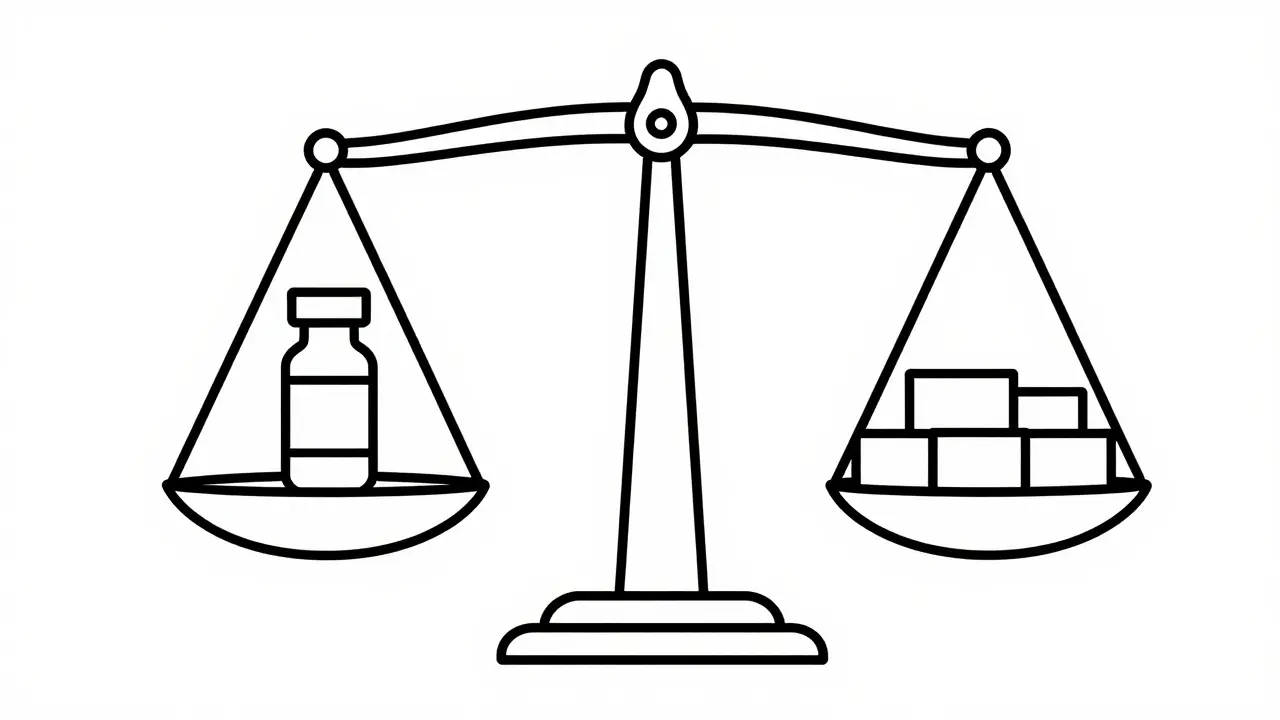
Imagine a world where life-saving medications remain inaccessible because their price stays high long after they stop being profitable for big companies. Before 1984, that was the reality in the United States. The Hatch-Waxman Actfederal legislation enacted on September 24, 1984 that revolutionized how drugs enter the market. Formally known as the Drug Price Competition and Patent Term Restoration Act, this law created a delicate balance. It protects innovation by granting brand-name manufacturers exclusive rights, yet simultaneously opens the door for affordable generics to compete once those protections expire.
The Core Purpose Behind the Legislation
Why did Congress pass this specific law? In the early 1980s, the pharmaceutical landscape was broken. Brand-name drug makers held onto patents indefinitely through regulatory delays, while generic companies struggled to prove safety without repeating expensive clinical trials. Senator Orrin Hatch and Representative Henry Waxman realized the system needed fixing. They aimed to solve two problems at once: incentivize the creation of new medicines and lower costs for patients through competition.
This legislative framework fundamentally changed the relationship between the Food and Drug Administration (FDA) and pharmaceutical companies. Previously, generic manufacturers had to submit full application packages, essentially conducting their own trials to prove what was already known about a brand-name drug. The Orange Bookofficial publication listing approved drug products and patents became the central tool for transparency under the new act. It lists approved drug products along with their associated patent information, allowing anyone to see exactly when a patent expires and which patents protect a specific medication.
Navigating the Abbreviated New Drug Application (ANDA)
The most significant procedural change introduced by the act is the pathway known as the Abridged New Drug Application formal submission process for generic drug approval, commonly referred to as the ANDA process. This allows generic manufacturers to skip the time-consuming clinical trials required for new chemical entities. Instead, they must demonstrate that their version of the drug is bioequivalent to the Reference Listed Drugthe original brand-name product listed in the Orange Book.
- Identical Active Ingredient: The generic must contain the same active component as the brand-name drug.
- Bioequivalence Standards: Pharmacokinetic studies must show the generic behaves in the body similarly, typically within a 90% confidence interval of 80-125% for key metrics like Cmax and AUC.
- Dosage and Form: Strength, dosage form, and route of administration must match the reference product precisely.
This streamlined approach drastically reduced costs. In 1984 dollars, development dropped from approximately $2.6 million to just $1-2 million per product. Today, that efficiency means thousands of generic drugs flood the market annually, making treatment accessible to millions.
Understanding the Patent Challenge System
Sometimes, a patent covering a drug has not yet expired when a generic company wants to launch its version. Under the Hatch-Waxman Actlegislation managing drug patents and approvals, generic manufacturers can challenge these patents directly. This happens through a certification system divided into four categories, often called "paragraph certifications." The most aggressive and strategic of these is the Paragraph IV certification.
| Certification Type | Patent Status | Impact on Timeline |
|---|---|---|
| Paragraph I | No patents listed | Standard review process |
| Paragraph II | Patents expired | Approval upon expiration |
| Paragraph III | Patent exists | Market entry delayed until patent expiration date |
| Paragraph IV | Potential infringement (Invalid or not infringed) | Triggers potential litigation and 30-month stay |
If a generic company files a Paragraph IV certification, it essentially tells the brand manufacturer, "We think your patent is invalid," or "Our drug doesn't infringe on it." This creates immediate tension. The filing triggers a mandatory notification process. Within 20 days, the generic applicant must notify the brand owner. The brand owner then has 45 days to file a lawsuit alleging patent infringement.
The 30-Month Stay and Market Exclusivity
When that lawsuit is filed, a specific automatic clock starts ticking known as the 30-month stay. During this period, the FDA cannot approve the generic application even if the science is sound. This mechanism prevents generics from hitting the market while the courts decide patent validity. While intended to give companies time to resolve disputes without disrupting patient access, it has become a primary battleground strategy.
To encourage companies to take this risk, the act offers a lucrative reward: the first generic applicant to file a valid Paragraph IV certification gets 180 days of market exclusivity. During these 180 days, no other generic competitors are allowed into the market. This period turns into a massive profit opportunity, often prompting fierce racing among generic firms to be the first filer. Historically, companies have camped outside FDA offices to physically hand in paperwork seconds before rivals.
Economic Impact and Healthcare Savings
The financial implications of this law are staggering. By facilitating rapid generic entry, the Federal Food, Drug, and Cosmetic Actprimary statute regulating drug safety amendments helped transform the U.S. market. Data shows that before the act, generics made up about 19% of prescriptions. Today, over 90% of prescriptions by volume are filled with generics.
The Congressional Budget Office reports that over the last decade, generic competition generated approximately $1.7 trillion in healthcare savings. Without the streamlined approval pathway and the incentives built into the 180-day exclusivity, we likely would not see prices drop so dramatically-often by 80% to 90%-immediately following patent expiration. This shift benefits Medicare beneficiaries significantly. Reports indicate that roughly 78% of Medicare Part D prescriptions are filled using generics, saving each beneficiary an average of $3,200 annually.

Patent Term Restoration
The legislation does not just favor the generic industry; it also supports innovators. When a drug spends years in clinical trials waiting for FDA approval, its patent is effectively shortened. To compensate for this lost time, the law allows for patent term extension. Companies can recover up to five years of patent life added back to the expiration date.
However, there is a hard cap on this benefit. The total exclusivity period cannot exceed 14 years after approval. This provision ensures that society eventually gets access to cheaper alternatives. Without this balance, innovators might face too much risk, but without the generic pathway, patients would never get affordable options.
Challenges and Modern Complexities
While the core framework works well for simple small-molecule drugs, the system faces challenges today. One major issue involves "evergreening" strategies. Sometimes, brand manufacturers secure multiple secondary patents on things like manufacturing processes or slightly modified delivery systems. These can be listed in the Orange Book to trigger fresh lawsuits against generics whenever they try to launch.
This dynamic led to controversies involving settlements. Occasionally, brand manufacturers pay generic companies to delay their entry. These "pay-for-delay" settlements undermine the competitive spirit of the act. Critics argue these tactics extend monopoly power beyond what the original sponsors intended. Furthermore, the rise of biologics-complex protein-based drugs-exposed gaps in the system. The 1984 law wasn't designed for these complex molecules, necessitating the separate Biologics Price Competition and Innovation Act of 2010.
Another modern hurdle is sample availability. Generic developers need samples of the brand-name drug to test their versions. Sometimes, suppliers fail to provide these samples, leading to delays. The Creating and Restoring Equal Access To Equivalent Samples (CREATES) Act of 2019 addressed this specifically, enforcing penalties for those who withhold samples to stall competition.
Future Outlook of Generic Approval
As we move further into the future of medicine, the regulatory environment continues to adapt. The FDA recently implemented GDUFA III in 2023, aiming to reduce review times and improve communication. The goal is to cut the average review time from months to weeks. Despite the complexities, the fundamental architecture established in 1984 remains the bedrock of U.S. drug policy. As new technologies like gene therapies emerge, regulators continue to debate how best to fit them into the established balance of patent protection and public access.
What is the primary purpose of the Hatch-Waxman Act?
The primary purpose is to balance two goals: encouraging pharmaceutical innovation by protecting patents and fostering competition by creating a streamlined pathway for generic drug approval without requiring repeated clinical trials.
How does the 180-day exclusivity period work?
The first generic manufacturer to successfully challenge a brand patent receives 180 days of market exclusivity, during which the FDA cannot approve subsequent generic applications for that drug, providing a profit incentive.
What is the difference between Paragraph III and Paragraph IV certifications?
Paragraph III certifies that a generic will not market before patent expiration, accepting the patent's validity. Paragraph IV asserts the patent is invalid or will not be infringed, inviting litigation and potentially triggering a 30-month approval stay.
Can patent terms be extended for brand-name drugs?
Yes, patent term restoration can add up to five years to compensate for regulatory review time, though the total post-approval exclusivity cannot exceed 14 years.
Does the Hatch-Waxman Act apply to biologics?
No, the Hatch-Waxman Act applies primarily to small-molecule drugs. Biologics are governed by a separate pathway established under the Biologics Price Competition and Innovation Act of 2010.

Goodwin Colangelo
This breakdown really highlights the complexity involved in getting drugs approved. Most people forget how much work goes into proving bioequivalence standards accurately. The ANDA pathway changed everything for patients trying to afford care significantly. Before 1984, companies had to redo trials that were already done once successfully. That redundancy cost billions of dollars in total system waste overall. It makes sense why Congress wanted to fix the bottleneck quickly then. Orange Book listings are now essential tools for any generic manufacturer planning launches. Transparency allows competitors to plan their launch strategies effectively without delays. The patent dance creates a lot of legal friction though unfortunately. Paragraph IV certifications trigger lawsuits almost immediately upon filing typically. Thirty month stays often protect brand monopolies longer than originally intended sometimes. Sometimes courts drag cases out just to delay cheap options reaching shelves faster. Patients suffer while lawyers fight over intellectual property rights constantly. We need stronger oversight on evergreening tactics specifically regarding secondary patents. Secondary patents on delivery systems feel like clear loopholes to exploit. The balance is delicate but currently tilts toward profit over access mostly.
Rachelle Z
The price of drugs would be way cheaper without these laws 😒!!
Dipankar Das
It is imperative that we understand the legislative intent behind the original statute. The separation of clinical trial requirements fundamentally altered market dynamics. We must acknowledge the necessity of patent protection for innovation incentives. However, the implementation often fails to deliver the promised efficiency gains.
sophia alex
You clearly do not grasp the magnitude of corporate lobbying here 💅👉. The elite players always find a way to monetize the loophole structures. Only the truly educated understand how the system actually favors the wealthy 🙄. Generic competition is merely a facade for controlled pricing 🚫💊.
HARSH GUSANI
I think this is just propaganda to keep people buying expensive medicine. The government works for the pharma companies not the people. Everything they say is a lie designed to hide the truth. You should trust your own instincts instead of this fake news. It feels like a scam to me personally. Why should we pay for years of research when profits are already huge? This system benefits the rich corporations mainly.
Goodwin Colangelo
While skepticism is healthy, the data supports significant savings from generic entry. The $1.7 trillion figure in CBO reports indicates real impact. Innovation does require financial risk capital to proceed. We cannot simply ignore the incentive structures that drive drug development.
simran kaur
They are hiding something deeper in the legislation definitely. There is a grand plan to control our health access globally. I suspect foreign agents influenced the drafting process heavily. Trust no one who claims this act helps patients freely. Watch out for the hidden clauses buried in the fine print carefully.
Will Baker
Cute theory but reality involves boring paperwork and lawyers mostly. Conspiracies sound fun until you realize it is just bureaucracy grinding on forever. Enjoy your paranoid thoughts while the FDA sits on your application. Nobody cares about your theories except you probably.
Lawrence Rimmer
The whole debate seems pointless since outcomes rarely change anyway. People argue about policy while prices continue rising steadily. It is just noise in the wind ultimately.
Jenna Carpenter
You are so wrong about the whole thiung. The system is perfecty fine for the most part. Why do u bother reading these things? It s just a waste of tyme honestly. Stop complaing about money issues.
Hudson Nascimento Santos
There is a philosophical dimension to balancing private rights against public good. We must weigh the moral weight of profit against survival needs deeply. Law becomes a vessel for societal values in this arena. One wonders if true justice exists within such regulation frameworks.
Sakshi Mahant
These discussions are important for understanding our shared future healthcare landscape. We should respect different viewpoints while seeking common ground for solutions. Finding balance between innovation and accessibility is key for progress. Let us all contribute positively to this vital conversation together.
Branden Prunica
My heart breaks thinking about seniors struggling to buy insulin. Imagine dying because you cannot afford a life saving pill. The injustice is palpable in every pharmacy line today. This broken system tears families apart financially every single day.
Dee McDonald
We can push for change through informed advocacy and community action! Every voice counts towards reshaping policy for the betterment of all. Keep fighting for transparency and fair access rights for everyone. Together we can demand improvements in our healthcare infrastructure!
Brian Shiroma
Everything sounds great until you try to file an ANDA yourself. Then you realize the real game is played in federal courtrooms not labs. Bioequivalence is just the tip of the iceberg for legal headaches. Good luck figuring out the patent cliff jump anytime soon.