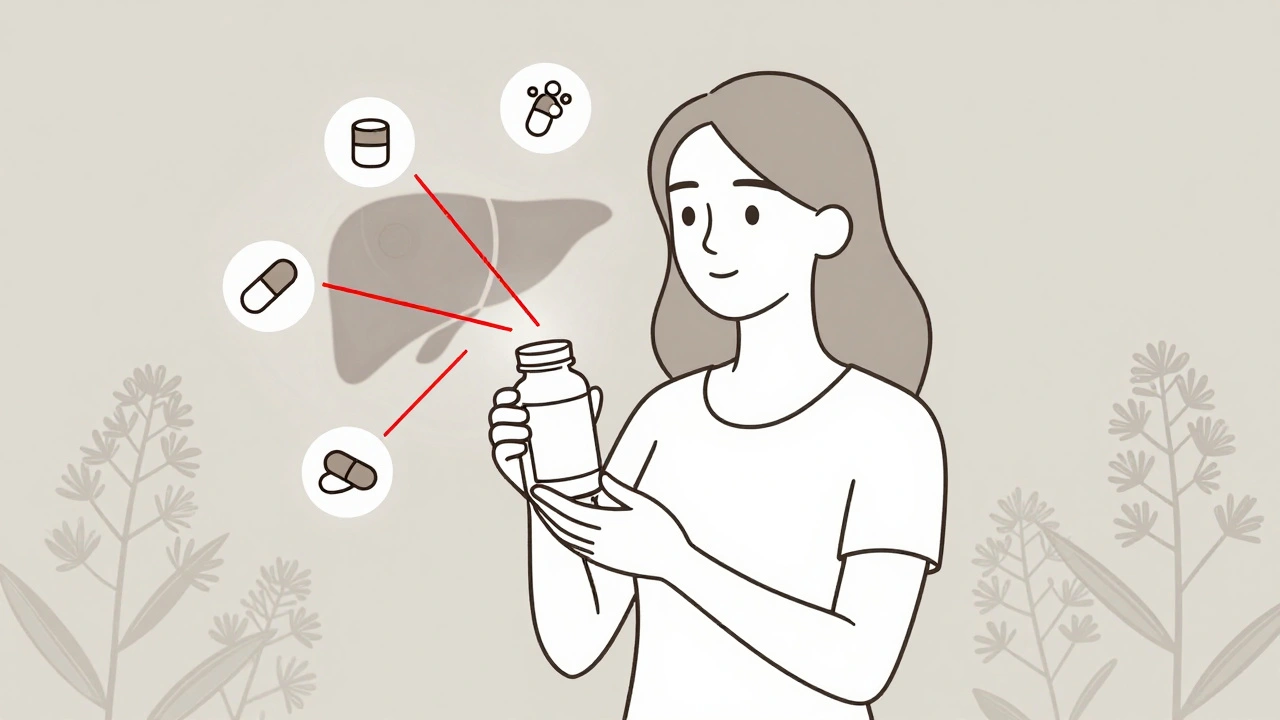
Herbal Supplements Liver Safety: What You Need to Know Before Taking Them
When it comes to herbal supplements liver safety, the use of plant-based products for health benefits without medical oversight. Also known as natural remedies, they’re often seen as harmless because they’re "natural." But that’s a dangerous myth. The liver processes everything you take—vitamins, prescriptions, and yes, even herbal teas and capsules. And not all herbs are gentle. Some can cause serious, even life-threatening liver damage.
Take kava, a root used for anxiety and relaxation. It’s been linked to over 25 cases of severe liver failure worldwide, leading to bans in several countries. Or green tea extract, a popular weight-loss supplement. While drinking green tea is fine, concentrated pills have caused acute liver injury in otherwise healthy people. Then there’s comfrey, an herb sometimes used for joint pain. It contains pyrrolizidine alkaloids—compounds that destroy liver cells. Even topical use can be risky if absorbed through the skin.
What makes this worse is that people often stack these supplements. Someone takes milk thistle for "liver support," adds turmeric for inflammation, throws in a detox tea with senna, and maybe a weight-loss pill with Garcinia cambogia—all without telling their doctor. These combinations don’t just add up; they can interact in unpredictable ways. The liver doesn’t care if something is labeled "organic" or "herbal." It sees chemicals. And if those chemicals overwhelm its ability to process them, it starts to shut down.
Some groups are at higher risk: older adults, people with existing liver disease, those on medications like statins or antidepressants, and anyone taking multiple supplements. A 2020 study in Journal of Hepatology found that herbal supplements were responsible for nearly 20% of all drug-induced liver injury cases in the U.S.—more than acetaminophen in some age groups. And unlike prescription drugs, herbal products aren’t required to prove safety before hitting shelves. The FDA only steps in after someone gets hurt.
You don’t need to avoid all herbs. Milk thistle, for example, has shown promise in protecting the liver in some studies—though even that’s not foolproof. The key is knowing what you’re taking, why you’re taking it, and whether it’s safe for you. If you’re on any medication, have liver issues, or just want to be safe, talk to your doctor before starting anything. Don’t assume "natural" means "safe." And never use herbal supplements as a substitute for medical care.
Below, you’ll find real-world case studies, lab-tested insights, and clear guidance on which supplements to question—and which might actually be worth considering. No hype. No fluff. Just what you need to protect your liver before the next bottle arrives at your door.