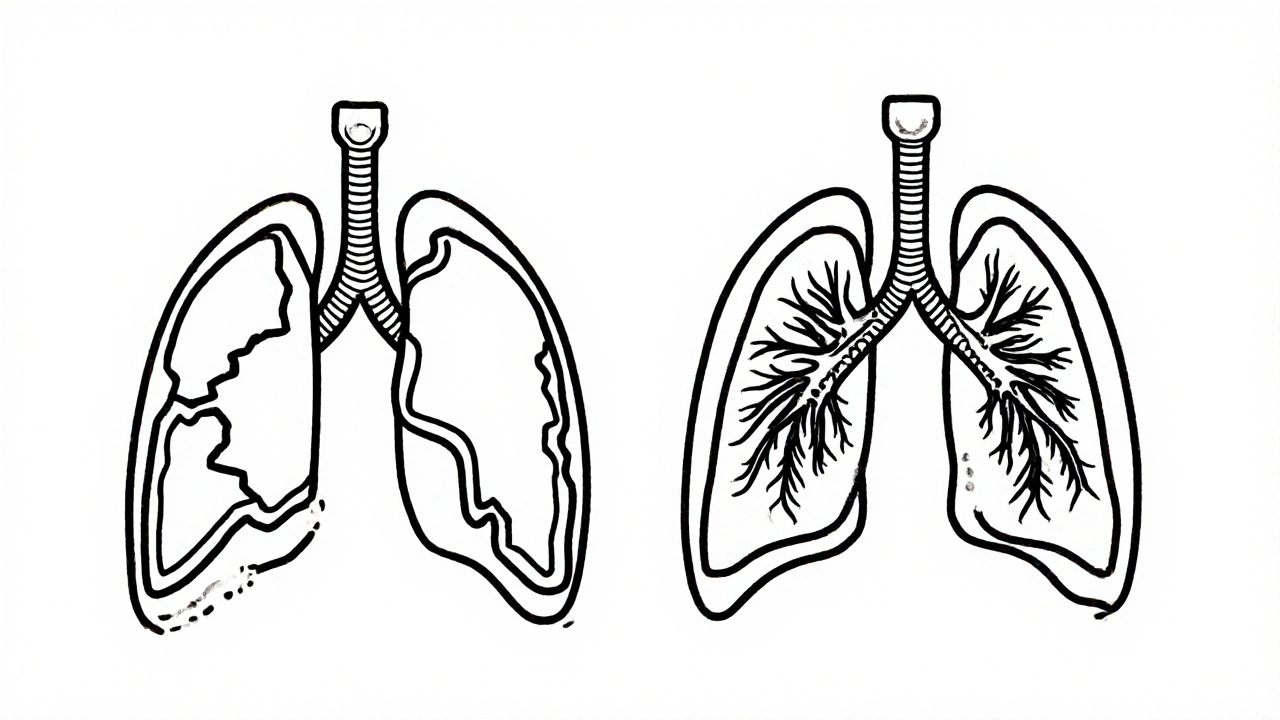
Emphysema: Causes, Symptoms, and What You Can Do
When you have emphysema, a type of chronic lung disease that destroys the air sacs in your lungs, making it harder to breathe. Also known as COPD, it doesn’t go away—but it can be managed if you act early. Most people with emphysema have been smoking for years, but not all. Some develop it from long-term exposure to pollution, chemical fumes, or even secondhand smoke. The damage to your lungs is permanent, but stopping smoking right now can stop it from getting worse.
Emphysema doesn’t hit you all at once. It creeps in. At first, you might just feel winded after climbing stairs or walking fast. Then you notice you’re coughing more, especially in the morning. Your chest feels tight. You’re tired all the time. These aren’t just signs of aging—they’re red flags. Emphysema often shows up with chronic bronchitis, a condition where your airways are swollen and produce too much mucus. Together, they form COPD, the umbrella term for long-term lung diseases that block airflow. Many people don’t realize they have it until their lungs are already badly damaged.
What you do next matters more than you think. Quitting smoking is the single most effective step—no drug or inhaler comes close. Oxygen therapy, pulmonary rehab, and certain medications can help you breathe easier and stay active. But none of it works if you keep exposing your lungs to smoke or toxins. The posts below cover real stories and science-backed advice: how to test for lung damage, what medications actually help, why some people need oxygen at home, and how to protect your lungs even after diagnosis. You’ll find practical tips on managing flare-ups, avoiding hospital visits, and living better with less breath.