
Acne isn’t just a teenage problem. By age 25, nearly 1 in 5 women and 1 in 10 men still deal with breakouts. In Australia, where humidity and sweat can clog pores faster, acne affects people of all ages - not because they’re not washing their face, but because the root causes run deeper than dirt.
What acne really looks like - not just pimples
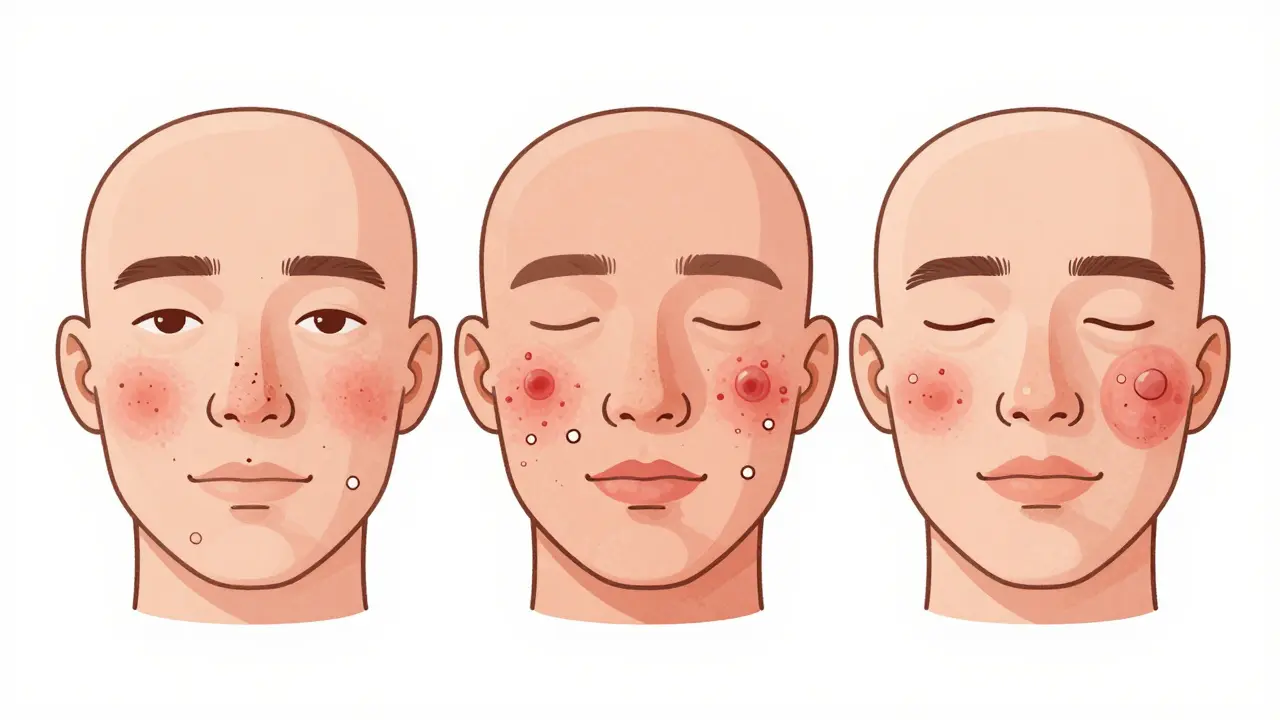
Not all acne is the same. You might think of it as one thing - red bumps and zits - but dermatologists break it into clear categories, each needing different treatment. The three main types are comedonal, inflammatory, and nodule/cystic.
Comedonal acne is the quiet kind. It doesn’t swell or hurt. Instead, you see tiny blackheads on your nose or whiteheads under your chin. These happen when oil and dead skin get stuck in a pore - blackheads form when the pore opens and the plug darkens from air exposure; whiteheads stay closed, trapped under the skin. This type responds well to gentle exfoliation, like salicylic acid or adapalene gel.
Inflammatory acne is the angry kind. Papules - small, red, tender bumps - and pustules - those white-tipped, pus-filled zits - mean your body is fighting infection. The pore wall breaks down, letting bacteria and oil leak into surrounding skin. This is where benzoyl peroxide shines. It kills the bacteria Cutibacterium acnes and reduces swelling. Studies show it cuts acne by 90% in four weeks.
Cystic acne is the worst. These aren’t just big pimples. They’re deep, painful, fluid-filled lumps under the skin. They don’t come to a head. They stay buried, often leaving scars. Hormonal acne - common around the jawline, chin, and neck - often looks like cystic acne. It flares with periods, pregnancy, or stress. It’s not about hygiene. It’s about hormones.
Why you break out - it’s not your diet
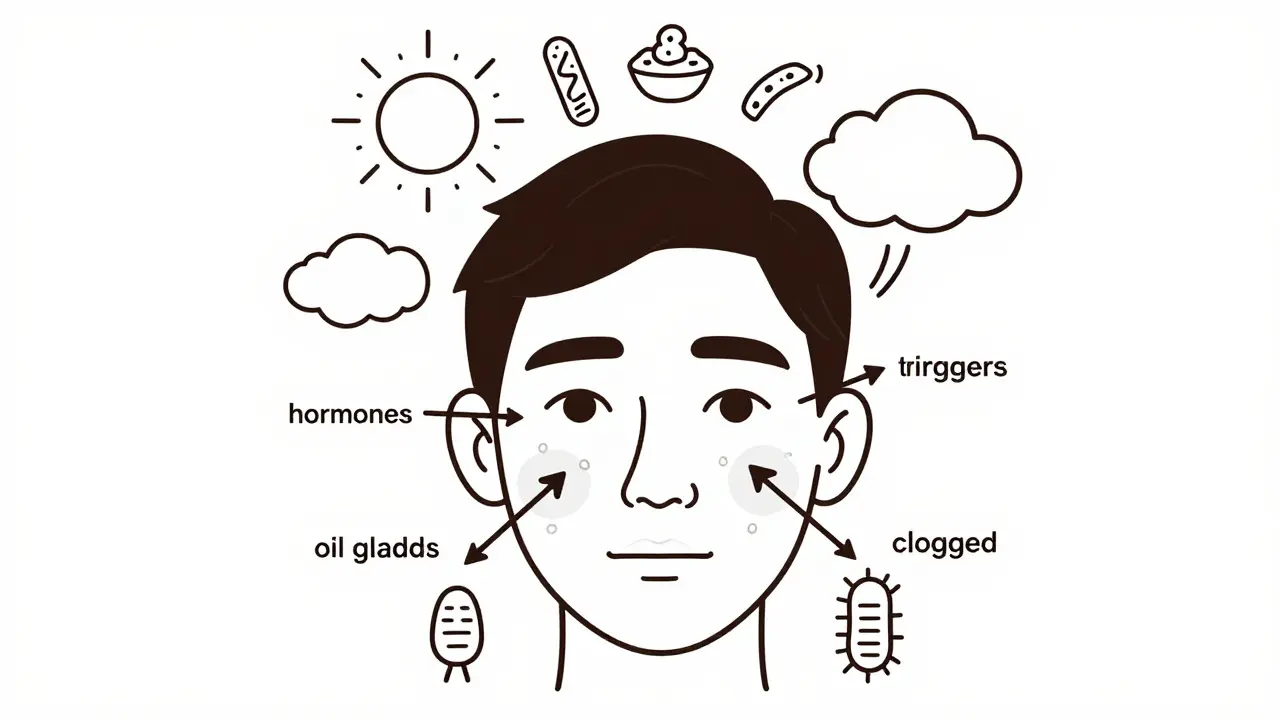
Everyone blames pizza or chocolate. But science says otherwise. Acne starts with four things working together: too much oil, clogged pores, bacteria, and inflammation.
And what triggers it? Hormones. Specifically, androgens. When these rise - during puberty, before your period, or due to stress - your oil glands go into overdrive. That’s why 85% of teens get acne. But it’s not just teens. Adult women with hormonal acne often have normal hormone levels on blood tests. The problem? Their skin is more sensitive to those hormones. Even tiny changes can trigger breakouts.
Insulin plays a role too. High sugar intake spikes insulin, which tells oil glands to make more sebum. That’s why some people break out after eating sugary foods - not because the food itself is bad, but because it changes how their body reacts.
Genetics matter. If both your parents had acne, your risk jumps by 50%. Certain meds can trigger it too - lithium, steroids, some birth control pills. And don’t forget friction. Helmets, tight collars, backpack straps - they can cause mechanical acne on the neck, shoulders, or back.
Stress? Yes. It raises cortisol, which boosts oil production. But it’s rarely the main cause. It’s more like fuel on a fire that’s already burning.
Topical treatments: what actually works
For mild to moderate acne, topical treatments are your first line of defense. They’re cheaper, safer, and easier to start with.
Benzoyl peroxide (2.5-10%) is the gold standard. It kills bacteria, reduces oil, and gently peels off dead skin. You don’t need the strongest version - 2.5% works just as well as 10%, with less irritation. Studies show it clears 90% of acne-causing bacteria in four weeks.
Salicylic acid (0.5-2%) is your friend for blackheads and clogged pores. It’s a beta hydroxy acid that slips into oil and dissolves gunk. La Roche-Posay’s clinical trials found it improves comedones by 60% after eight weeks. Use it daily in a cleanser or toner.
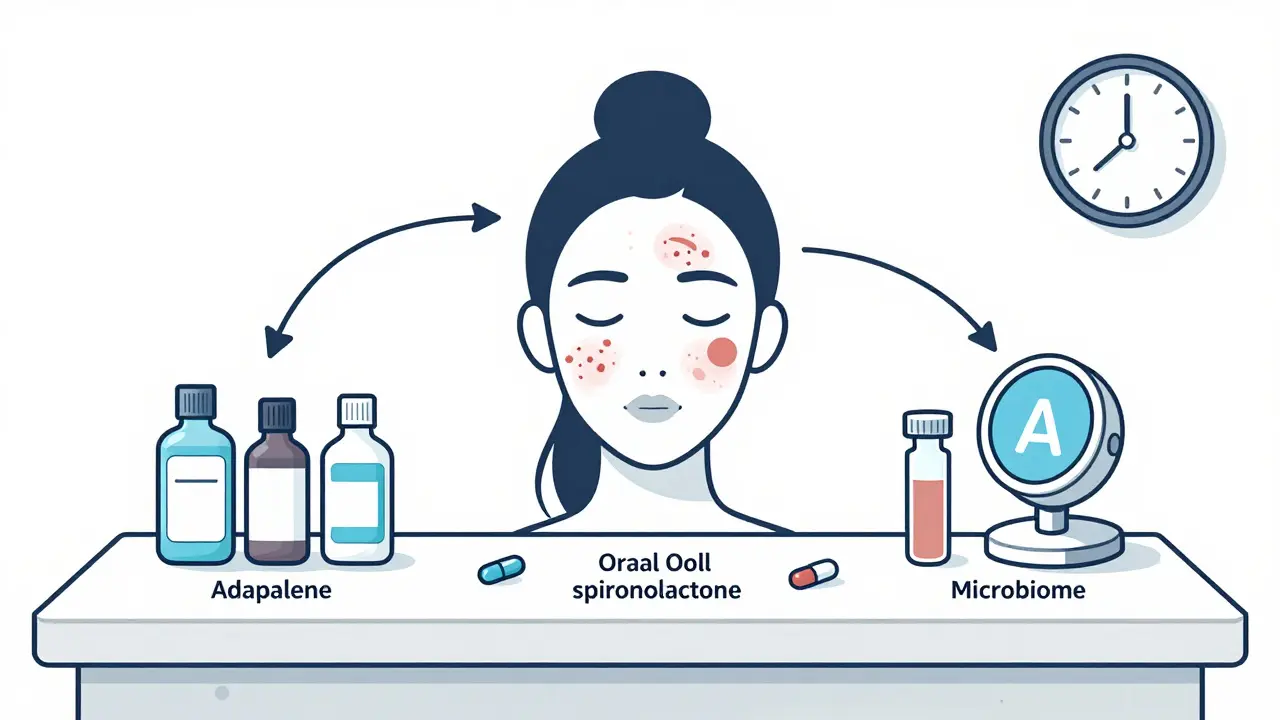
Retinoids like tretinoin or adapalene (Differin) fix the root problem: clogged pores. They make skin cells turn over faster, so they don’t stick together. Adapalene 0.1% is now available over-the-counter. Reddit users with comedonal acne report 78% satisfaction after 12 weeks. But here’s the catch: it takes time. And it can make your skin peel or burn at first. That’s called “purging” - it’s not a reaction, it’s your skin clearing out old gunk. Stick with it for at least eight weeks.
Combination products - like benzoyl peroxide + clindamycin - work better than either alone. They cut inflammatory acne by 65-80%, versus 40-50% with single ingredients. But they require a prescription.
Don’t waste money on tea tree oil. Studies show it’s only 40% as effective as benzoyl peroxide. It might help a few mild spots, but don’t count on it for anything serious.
Oral treatments: when topical isn’t enough
If your acne is moderate to severe - deep, painful, widespread - you need something stronger than cream.
Antibiotics like doxycycline or minocycline reduce inflammation and kill bacteria. They work fast - many see improvement in 4-6 weeks. But here’s the catch: 25% of people develop antibiotic resistance after 3-4 months. That’s why doctors now limit them to 3-4 months max. They’re a bridge, not a long-term fix.
Oral contraceptives (like Yaz or Ortho Tri-Cyclen) help women with hormonal acne. They lower androgen levels. Studies show 50-60% reduction in breakouts after 3-6 months. But they’re not for everyone. Side effects include mood changes, weight gain, and blood clot risks. Talk to your doctor if you’re over 35 or smoke.
Spironolactone is a game-changer for adult women. It blocks androgens at the skin level. In clinical trials, it cuts hormonal acne by 40-60% in three months. Many users on Reddit report 65% improvement. But it can cause dizziness, fatigue, or irregular periods. It’s not FDA-approved for acne - it’s used off-label - but it’s widely trusted by dermatologists.
Isotretinoin (Accutane) is the nuclear option. It shrinks oil glands, reduces bacteria, and stops inflammation. It clears 80-90% of cystic acne. And for 60% of people, it’s permanent. But it’s not simple. You need monthly blood tests. You can’t get pregnant - ever - during and for a month after treatment. Dry skin, nosebleeds, and mood changes are common. But if you’ve tried everything else and still have scars, this is the only thing that can truly reset your skin.
What works best - and what to avoid
There’s no one-size-fits-all. Your treatment should match your acne type.
- Blackheads/whiteheads? Start with adapalene or salicylic acid. Add benzoyl peroxide if you get red bumps.
- Red, inflamed pimples? Benzoyl peroxide + topical antibiotic. If no improvement in 8 weeks, see a dermatologist.
- Deep cysts around jawline? Spironolactone or oral contraceptives for women. Men? Isotretinoin is often the answer.
- Breakouts on chest/back? Oral antibiotics or isotretinoin. Topicals rarely penetrate deep enough.
Avoid these mistakes:
- Over-washing. Scrubbing won’t help - it irritates skin and makes oil production worse.
- Using too many products at once. Layering 5 serums won’t clear acne faster. Pick one treatment, stick with it for 8 weeks.
- Expecting overnight results. Acne doesn’t vanish in a week. It takes 6-12 weeks to see real change.
- Skipping sunscreen. Retinoids and benzoyl peroxide make skin sun-sensitive. Daily SPF 30+ is non-negotiable.
The reality of treatment - patience, not perfection
Most people quit too soon. A Mayo Clinic study found 70% of users stop topical treatments because they don’t see results in two weeks. But acne doesn’t work that way. It’s not a light switch. It’s a slow dimmer.
Purging is normal. If you start retinoids and your face gets worse before it gets better - that’s your skin adjusting. It’s not failing. It’s working.
Cost is a barrier. Isotretinoin and Winlevi (a newer hormonal cream) can cost $600+ a month without insurance. In Australia, PBS subsidies help, but access to dermatologists is still hard. Wait times for public clinics can be 6-8 weeks. Private visits? $200+ per consultation.
What works best? Consistency. People who apply treatment twice daily, every day, see 50% better results than those who skip days. Gentle cleansing. No picking. Sunscreen. And patience.
And remember: early treatment prevents scars. Delay it, and your risk of permanent damage jumps from 15% to 40%.
What’s next - the future of acne care
The acne market is booming. New treatments are emerging. Winlevi (clascoterone), approved in 2020, targets hormones directly at the skin. It’s less harsh than isotretinoin and works for both men and women. Early data shows 60% adherence - better than older topicals.
Companies are now testing microbiome therapies. Instead of killing bacteria, they’re restoring balance. One treatment, ATR-12, is in phase 2 trials and could replace antibiotics within five years.
AI skin scanners are coming. Apps that analyze your face and suggest treatments? They’re already in use. In 2028, they might be standard in clinics.
But for now? Stick with proven science. Don’t chase trends. Your skin doesn’t need a revolution - it needs the right treatment, applied consistently, for long enough to work.

Martin Halpin
Okay but let’s be real - this whole post reads like a pharmaceutical ad disguised as science. Benzoyl peroxide? Retinoids? Spironolactone? You’re telling me the answer to acne is just more chemicals? What about just… stopping washing your face for a week? I did that. My skin went from ‘angry volcano’ to ‘calm lake’ in 4 days. Turns out, your skin’s not a damn sink - it’s a self-regulating ecosystem. We’ve been lied to by dermatology for decades. Stop scrubbing. Stop treating it like a war. Let it breathe. I’m not saying this is science - I’m saying it’s survival.
Eimear Gilroy
Interesting take - I’ve been dealing with hormonal acne since I was 21, and I swear it’s tied to my thyroid. I didn’t even think to get tested until I started reading about how androgens can be elevated even with ‘normal’ blood work. I’ve been on spironolactone for 4 months now, and honestly? My jawline cleared up more than any topical ever did. But I wish someone had told me earlier that it takes 3 months to even notice changes. I almost quit after 6 weeks because I thought it wasn’t working.
Emily Wolff
Salicylic acid? Please. If you’re still using OTC stuff after 25, you’re not trying. Isotretinoin is the only real solution - everything else is just noise. And no, tea tree oil isn’t ‘natural’ - it’s a placebo with a hippie price tag.
Anil bhardwaj
bro i used to have cystic acne on my back so bad i wore hoodies in 40 degree heat. tried everything - benzoyl, tea tree, witch hazel, lemon juice (don’t do that). then i just started showering after sweating, stopped wearing tight shirts, and used a loofah once a week. not magic. just less friction. now i barely think about it. maybe the answer isn’t in a bottle?
lela izzani
Thank you for this. So many people think acne is just ‘bad hygiene’ or ‘eating too much chocolate’ - it’s exhausting. I especially appreciate you pointing out that hormonal acne isn’t about having ‘high hormones’ - it’s about skin sensitivity. I’m 32, have normal labs, and still break out before my period. Spironolactone changed my life. Also - sunscreen. Always. I’ve had 3 years without new scars since I started daily SPF 50. It’s not sexy, but it’s the most important step.
Joanna Reyes
I’ve been on isotretinoin for 7 months now. I started at 22 with cystic acne that left me feeling like I was permanently scarred. I cried every time I looked in the mirror. The side effects? Dry lips, nosebleeds, joint pain - yeah, it sucked. But here’s the thing: after month 4, I saw my first reflection without wanting to turn away. My skin looked… normal. Like, the kind of skin people have in Instagram ads. I’m not saying it’s easy. I’m saying it’s worth it. If you’ve tried everything else and still feel like your face is a battlefield - give it a shot. And yes, you’ll need blood tests. Yes, you’ll need to be on birth control. Yes, it’s expensive. But if you’re willing to do the work, it’s the closest thing to a reset button your skin will ever get.
Stephen Archbold
OMG YES to the purging thing!! I started adapalene and thought I was dying. My face looked like a warzone. I almost threw it out. Then I read that it’s just your skin pushing out all the junk. I stuck with it. 8 weeks later? Smooth AF. Also - stop using ‘acne face washes’ with 12 ingredients. Just use water and a cheap cleanser. I used CeraVe for 3 months and my skin stopped screaming. Also - no picking. I know, I know. But if you pick, you’re just paying for a scar later. I still have one from 2018. It’s my little reminder to chill.
Haley Gumm
Wow. So you’re saying the real problem is that people are too lazy to wait 8 weeks? And that the solution is just… more chemicals? You forgot to mention that 90% of people who try isotretinoin end up with depression, and that spironolactone can cause breast growth in men. This isn’t skincare advice - it’s a marketing brochure for Big Derm. And you call tea tree oil a placebo? Have you tried it? It’s literally the only thing that worked for me. But sure, let’s ignore the 30 years of anecdotal evidence and go with the lab studies. Typical.