
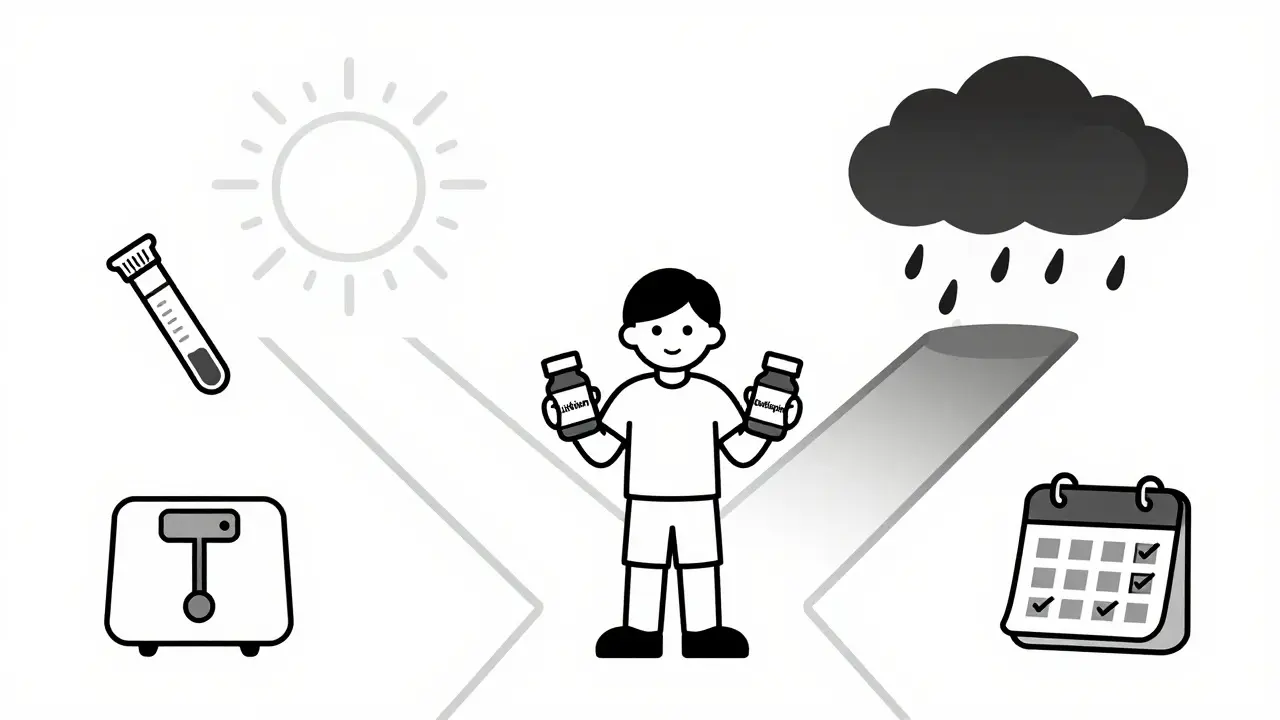
Living with bipolar disorder means navigating extreme mood swings - from crushing depression to overwhelming mania - and finding the right medication can feel like searching for a needle in a haystack. For many, the path to stability isn’t about one magic pill, but a careful balance between mood stabilizers and antipsychotics, each with their own benefits, risks, and real-world trade-offs. This isn’t theoretical. It’s daily life. People are quitting meds because of weight gain, constant thirst, or brain fog. Others stay on them because, despite the side effects, they finally feel like themselves again.
What Are Mood Stabilizers, and Why Do They Matter?
Mood stabilizers are the oldest and most trusted tools for managing bipolar disorder. They don’t just calm mania - they prevent it from coming back. Lithium, approved by the FDA in 1970, remains the gold standard. It’s not flashy, but it works. Studies show it cuts suicide risk by 80% compared to no treatment. That’s not a small number. It’s life-changing.Other mood stabilizers include valproate, carbamazepine, and lamotrigine. Each has a different profile. Lithium and valproate are strong against mania. Lamotrigine shines in treating depression, with a 47% response rate - nearly double placebo. But it comes with a scary catch: a 1 in 10 chance of developing a serious skin rash, especially if the dose is raised too fast.
Lithium needs blood tests. Regular ones. When you start, you might need a test every week. Once stable, every two to three months. The sweet spot? Blood levels between 0.6 and 1.0 mmol/L. Too low, and it doesn’t work. Too high - above 1.2 mmol/L - and you risk toxicity. Symptoms? Slurred speech, shaking, loss of coordination. That’s not just uncomfortable. It’s dangerous.
Side effects are common. About 30-40% of people on lithium drink way more water than usual. Hands shake. Weight goes up - 10 to 15 pounds in the first year is typical. Nausea hits 20-30%. Many users on Reddit say they felt like their body was betraying them. One person wrote: "I was drinking three liters of water a day and still felt dehydrated." But another said: "After three failed meds, lithium finally stopped my weekly suicidal thoughts. The weight gain? Worth it."
Antipsychotics: Faster Relief, Heavier Costs
Atypical antipsychotics like quetiapine (Seroquel), olanzapine, and aripiprazole are now used as much as mood stabilizers - sometimes more. Why? They work fast. Quetiapine can start lifting depression in as little as seven days. Lithium? Often takes two weeks or more.They’re also powerful against acute mania. Risperidone, for example, helps 68% of people within three weeks. That’s why they’re often the first choice in the hospital or during a crisis.
But the price is steep. Weight gain is the biggest complaint. Olanzapine can add 4.6 kilograms in just six weeks. Quetiapine users on PatientsLikeMe report an average gain of 22 pounds. Metabolic problems follow - 20-30% higher risk of type 2 diabetes with olanzapine. Sedation hits 60-70% of quetiapine users. Some say they feel like they’re walking through syrup.
And then there’s akathisia - that restless, can’t-sit-still feeling. It affects 15-20% of people on antipsychotics. It’s not just annoying. It can make people feel worse than before they started the med. One Reddit user described it as "my body screaming to move, but my brain stuck in place."
Combining Meds: When Two Are Better Than One
Sometimes, one drug isn’t enough. That’s where combination therapy comes in - a mood stabilizer plus an antipsychotic. This approach works for treatment-resistant cases. Studies show a 70% response rate when the two are paired. But side effects pile up. You might get lithium’s tremors and quetiapine’s weight gain. That’s a double burden.Many people end up on this combo after trying single meds and failing. It’s not the first step. It’s the next step when things don’t improve. The trade-off? Better control - but more side effects. About 25-30% more.
Doctors now use tools to make this safer. They check waist size, blood sugar, and cholesterol every three months. Why? Because antipsychotics can quietly wreck your metabolism. A waist over 40 inches for men, or 35 for women, signals trouble. That’s not about looks - it’s about heart disease and diabetes risk.

Why People Stop Taking Their Meds
Here’s the hard truth: about 40% of people with bipolar disorder stop taking their meds within a year. The National Alliance on Mental Illness found that 45% of 1,200 surveyed patients quit because of side effects. The top reasons? Weight gain (78%), brain fog (65%), and sexual problems (52%).It’s not laziness. It’s not weakness. It’s survival. If you’re constantly tired, gaining weight, or feeling numb, it’s easy to think: "Is this really living?"
But quitting cold turkey is dangerous. It can trigger a rapid return of mania or depression. Some people go from stable to suicidal in days. That’s why tapering under a doctor’s care is non-negotiable.
Some strategies help. Taking lithium with food reduces nausea. Splitting doses - like 300mg twice a day instead of 600mg once - can ease tremors. Metformin, a diabetes drug, is now commonly prescribed alongside antipsychotics to fight weight gain. One user wrote: "I gained 30 pounds on olanzapine. My doctor added metformin. I lost 18 pounds in six months. It didn’t fix everything, but it gave me back some control."
What’s New in 2026?
The field is changing. In 2023, the FDA approved lumateperone (Caplyta) for bipolar depression. Unlike quetiapine, it causes only 0.8kg of weight gain in six weeks - barely a blip compared to 3.5kg with older drugs. That’s huge for people terrified of gaining weight.Long-acting injectables are gaining traction. Aripiprazole (Abilify Maintena) is given as a monthly shot. No daily pills. For people who forget meds or struggle with adherence, this can be a game-changer.
Genetic testing is becoming more common. Tests like Genomind’s Precision Medicine Alliance look at how your body processes meds - especially genes like CYP2D6 and CYP2C19. These affect how fast you break down lithium, antipsychotics, and antidepressants. If you’re a slow metabolizer, standard doses can build up to toxic levels. Testing can cut trial-and-error time by 30%.
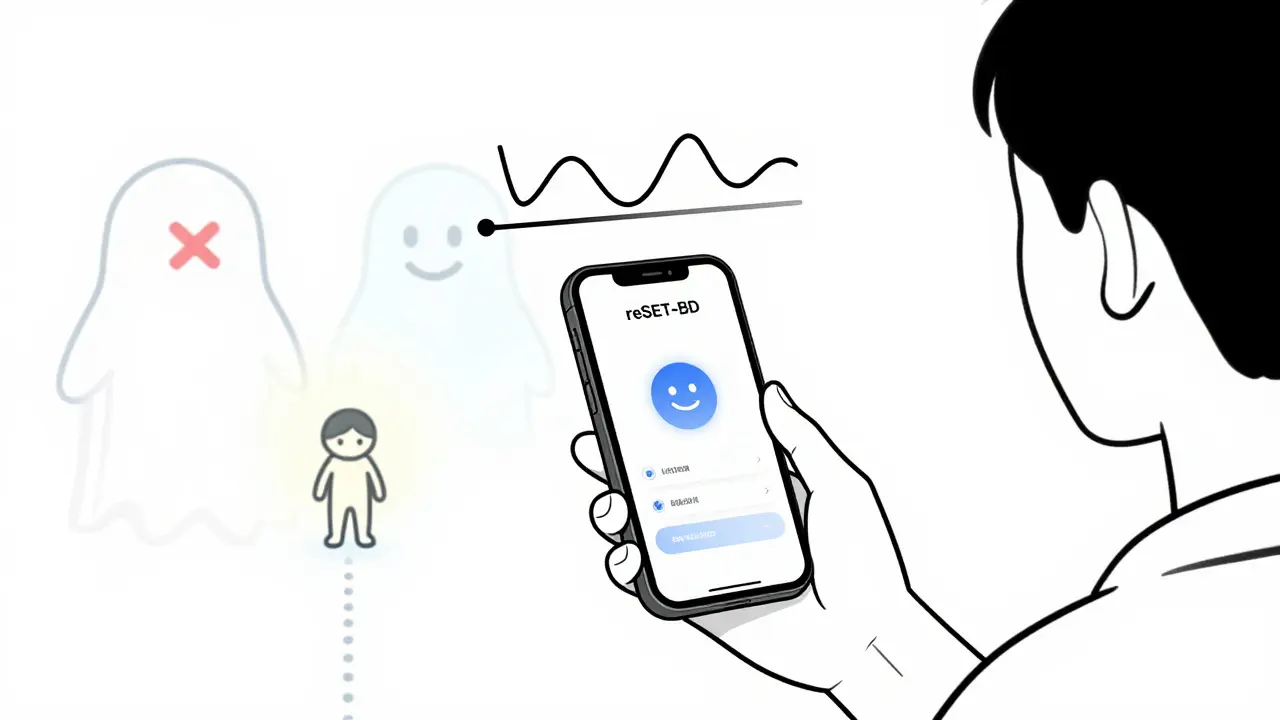
Even digital tools are stepping in. reSET-BD, a smartphone app approved by the FDA, helps track mood, sleep, and medication. In trials, it reduced relapse by 22%. It’s not a replacement for meds - but it’s a powerful ally.
What About Antidepressants?
This is one of the most debated topics in bipolar care. Antidepressants like fluoxetine (Prozac) can lift depression - 50.7% response rate. But they carry a 10-15% risk of triggering mania. Some experts, like Dr. Gary Sachs from Harvard, say they should be avoided. Others, like Dr. David Miklowitz at UCLA, say they’re okay if paired with a mood stabilizer.The safest approach? Only use them if depression is severe and hasn’t responded to mood stabilizers or antipsychotics alone. And never alone. Always with a mood stabilizer. Even then, monitor closely.
What Works Best - And For Whom?
There’s no one-size-fits-all. But here’s a rough guide based on real outcomes:- Lithium: Best for long-term suicide prevention, mania control, and stability. Worst for kidneys, thyroid, and weight gain. Ideal for people who can handle regular blood tests and want the most proven protection.
- Lamotrigine: Best for depression with minimal weight gain. Worst for rash risk. Ideal for people who struggle with low mood and hate gaining weight.
- Quetiapine: Fastest for depression and mania. Worst for weight gain and sleepiness. Ideal for acute episodes or people who need quick relief.
- Lumateperone: Newer option with minimal metabolic side effects. Best for people who’ve had bad reactions to older antipsychotics.
- Combination therapy: Best for treatment-resistant cases. Worst for side effect overload. Only when single meds fail.
It’s not about picking the "best" drug. It’s about picking the right one for you - your body, your life, your goals.
How to Stay on Track
Managing bipolar meds isn’t a one-time decision. It’s a lifelong conversation - with your doctor, your body, and your mind.- Get blood tests regularly - don’t skip them, even if you feel fine.
- Track your weight, waist size, and mood daily. Apps help. So do paper journals.
- Never stop cold turkey. Always taper with medical help.
- Speak up about side effects. If you’re tired, bloated, or numb, your doctor needs to know.
- Ask about alternatives. There’s always another option - even if it’s not the first one you tried.
Success isn’t about being perfect. It’s about staying in the game. One person wrote: "I’ve tried five meds. I’m on lithium now. I’m heavier. I’m thirsty. But I haven’t been hospitalized in four years. That’s my win."
Can you manage bipolar disorder with just one medication?
Yes, many people do. Lithium, lamotrigine, or quetiapine alone can work well for some. But if one drug doesn’t fully control symptoms - especially if mania and depression keep returning - doctors often add a second. Combination therapy is common for treatment-resistant cases, but it increases side effects. The goal is the fewest meds needed to stay stable.
How long does it take for mood stabilizers to work?
Lithium and valproate usually take 1-3 weeks to start working fully. Lamotrigine is slower - it can take 6-12 weeks to reach full effect, which is why it’s dosed very gradually. Antipsychotics like quetiapine can show results in as little as 7 days for depression. Speed matters, but long-term protection is what matters most.
Is lithium dangerous? Should I be scared of it?
Lithium is safe when monitored. The risks come from not checking blood levels. At therapeutic doses (0.6-1.0 mmol/L), it’s one of the most effective drugs for preventing suicide. Toxicity happens only when levels go above 1.2 mmol/L - usually due to dehydration, kidney issues, or drug interactions. Weekly blood tests at first, then every few months, make it very safe. Most people tolerate it fine with proper care.
Do antipsychotics make you gain weight permanently?
Not always. Weight gain is common, especially with olanzapine and quetiapine, but it’s not inevitable. Many people stabilize after 3-6 months. Lifestyle changes - diet, exercise, and sometimes metformin - can reverse it. Newer antipsychotics like lumateperone and cariprazine cause far less weight gain. If weight is a major concern, talk to your doctor about switching to a lower-risk option.
Can I stop taking meds if I feel fine?
Feeling fine doesn’t mean you’re cured. Bipolar disorder is a chronic condition. Stopping meds increases relapse risk by 70% within a year. Even if you’ve been stable for years, stopping suddenly can trigger a severe episode. If you want to reduce or stop, do it slowly, with your doctor’s help - never on your own.
What should I do if I experience side effects?
Write them down. Note when they started, how bad they are, and what makes them better or worse. Bring this to your doctor. Don’t wait until you’re miserable. Small changes - like splitting a dose, adding metformin, or switching to a different drug - can make a huge difference. Your feedback is critical to finding the right balance.
Managing bipolar disorder isn’t about perfection. It’s about persistence. The right mix of mood stabilizers and antipsychotics can give you back your life - even if it comes with some trade-offs. The goal isn’t to feel nothing. It’s to feel enough - to be present, to connect, to live without the terror of the next crash. And for many, that’s possible.




Sonal Guha
Lithium works but the thirst is unreal
Jessica Bnouzalim
I was on quetiapine for 18 months and gained 40 pounds-I felt like a walking doughnut. Then I switched to lumateperone and lost 22 in six months without even trying. My therapist cried when I told her. I’m not ‘cured’ but I’m alive again. Please, if you’re struggling with weight gain-ask for alternatives. You deserve more than just surviving.
laura manning
It is imperative to underscore that the pharmacological management of bipolar disorder necessitates rigorous adherence to therapeutic drug monitoring protocols, particularly with lithium, wherein serum concentrations exceeding 1.2 mmol/L are unequivocally associated with neurotoxicity. Furthermore, the metabolic syndrome risk profile associated with second-generation antipsychotics mandates quarterly assessment of fasting glucose, lipid panel, and waist circumference. Failure to implement such protocols constitutes a clinically significant deviation from established standards of care.
Sumit Sharma
Stop romanticizing noncompliance. 40% quit meds? That’s not ‘survival’-that’s self-sabotage wrapped in victimhood. You want stability? You show up for bloodwork. You track your weight. You don’t blame the drug when you skip the labs and then wonder why you’re in the ER again. This isn’t a Netflix doc-it’s medicine. And medicine demands discipline.
Jay Powers
I’ve been on lithium for 11 years. Tremors? Yeah. Thirst? Constant. But I’ve held the same job. Raised two kids. Went on hikes with my niece. I didn’t feel like myself until I found the right dose. It’s not perfect. But it’s mine. And if you’re scared of side effects? Talk to your doc. Don’t quit. Just ask. There’s always another option. You’re not alone in this.
Lawrence Jung
They say bipolar is a disease but what if it’s just a different frequency of being? We’re not broken-we’re tuned too loud. The meds mute us. Maybe the real question isn’t how to manage the meds but whether we should be muted at all. What if the storm is the signal? I don’t know. I’m just asking.
Alice Elanora Shepherd
For anyone considering lamotrigine: please, please, please-do not increase your dose faster than your doctor recommends. I developed SJS at 100mg. I spent three weeks in the ICU. I survived. But my skin still peels in the sun. The risk is real. Slow titration isn’t boring-it’s life-saving.
Christina Widodo
Does anyone else use reSET-BD? I’ve been on it for 3 months and it actually helped me notice patterns I missed-like how my sleep drops 2 days before a low. My doc said it’s like having a second brain. Also, metformin + olanzapine? I lost 15 lbs. No joke. It’s not magic, but it’s a tool. Try it.
Prachi Chauhan
My mom took lithium for 30 years. She said it felt like her brain stopped screaming. But she also said the worst part wasn’t the shakes or the weight-it was the loneliness. People didn’t get why she drank so much water. Why she was always tired. Why she couldn’t just ‘be happy’. The meds fixed the mood swings. But nobody fixed the isolation. That’s the real cost.
Katherine Carlock
Just wanted to say thank you for writing this. I’ve been on aripiprazole injection for 8 months. Monthly shot. No pills. No forgetting. I still get tired sometimes. But I haven’t had a manic episode since I started. I’m not ‘fixed’. But I’m here. And that’s enough for today.