

Living with a transplanted organ is a victory, but the journey doesn't end at surgery. Every single day, you are navigating a tightrope walk between preventing rejection and avoiding toxic side effects. Many people think the hard part is getting the surgery, but managing Immunosuppressants is where the real work begins. These are powerful drugs that slow down your immune system to stop it from attacking the new organ. While they save lives, they come with significant risks that require constant vigilance.
You need to understand that these medications alter how your body defends itself against everything from viruses to bacteria. This guide breaks down the safety essentials you need to know right now. We aren't going to sugarcoat the challenges, but we will give you clear information to help you stay safe and protect your graft.
Understanding What Immunosuppressants Do
Before you worry about side effects, it helps to grasp why you are taking them at all. Your immune system is designed to identify "self" versus "non-self." When you receive a new heart, kidney, or liver, your body sees it as an invader, similar to a virus. Without intervention, your immune cells would launch a full-scale attack, destroying the new tissue.
Graft Rejection is the process where the recipient's immune system attacks the transplanted organ, leading to potential failure. Historically, before modern drugs, acute rejection occurred in about 80% of cases. Today, thanks to combination therapy protocols, that number has dropped below 15%. However, chronic rejection remains a threat years down the road.The goal isn't just to stop rejection; it's to preserve your overall health. Doctors aim for a state called tolerance, though true tolerance-where your body accepts the organ without drugs-is still rare. Most patients stay on maintenance therapy indefinitely. This involves balancing three competing goals: keeping the organ safe, avoiding severe infections, and minimizing long-term damage like diabetes or kidney issues caused by the drugs themselves.
Major Drug Classes and Their Safety Profiles
You will likely encounter several classes of medications, each working differently and carrying unique risks. Knowing which class you are on is crucial because side effects vary significantly.
Calcineurin Inhibitors are the backbone of most regimens. Cyclosporine was the pioneer here, revolutionizing transplant success rates starting in the 1980s. Alongside it sits Tacrolimus, which is currently the preferred choice in many centers due to its potency.
While effective, these drugs stress your kidneys. Approximately 30% to 50% of patients develop some form of nephrotoxicity. You might also see changes in electrolytes, such as low magnesium levels or high potassium. Cancer risk is another major concern; these medications increase malignancy risk by two to four times compared to the general population. Regular monitoring of kidney function is non-negotiable.
| Class | Primary Risk | Common Side Effects |
|---|---|---|
| Calcineurin Inhibitors | Kidney Toxicity | Hypertension, Nephrotoxicity |
| Corticosteroids | Bone Loss | Weight Gain, Diabetes |
| mTOR Inhibitors | Wound Healing | Pneumonitis, High Cholesterol |
| Antiproliferatives | Blood Counts | Diarrhea, Neutropenia |
Then there are Corticosteroids like prednisone. While excellent at suppressing inflammation, long-term use affects roughly 10-40% of recipients with new-onset diabetes. Bone density loss is also common, occurring in nearly half of long-term users. You may notice physical changes like moon face or buffalo hump, which signal the dosage might need adjustment.
Another category includes Antiproliferative Agents such as mycophenolate mofetil. These block cell division to reduce immune response. The downside is gastrointestinal distress. Up to 50% of patients report anorexia, abdominal pain, or diarrhea. Low white blood cell counts (neutropenia) can happen in 10-20% of cases, making you vulnerable to serious bacterial infections.
Finally, mTOR inhibitors like sirolimus and everolimus work by blocking a different pathway entirely. They are less harsh on kidneys but carry black box warnings for delayed wound healing and lung inflammation (pneumonitis). Everolimus specifically has warnings regarding kidney thrombosis within the first month post-transplant. If you are early in your transplant journey, doctors avoid these due to wound healing concerns.
Adherence: The Hidden Danger
Perhaps the biggest risk to your graft isn't the drug toxicity-it's missing doses. Studies show that over half of renal transplant patients are classified as nonadherent at some point. About 25% miss doses entirely, while others delay them. This behavior directly correlates with higher rejection rates.
For heart and lung recipients, the window for error is razor-thin. Heart grafts are at highest risk for rapid rejection, sometimes happening within days. A missed dose today could trigger an acute event tomorrow. Nonadherence increases the risk of coronary artery disease in transplants by 3.5-fold. It creates a false sense of security; you feel fine, so you skip pills, but your immune system is quietly preparing an assault.
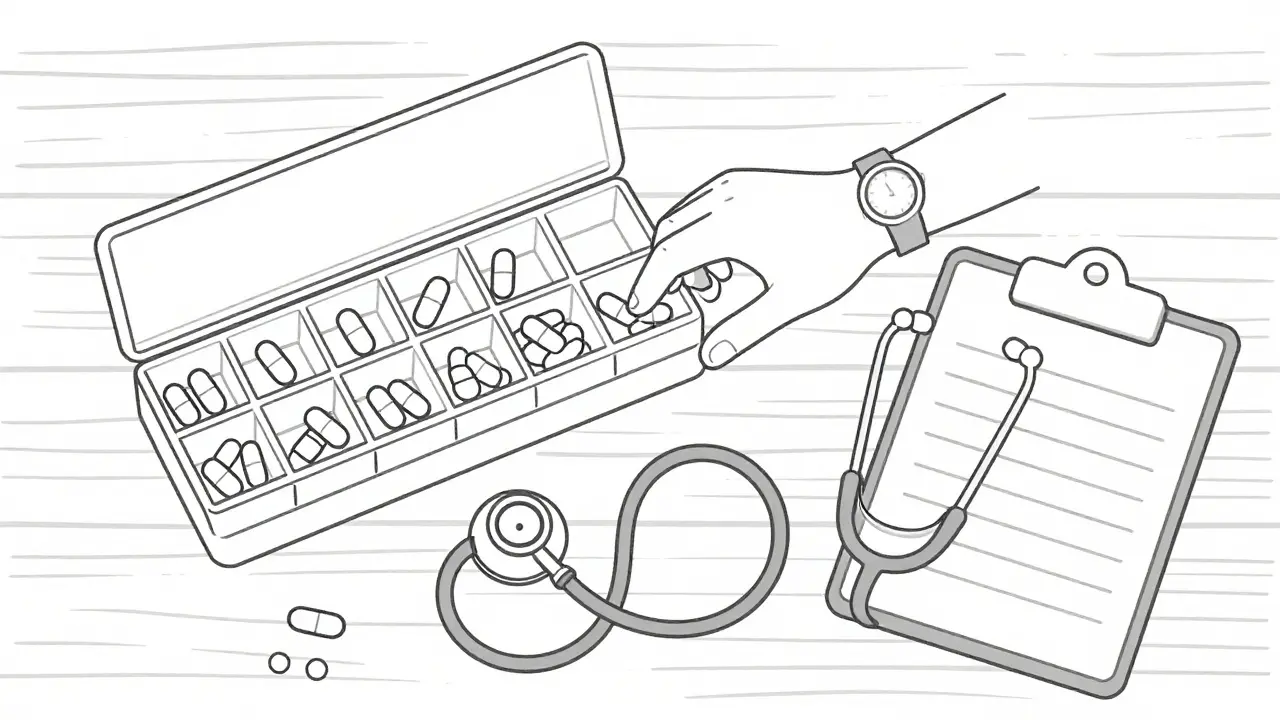
Why do people skip doses? Often it's the complexity. Complex schedules cited by 40% of nonadherent patients lead to confusion. Cost is another barrier affecting 25%, especially for those with out-of-pocket expenses. Simple strategies like once-daily dosing formulations (available for tacrolimus) can improve adherence rates by 15-25%. Using mobile apps or setting alarms provides reminders that can be lifesaving.
Infection Control and Prophylaxis
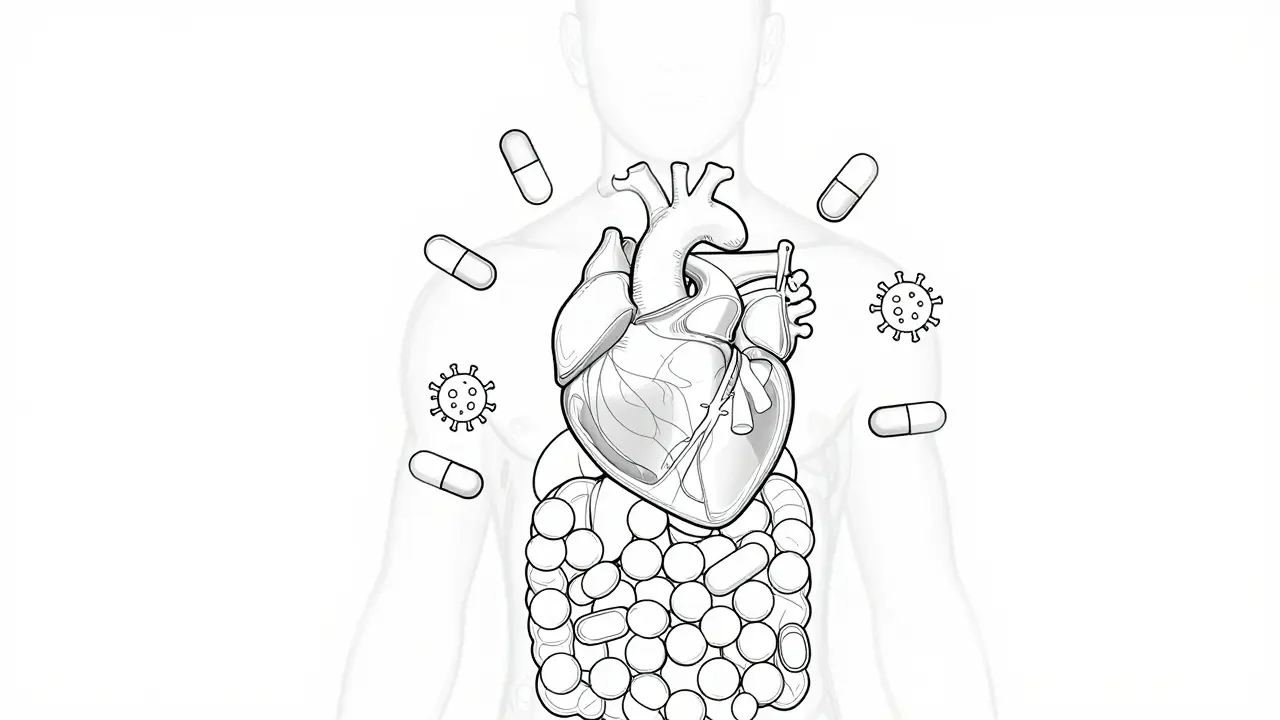
Since these drugs lower your immune defenses, you become a prime target for pathogens that healthy people ignore. One critical pathogen is cytomegalovirus (CMV). It affects 30-70% of seronegative recipients who receive organs from seropositive donors if no prophylaxis is used. This viral infection can cause fever, fatigue, and severe complications in the lungs or gut.
Standard care usually involves antimicrobial prophylaxis for the first 3-6 months. This prevents opportunistic fungal and bacterial infections. However, you must extend this protection into your daily habits. Hand washing is the most effective tool you have. Wearing masks in crowded places during flu season is smart medicine. Avoid people with active chickenpox or cold sores, as their viruses can be fatal in your compromised state.
Monitoring and Dose Adjustments
Your medication levels need to be precise. Too little, and you reject the organ. Too much, and you damage your own kidneys or pancreas. Physicians generally decrease doses over time, moving from 3-4 meds initially to 2-3 after the first year.
Blood draws check the concentration of drugs in your serum. For tacrolimus, target ranges depend heavily on how far post-surgery you are. Early on, targets are higher. As time passes, they drop. Never adjust your dose yourself based on how you feel. Symptoms like tremors or nausea could mean levels are high, while feeling "normal" might hide rejection. Regular follow-ups allow your doctor to make empirical adjustments safely.
Long-Term Health Outlook
Lifelong management is the reality. Quality-adjusted life years (QALYs) for transplant recipients are significantly higher than dialysis patients (0.65 vs 0.53), showing the treatment works. Yet, life expectancy still lags behind the general population due to these medication side effects.
The search continues for newer drugs that promote tolerance without toxicity. Some centers are now using biomarkers to tailor therapy, reducing CNI exposure by up to 50% in low-risk patients. This personalized approach minimizes long-term risks while maintaining protection. Until a perfect solution exists, sticking to your regimen is your best defense.
Frequently Asked Questions
Can I stop taking immunosuppressants after one year?
No, discontinuing immunosuppression is rarely recommended even after one year. Stopping abruptly usually leads to acute rejection. Maintenance therapy typically requires 2-3 medications permanently. Only if the organ fails completely does discontinuation become reasonable, as preventing rejection is no longer the goal.
Do I need to watch what I eat with these medications?
Yes, diet matters significantly. Grapefruit juice interacts with cyclosporine and tacrolimus, raising drug levels to dangerous heights. St. John's wort lowers levels dangerously. You should also limit sodium due to hypertension risks from calcineurin inhibitors and monitor sugar intake if on corticosteroids.
What symptoms indicate a problem with my medication?
Watch for swelling, sudden weight gain, shortness of breath, or changes in urine output. Fever can signal infection, while tremors suggest drug toxicity. If you experience severe diarrhea, muscle weakness, or confusion, contact your specialist immediately.
Is travel allowed with my transplant?
Travel is possible but risky. You must pack medication in your carry-on and check local water safety standards to prevent GI infections. Always know where the nearest transplant center is in case of emergency rejection or illness.
How does age affect drug choices?
Older patients may tolerate lower doses of steroids due to osteoporosis risks. Younger recipients might need stronger regimens to prevent rejection over decades. Pediatric dosing differs significantly from adults, focusing on growth and bone development impacts.


Poppy Jackson
The risk is so high that it terrifies me sometimes
But we must stay vigilant every single day
Living with this fear is heavy on my heart constantly
Philip Wynkoop
Keep the meds on time :)
Tommy Nguyen
I agree totally with that sentiment
Positive vibes help us get through the tough days
Just keep moving forward with hope
Sabrina Herciu
It is crucial to understand the pharmacokinetics involved in these regimens; many patients fail to grasp the gravity of therapeutic drug monitoring.
Tacrolimus levels fluctuate wildly with minor dietary changes alone; grapefruit interactions remain the most commonly cited oversight in clinical settings.
We see this pattern repeatedly during our annual review meetings with fellows regarding patient safety protocols.
The renal clearance rates drop precipitously when hydration levels are low during hot summer seasons.
Patients often neglect the importance of consistent timing in their administration schedules throughout the week.
A deviation of even one hour can alter serum concentrations significantly enough to cause toxicity.
Nephrotoxicity is not always reversible once the glomerular filtration rate declines below normal thresholds.
Long term bone density scans are mandatory for everyone on corticosteroids regardless of age.
Osteoporosis fractures occur far too frequently in the elderly population specifically due to drug usage.
We cannot ignore the subtle signs of rejection that present without fever spikes or pain.
Subclinical rejections are dangerous because they progress silently until organ failure occurs suddenly.
Adherence tracking apps show promise in improving compliance rates among young adult demographics effectively.
Regular communication with your transplant coordinator remains the single most effective tool available for survival.
Always consult your team before making any changes to your daily intake schedule.
Medical oversight prevents unnecessary complications in the long run for everyone.
gina macabuhay
You people act like you do not know anything about basic health management.
Stop being lazy with your prescribed medications.
If you want to live, then take the pill as instructed.
Aaron Olney
I realy hope people read the part about wound healing
Some doctors dont tell you enought about risks
Rachael Hammond
i thnk its good u shared this info
grape fruit makes me worry cos i drink juice
Eva Maes
The nuances of immunosuppressive therapy are often glossed over by laypeople.
One must appreciate the intricate balance between graft survival and host defense mechanisms.
Our current pharmaceutical landscape offers a smorgasbord of options with varying toxicities.
Malignancy risks increase substantially compared to the general demographic pool.
It is fascinating how the immune system perceives foreign tissue as an imminent threat.
The concept of tolerance remains elusive despite decades of rigorous research efforts.
Maintenance therapy dictates the rhythm of life for thousands of recipients globally.
Chronic rejection manifests slowly yet inexorably over many years of exposure.
Bioavailability shifts dramatically depending on individual metabolic enzyme activity levels.
Monitoring blood counts is non-negotiable for preventing severe neutropenia episodes.
Jeannette Kwiatkowski Kwiatkowski
Clearly written for those who lack fundamental biological education.
I suppose we must cater to the lowest common denominator in public discourse.
However, the information holds merit for the uneducated masses.
Devon Riley
This guide really helps families understand the challenges 😊
Being supportive is key for loved ones 🙏
Sophie Hallam
Safety precautions are vital for long term success
We should respect the medical boundaries set by professionals
Nice summary of the critical points