Tolvaptan: What It Is, How It Works, and What You Need to Know About Side Effects and Interactions
When your blood sodium drops too low—a condition called hyponatremia, a dangerous imbalance of sodium in the blood that can cause confusion, seizures, or coma—doctors sometimes turn to tolvaptan, a selective vasopressin V2 receptor antagonist that helps your kidneys flush out excess water without losing sodium. Unlike diuretics that strip away both water and salt, tolvaptan targets only the water, making it unique for treating conditions like SIADH or heart failure where sodium levels are stubbornly low. It’s not a first-line fix, but when other options fail or aren’t safe, it can be a lifesaver.
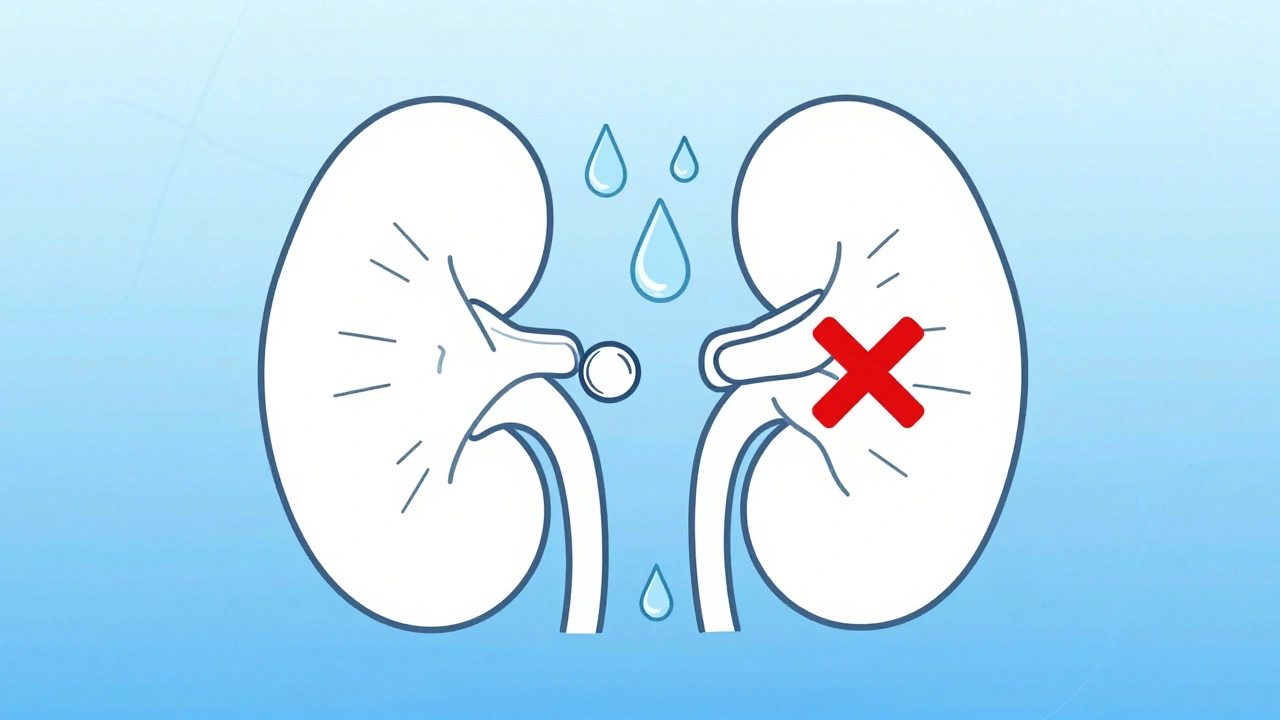
Tolvaptan works by blocking the action of antidiuretic hormone (ADH), a hormone that tells your kidneys to hold onto water. When ADH is overactive—common in people with certain cancers, brain injuries, or chronic heart issues—it causes your body to retain too much water, diluting your sodium. Tolvaptan shuts that signal down, letting your body release extra fluid through urine. That’s why it’s used in autosomal dominant polycystic kidney disease (ADPKD), a genetic disorder where fluid-filled cysts slowly destroy kidney tissue. In ADPKD, tolvaptan slows cyst growth by reducing the fluid buildup inside them, helping preserve kidney function longer.
But it’s not without risks. Tolvaptan can cause your sodium to rise too fast, leading to a rare but serious brain condition called osmotic demyelination syndrome. That’s why doctors start with low doses and monitor blood levels closely. It also increases thirst and urination—sometimes so much that people get dehydrated if they don’t drink enough. And because it’s processed by the liver, it can interact badly with other drugs like statins, certain antifungals, or even grapefruit juice. If you’re on multiple meds, your pharmacist should check for hidden clashes.
People using tolvaptan often need regular blood tests to track sodium, liver enzymes, and kidney function. It’s not something you take long-term without supervision. And while it’s FDA-approved for specific uses, some doctors prescribe it off-label for other fluid balance issues. The key is knowing when it helps—and when it might do more harm than good. Below, you’ll find real-world insights from patients and clinicians on how to use it safely, spot early warning signs, and avoid dangerous mistakes with other medications.