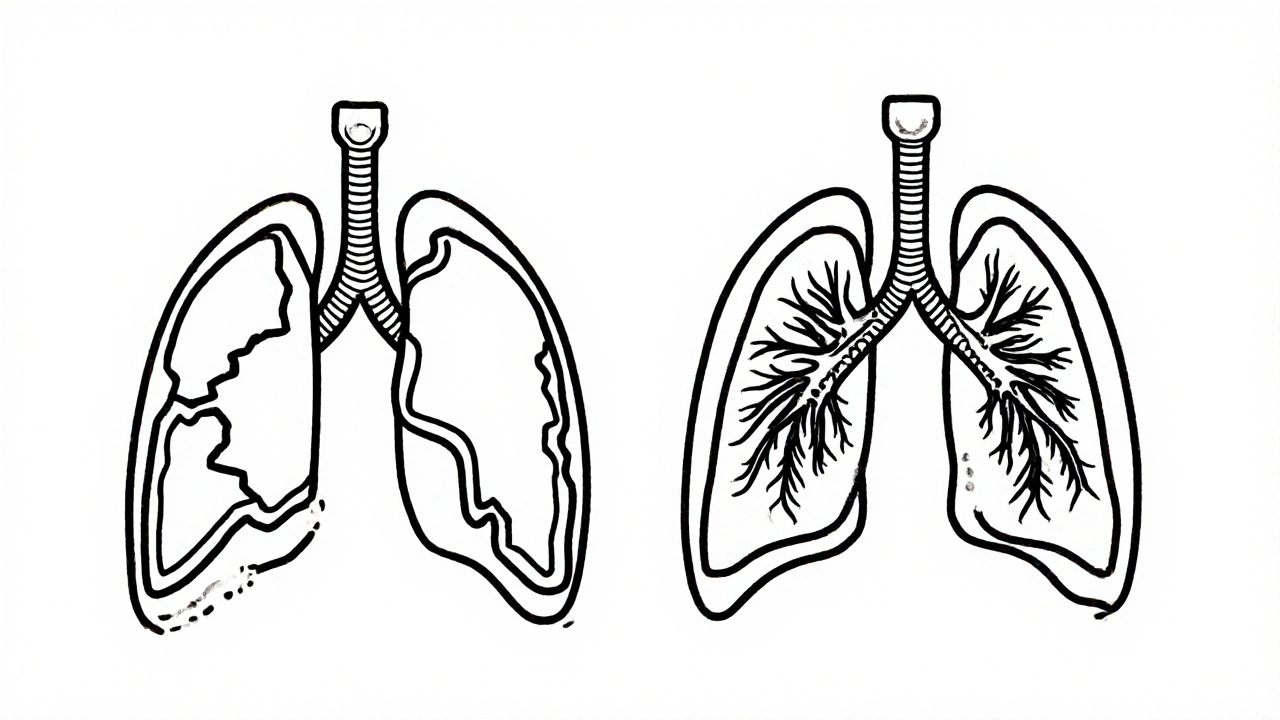
COPD Symptoms: What to Watch For and When to Act
When your breathing feels heavier than it should—like you’re trying to suck air through a straw—you might be dealing with chronic obstructive pulmonary disease, a progressive lung condition that makes it hard to breathe due to damaged airways and lung tissue. Also known as COPD, it’s not just a smoker’s disease anymore. It affects millions who’ve never lit a cigarette, and too many ignore the early signals until it’s too late. The truth? Most people think COPD means constant wheezing and coughing. But the first sign is often something quieter: getting winded walking up a hill, or needing to pause to catch your breath while doing the dishes.
Chronic bronchitis, a type of COPD marked by a daily cough with mucus that lasts for months is one of the two main forms. The other is emphysema, where the air sacs in your lungs break down, reducing oxygen exchange. Many people have both. You might not notice it at first. Maybe you’ve just told yourself you’re getting older, or out of shape. But if you’re constantly tired after light activity, or your chest feels tight after walking to the mailbox, that’s not normal aging. That’s your lungs sending a signal.
Symptoms don’t show up all at once. Early on, it’s subtle: needing to clear your throat in the morning, avoiding stairs, skipping walks because you know you’ll feel wrecked after. As it progresses, you might find yourself sitting upright to breathe, or waking up gasping. Some people develop a blue tint to their lips or fingernails—signs your body isn’t getting enough oxygen. And if you’re coughing up thick mucus most days, especially if you’ve smoked or been around smoke or pollution for years, that’s a red flag.
What makes COPD dangerous isn’t just the breathing trouble. It’s how slowly it creeps up. People wait years before seeing a doctor, thinking it’s just a "bad cough" or "asthma that won’t go away." But unlike asthma, COPD doesn’t reverse. Treatment won’t fix the damage—but it can stop it from getting worse. And the earlier you catch it, the more you can do to protect your lungs, your energy, and your independence.
That’s why knowing the signs matters. You don’t need to be a smoker to get it. Long-term exposure to fumes, dust, or secondhand smoke can do it. Even air pollution over decades plays a role. And if you’ve got a family history, you might be more at risk. The good news? If you spot the symptoms early and act, you can slow the decline. You can stay active longer. You can avoid hospital visits. You can breathe easier—for years.
Below, you’ll find real, practical guides that break down what COPD symptoms really look like, how they connect to other lung conditions, and what steps actually help. No fluff. Just what you need to know to protect yourself or someone you care about.