
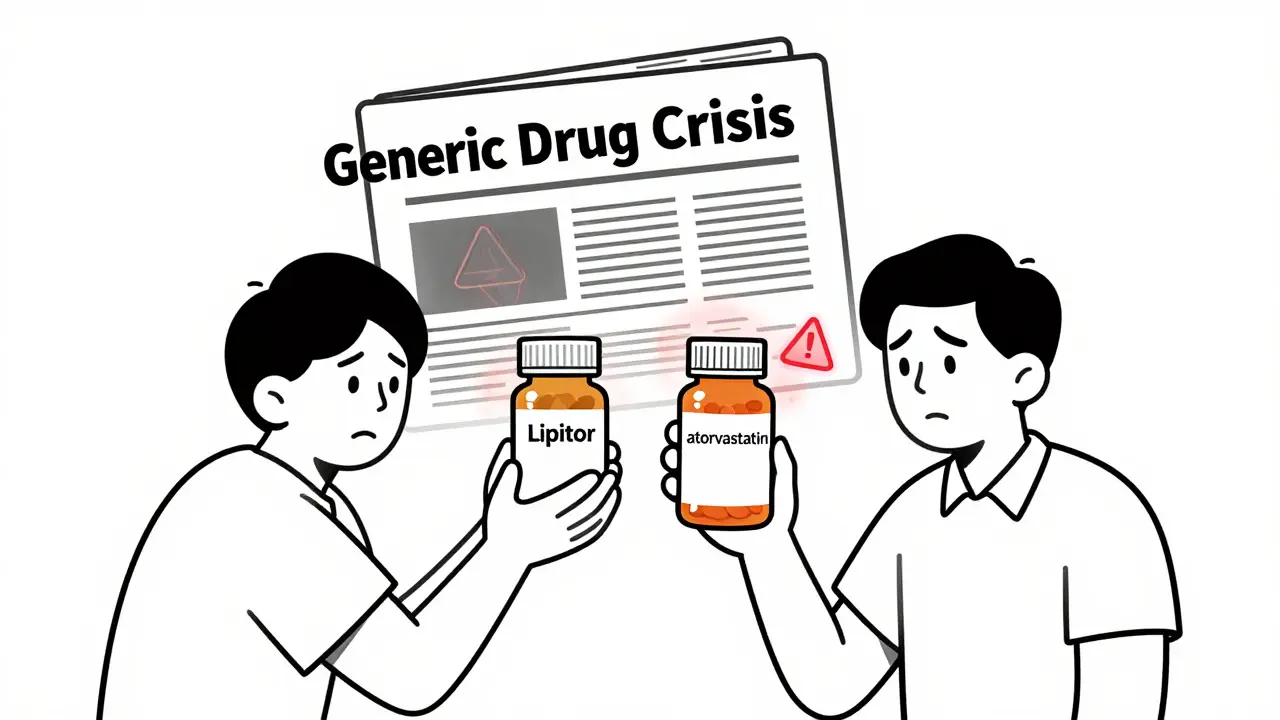
When you pick up a prescription, you probably don’t think twice about whether it’s a brand-name drug or a generic. But here’s the truth: generic drugs are just as safe and effective as their brand-name counterparts-yet most people still don’t trust them. Why? A big part of the answer lies in what you read in the news.
News Stories That Scare People Away from Generics
You’ve seen the headlines: “Contaminated Generic Drugs Reveal an Urgent Public Health Crisis,” “How Some Generic Drugs Could Do More Harm Than Good,” or “Medicines Made in India Set Off Safety Worries.” These aren’t fringe tabloids. They’re from major outlets like The New York Times and other trusted sources. And they’re shaping how millions of people see their medications. The problem isn’t that these stories are always false. Sometimes, there are real quality issues-like a batch of pills with impurities or a factory failing inspections. But here’s what gets left out: those cases are rare. The FDA approves over 90% of generic drug applications without a single inspection. And when problems do happen, they’re just as likely to occur with brand-name drugs. Yet, you rarely see headlines saying, “Brand-Name Blood Pressure Med Found with Trace Contaminant.” Instead, the media tends to single out generics. Why? Because “generic” sounds cheaper, less reliable. It’s easier to write a scary story about a $2 pill than a $200 one. And when you combine that with vague language-like “some generics” or “certain manufacturers”-it creates a blanket of doubt over the entire category.Why Journalists Use Brand Names (And Why It Matters)
Look at any news article about a new drug study. Chances are, it says “Lipitor” instead of “atorvastatin.” Or “Viagra” instead of “sildenafil.” That’s not an accident. A 2014 study in JAMA Network found that only 2% of U.S. newspapers had written policies requiring reporters to use generic names. Most don’t even have unwritten rules. So journalists default to the names they hear in ads, from doctors, or from patients-brand names. This isn’t just about terminology. It’s about perception. When you hear “Lipitor” every time cholesterol is discussed, your brain starts to associate that brand with effectiveness. When you see “atorvastatin” on the bottle at the pharmacy, it feels foreign. Like a knockoff. That’s not how science works. But it’s how psychology works. And here’s the kicker: when news stories don’t disclose funding sources-like when a study is paid for by a brand-name drug maker-the public has no way to know if the message is biased. A 2019 Commetric analysis found that most media reports on drug studies leave out this critical detail. That means readers are left believing the story is neutral, when it might be quietly pushing a more expensive option.People Don’t Know What a Generic Is
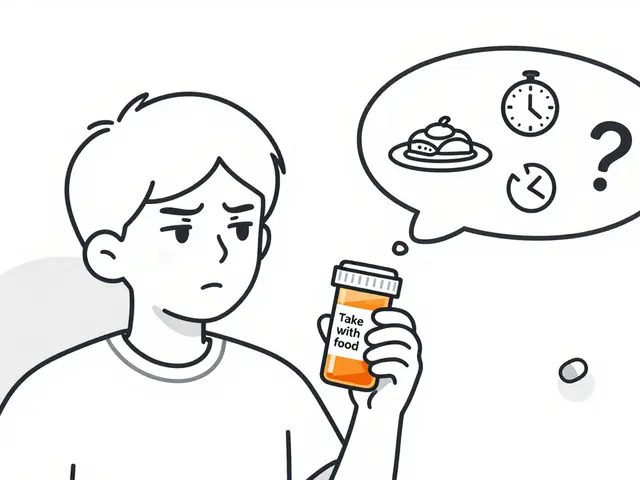
A 2023 study published in PMC found that only 17% of people could correctly identify a generic medicine by its packaging. Around 40% couldn’t tell the difference between a generic and a brand-name drug just by looking at the bottle. That’s not because they’re careless. It’s because no one ever taught them. Think about it. When you get a prescription, the pharmacist hands you a pill. Maybe the color is different. Maybe the shape is odd. Maybe the name on it doesn’t match the one your doctor said. You’re already anxious about your health. So you assume: if it looks different, it must be different. And if it’s cheaper, it must be worse. That’s not logic. It’s fear. And the media feeds it. Every time a story talks about “generic drug shortages” or “foreign manufacturing,” it implies that these drugs are less controlled, less regulated. But here’s the fact: every generic drug must meet the exact same FDA standards as the brand. Same active ingredient. Same dosage. Same absorption rate. The only differences are in the inactive ingredients-like dyes or fillers-which don’t affect how the drug works.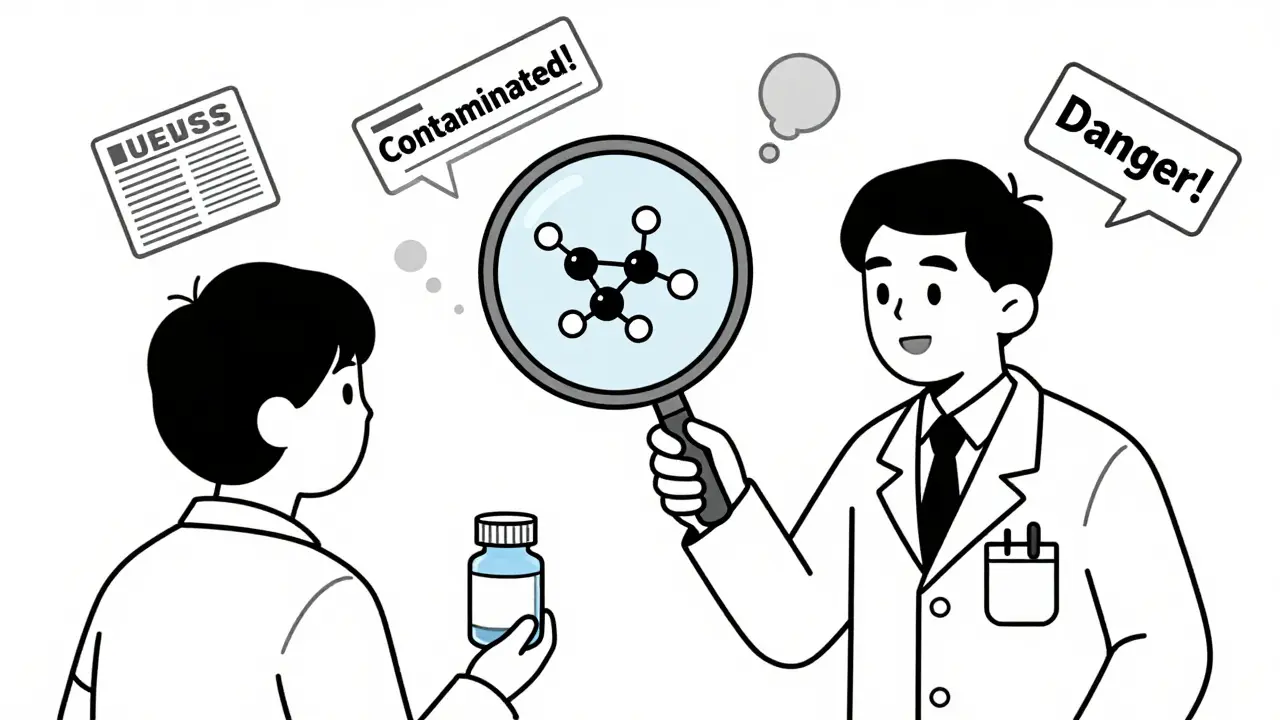
Why Bad News Makes People Choose Expensive Drugs
Here’s one of the most disturbing findings: when people get bad health news-like a cancer diagnosis or a heart condition-they suddenly stop choosing generics. A 2023 study from the University of Texas at Dallas found that within 90 days of receiving a serious diagnosis, patients were far more likely to switch to brand-name drugs-even if they had to pay 10 times more. Why? Because in moments of fear, people crave control. And if they believe a brand-name drug is “better,” they’ll pay extra for the illusion of safety. It’s not about science. It’s about emotion. And media coverage makes that emotion stronger. The same study showed that patients who had conversations with their doctors or pharmacists about generics were much more likely to stick with them. That’s the key. When someone you trust explains that the generic is just as good, fear loses its grip.Doctors and Pharmacists Are the Real Solution
The FDA says all approved generics are therapeutically equivalent. But that doesn’t mean patients believe it. A systematic review in PMC (2015) found that patient trust in their physician overrides personal doubts about generics. In other words: if your doctor says, “This generic is fine,” you’ll take it-even if the news says otherwise. But here’s the problem: many doctors don’t talk about it. They assume patients know. Or they don’t want to waste time. Pharmacists, on the other hand, are often the first to notice the hesitation. A 2023 article in US Pharmacist found that pharmacists who took just two minutes to explain the science behind generics saw a clear rise in patient acceptance. What should they say? Simple things: “This is the same medicine as the brand, just cheaper.” “The FDA requires it to work exactly the same.” “I’ve given this to hundreds of patients. No one had a problem.” Those words matter. More than any news story ever could.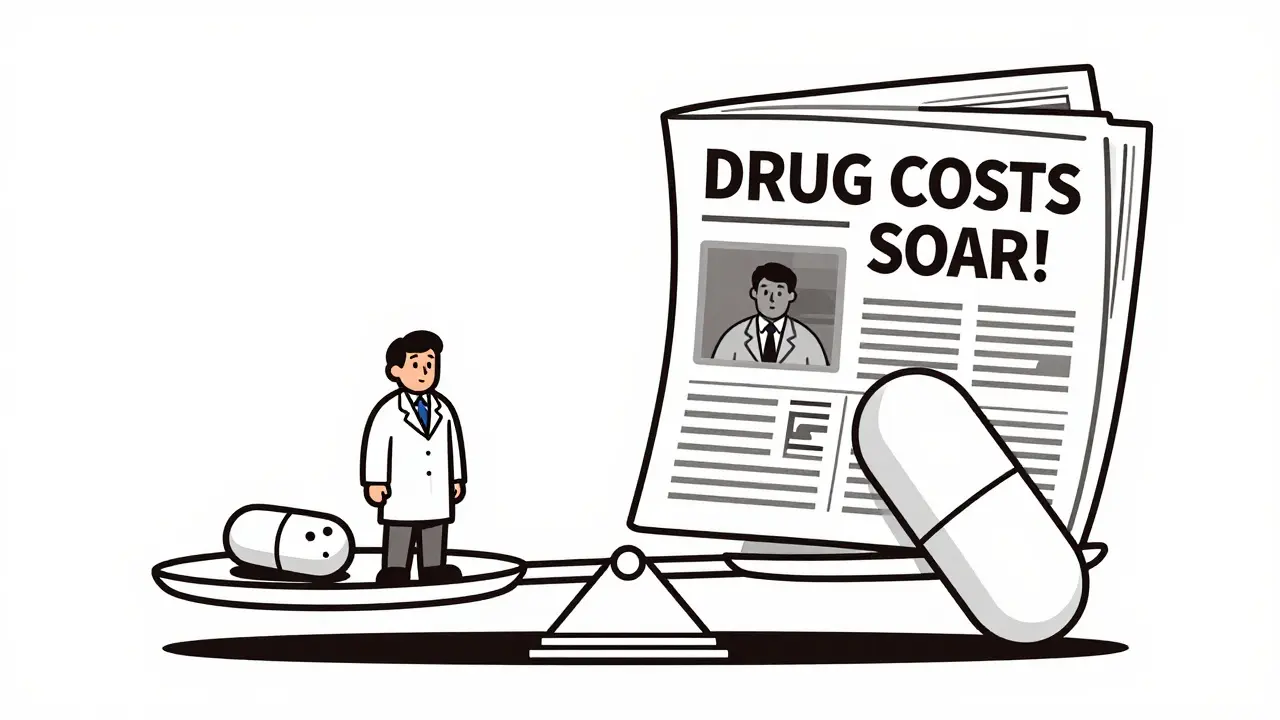
The Real Cost of Mistrust
When people avoid generics, it doesn’t just hurt their wallets. It hurts the whole system. Insurance companies pay more. Hospitals spend more. Taxpayers foot the bill. And the cycle continues: higher prices mean more news stories about “skyrocketing drug costs”-even though the real issue isn’t generics. It’s the lack of competition in brand-name markets. The HHS ASPE report in 2023 showed that when three or more generic versions of a drug enter the market, prices drop by 20%. That’s not a rumor. That’s data. But you won’t hear that in a headline. You’ll hear about one company raising prices by 500%-and the media blames the generic market, even though the price hike came from the brand.What Needs to Change
Media outlets need to adopt clear policies: use generic names. Disclose funding sources. Don’t sensationalize rare problems. That’s not radical. It’s basic journalism. Healthcare providers need to talk about generics-not as a cost-cutting trick, but as a scientifically sound choice. A simple sentence can change a patient’s mind. And patients? You need to ask: “Is this really different? Or is this just how it’s being sold to me?” The science is clear. Generics work. They’re safe. They save lives and money. But trust doesn’t come from data alone. It comes from clear communication, consistent messaging, and people you believe in telling you the truth. The media tells you what to fear. Who’s going to tell you what to trust?Are generic drugs really as effective as brand-name drugs?
Yes. Every generic drug must contain the same active ingredient, strength, dosage form, and route of administration as the brand-name version. The FDA requires generics to prove they work the same way in the body. Studies consistently show they are just as effective. The only differences are in inactive ingredients like color or shape-none of which affect how the drug works.
Why do some people feel generics don’t work as well?
It’s often psychological. When a pill looks different-different color, size, or name-people assume it’s different. Negative media stories amplify this. Also, when patients switch from a brand they’ve used for years, they may notice minor side effects from inactive ingredients (like dyes), which aren’t caused by the drug itself. These aren’t signs the generic doesn’t work-they’re just side effects of a different filler. Talking with a pharmacist can clear this up.
Does the FDA inspect generic drug factories?
Yes. The FDA inspects all manufacturing sites-brand and generic alike-before approving a drug. In fact, many generic manufacturers are the same companies that produce brand-name drugs. The FDA doesn’t treat them differently. Over 90% of generic applications are approved without a site visit because the company has a clean record. The agency holds all approved products to the same high standards.
Why do news stories focus so much on generic drug problems?
Because it’s easier to write a dramatic story about a cheap drug failing than about a costly brand drug doing the same. Media often lacks policies requiring the use of generic names or disclosure of funding sources, which skews perception. Rare problems get amplified, while the overwhelming majority of safe, effective generics go unreported. This creates a false impression that generics are riskier than they are.
Can switching to a generic cause side effects?
Rarely, and not because the drug doesn’t work. Some people are sensitive to inactive ingredients-like dyes or fillers-that differ between brands and generics. These aren’t harmful, but they can cause minor reactions like stomach upset or skin irritation. If this happens, talk to your pharmacist. There are usually multiple generic versions available, and switching to another one often solves the issue.
Do pharmacists prefer generics over brand-name drugs?
Yes, studies show pharmacists-who have more training in drug science-are significantly more likely to choose generics for themselves and their families than the general public. That’s because they understand the data: generics are identical in effectiveness and safer for the system due to lower costs. Their preference is based on knowledge, not cost.
What can I do if I’m unsure about taking a generic?
Ask your pharmacist or doctor: “Is this generic the same as the brand?” They can explain how the FDA ensures equivalence. You can also ask to see the FDA’s website on generic drugs or request a different generic version if you notice a reaction. Don’t assume it’s unsafe-just ask for clarity. Most people feel better once they understand the facts.

Chuck Dickson
Look, I get why people are scared. I used to be one of them. But after my dad started on generic metformin and his blood sugar stabilized just as good as the brand, I started digging. Turns out, the FDA makes them prove they’re identical. Same active ingredient. Same absorption. Same everything. The only difference? The pill doesn’t look like a billboard. That’s it. Stop letting marketing scare you into paying extra for the same medicine.
Naomi Keyes
Actually, you’re oversimplifying-there’s a critical distinction between bioequivalence and therapeutic equivalence, and not all generics undergo the same rigorous testing in real-world conditions. The FDA’s 90% approval rate without inspection? That’s because they rely on the manufacturer’s data-which is often submitted by the same companies that produce the brand-name version. There’s a conflict of interest here that’s rarely acknowledged in mainstream discourse.
kenneth pillet
my pharmacist switched me to generic lisinopril last year. no side effects. same results. same bottle shape. just cheaper. stop overthinking it.
Jay Clarke
Oh great, another article telling us to trust the system that let Big Pharma jack up prices for 20 years while telling us generics are ‘just as good.’ Wake up. The media doesn’t just ignore the truth-they’re paid to bury it. If generics were truly equal, why do insurance companies push them so hard? Why do pharmacies make you jump through hoops to get the brand? It’s not about safety. It’s about control.
Eric Gebeke
You people are so naive. You think the FDA is some noble guardian of public health? They’re a revolving door for pharma execs. The same people who approve generics are the ones who used to work for Pfizer. And now you’re swallowing their propaganda like it’s gospel? Pathetic. You’re not saving money-you’re being exploited. And you’re too scared to admit it.
Jake Moore
My mom had a bad reaction to a generic version of her thyroid med-different filler, caused stomach issues. She switched to another generic, and it was fine. Point is: not all generics are identical in inactive ingredients. That’s why pharmacists keep multiple brands on hand. It’s not about trust in the system-it’s about finding the right version for your body. Talk to your pharmacist. They’re the real experts.
Nishant Sonuley
Let me tell you something about India-where most generics are made. I worked in a pharma lab in Hyderabad. We made pills for Walmart, CVS, you name it. The standards? Tighter than you think. FDA inspectors show up unannounced. If you miss a single batch test, you’re shut down. The problem isn’t the generics-it’s the headlines. They don’t care that 99.9% are fine. They want clicks. And you? You click. So they keep writing. It’s not conspiracy. It’s capitalism.
Emma #########
I used to refuse generics after my cancer diagnosis. I was terrified. Then my oncologist sat down with me and said, ‘This is the exact same drug. The only thing different is the price.’ I cried. Not because I was scared anymore-but because I realized I’d been manipulated by fear, not science. Thank you for saying this.
Danny Gray
It’s not about the drugs. It’s about control. We live in a world where we’re told to trust institutions, but every institution has been corrupted. The FDA, the media, the doctors-they’re all part of the same machine. Generics aren’t the issue. The system that profits from your ignorance is. You think you’re saving money? You’re just being conditioned to accept less. And you call that wisdom?
Andrew McLarren
While the empirical evidence overwhelmingly supports the therapeutic equivalence of generic and brand-name pharmaceuticals, one must also acknowledge the sociopsychological dimensions of patient perception. The cognitive dissonance induced by aesthetic variance in pill morphology, coupled with the hegemonic influence of pharmaceutical branding, constitutes a formidable barrier to rational decision-making. A systemic recalibration of health communication protocols is therefore not merely advisable-it is ethically imperative.
Andrew Short
So you’re telling me the guy who wrote this article actually believes people are stupid enough to think generics are different? That’s not ignorance-that’s willful blindness. And you’re all just nodding along like sheep. The real scandal isn’t the media. It’s that we’ve let them get away with it for decades. Wake up. You’re being played. And you’re paying for it-in dollars, in health, in dignity.