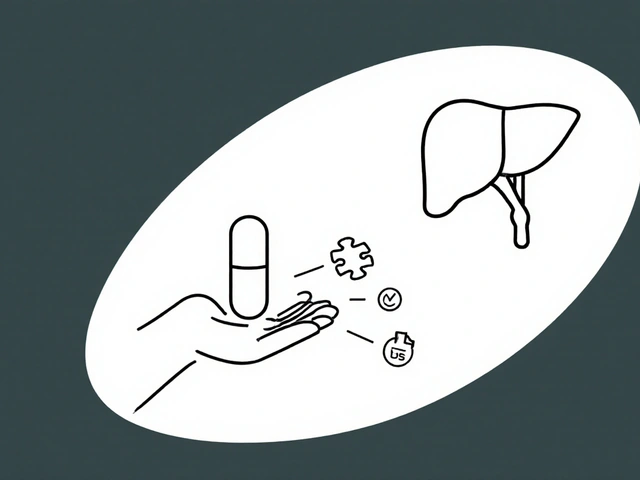
Ever wondered if moving your pills from a manufacturer's bottle into a weekly organizer actually changes how they work? Most people assume that as long as the expiration date on the original bottle is fine, the meds are safe. That is a dangerous misconception. Once you break the seal of a manufacturer's container and move a drug into a pharmacy vial or a plastic pillbox, the repackaged medications stability clock resets, often moving much faster than you'd expect.
When a drug company packages a medication, they don't just pick a random plastic bottle. They spend years testing a "container-closure system"-a specific combination of plastic, seals, and sometimes desiccants-to keep moisture, light, and oxygen out. When you transfer those meds into a generic pillbox or a pharmacy vial, you're stripping away that engineered protection. This exposes the drug to environmental stressors that can lead to chemical breakdown long before the original date on the bottle arrives.
Why Repackaging Changes Everything
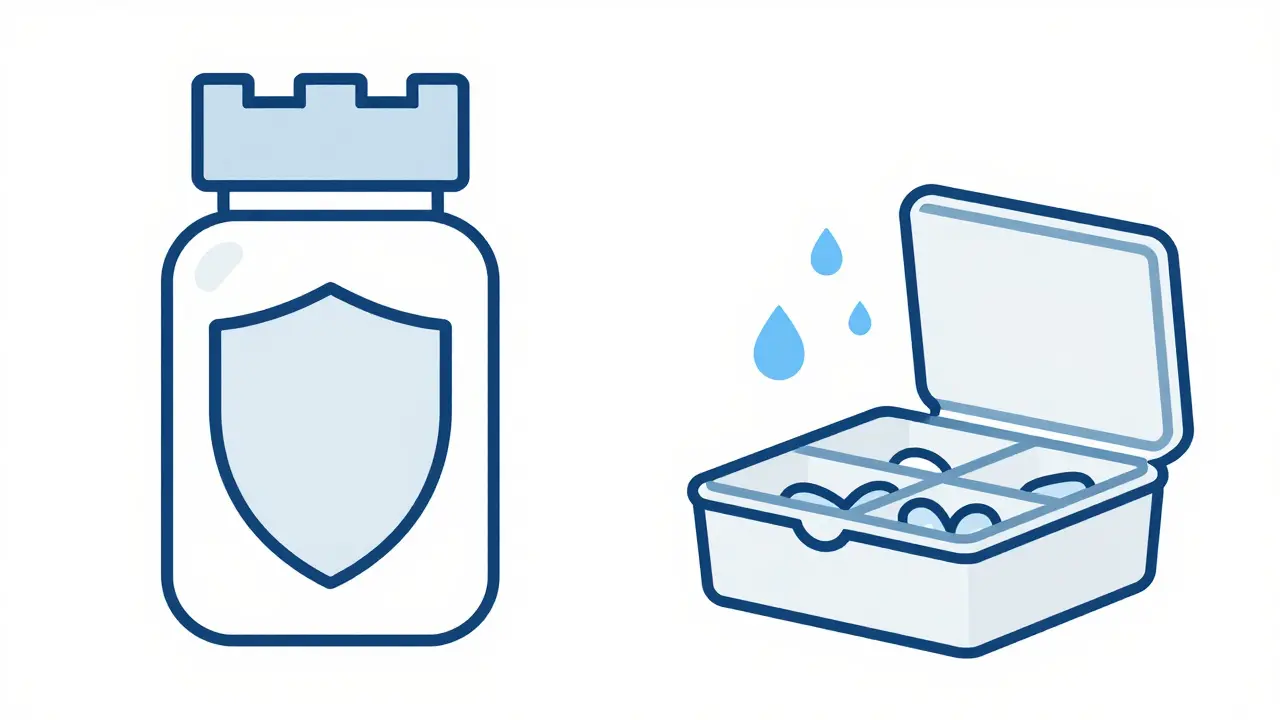
Repackaging is defined by USP Chapter <1178> as the process of transferring a drug product from its original container into a different container for dispensing or administration. The moment this happens, the stability profile changes. The original manufacturer's bottle is designed to be a fortress; a standard pharmacy vial or a weekly pill organizer is more like a screen door.
The primary culprit is the Moisture Vapor Transmission Rate (MVTR). Manufacturer bottles typically have an MVTR of 0.10-0.25 g/m²/day. In contrast, common pharmacy vials are much leakier, ranging from 0.35-0.50 g/m²/day. This means moisture enters the container at twice the speed, which can trigger hydrolysis-a chemical reaction where water breaks down the drug molecules. For example, a study in the Journal of Pharmaceutical Sciences found that albuterol sulfate tablets degraded by 15.7% in 90 days when stored in standard vials, compared to only 3.2% in the original HDPE bottle with a desiccant.
The Unique Risks of Pillbox Organizers
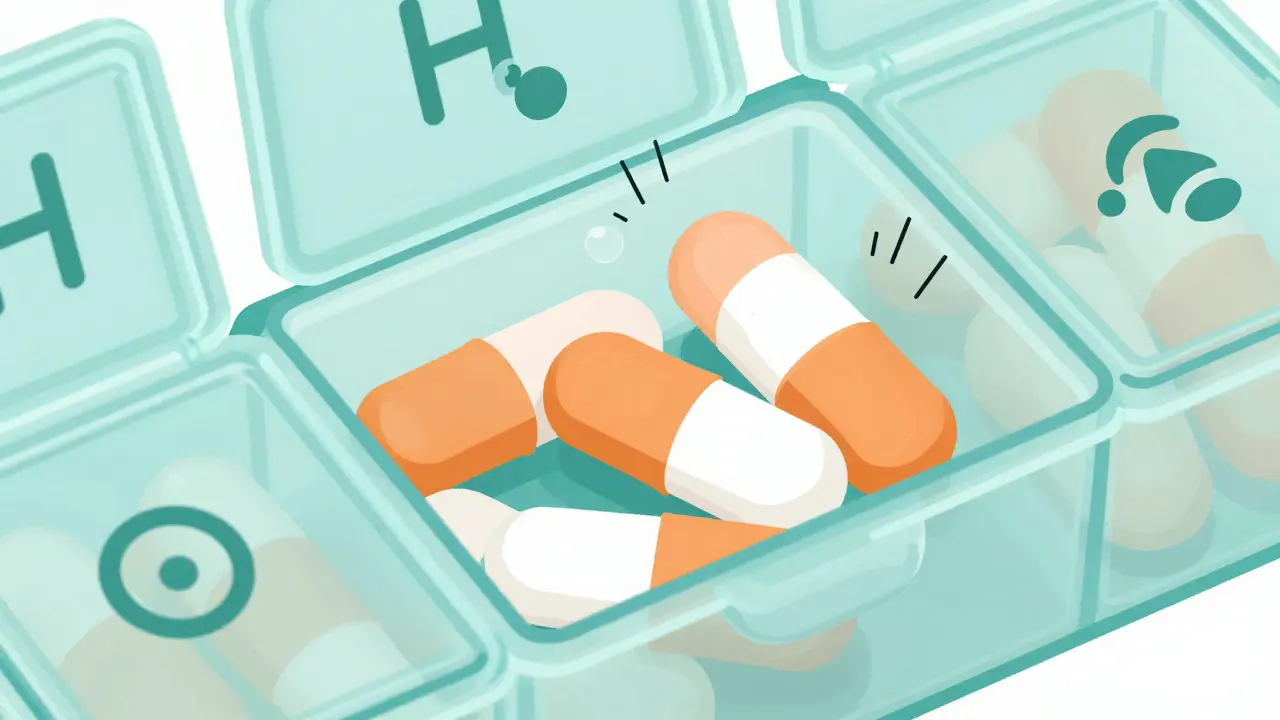
Pillboxes add a layer of complexity that single-vial repackaging doesn't. In a pillbox, you aren't just dealing with a weaker seal; you're often mixing different drugs in the same small compartment. This creates a risk of physical and chemical interactions between different medications.
According to data from the American Pharmacists Association a professional organization for pharmacists in the United States, about 18.7% of medications combined in a single organizer showed physical signs of instability-like caking or color changes-within just 14 days. When drugs are crowded together, they can absorb moisture from one another or react to the volatile organic compounds (VOCs) leaching from the plastic of the organizer itself.
| Drug Type | Example Medication | Recommended Max Expiration | Primary Risk Factor |
|---|---|---|---|
| Hygroscopic | Amoxicillin | 30 Days | High moisture absorption |
| Light-Sensitive | Nifedipine | 60 Days | UV degradation |
| Relatively Stable | Atenolol | 90 Days | General oxidation |
How Stability is Actually Measured
To truly know if a repackaged drug is still potent, pharmacists and researchers don't just look at the pill; they use "stability-indicating" analytical methods. The gold standard here is HPLC-UV High-Performance Liquid Chromatography with Ultraviolet detection, used to separate and quantify components in a mixture. This technology can detect degradation products at concentrations as low as 0.05%.
For more complex biologicals or protein-based meds, experts use Size-Exclusion Chromatography (SEC-HPLC) to find aggregates-basically "clumps" of proteins that indicate the drug has folded incorrectly and is no longer effective. If a pharmacy wants to set a safe expiration date for a repackaged drug, they follow a strict protocol:
- Stress Testing: Exposing the drug to 40°C and 75% relative humidity for 14 days to see how quickly it breaks down.
- Long-term Testing: Monitoring the drug at 25°C and 60% humidity, typically checking every 3 months for the first year.
- Batch Validation: Testing at least three different batches to ensure the results aren't a fluke.
Setting Realistic Expiration Dates
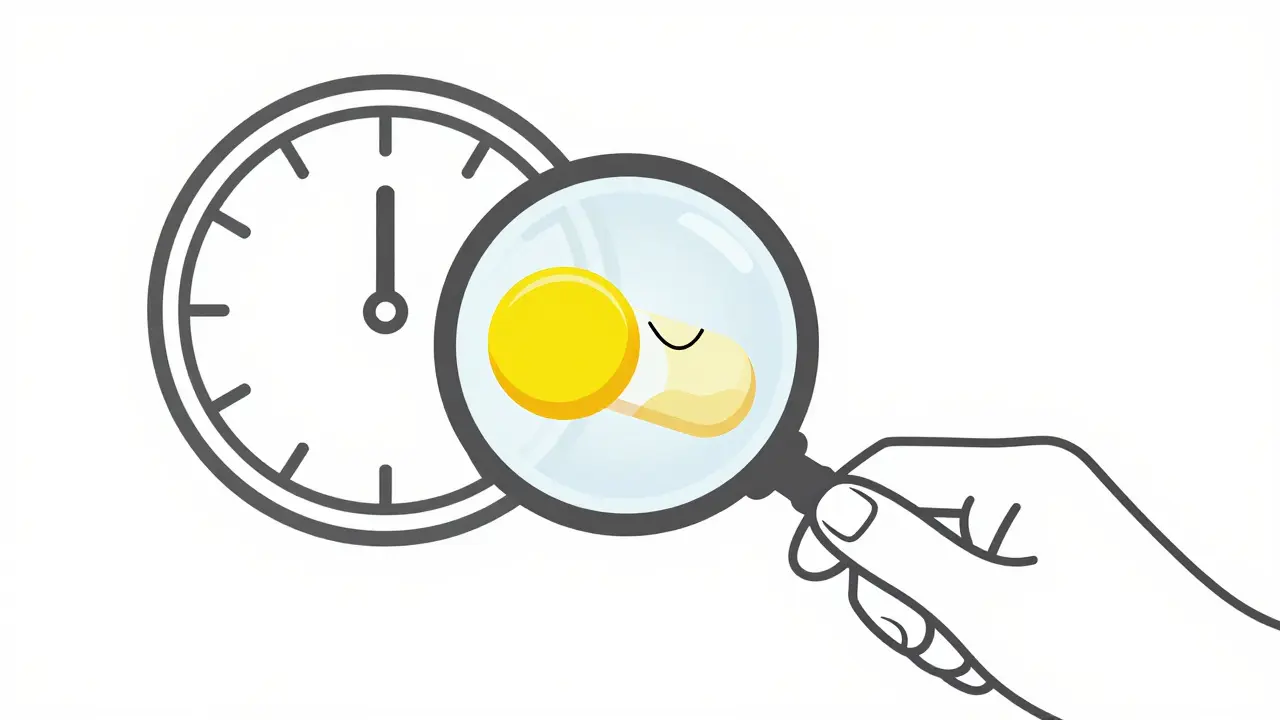
One of the biggest mistakes in pharmacy practice is assuming the original manufacturer's date still applies. Dr. Diane J. Berry from the University of Florida's Drug Information Center has pointed out that this is categorically false. Once a drug is repackaged, the original date is essentially void.
As a rule of thumb, the International Pharmaceutical Federation (FIP) the global body representing pharmacy and pharmaceutical sciences suggests that repackaged solid oral drugs should not exceed a 6-month stability window under standard pharmacy conditions. However, many US states are stricter, with some limiting certain drug classes to just 30-90 days. The FDA the U.S. federal agency responsible for protecting public health by ensuring the safety and efficacy of drugs has even issued warning letters to pharmacies that fail to establish written procedures for these new, shorter expiration dates.
Practical Tips for Patients and Caregivers
If you rely on a pillbox for your daily regimen, you can't run a full HPLC lab in your kitchen, but you can take steps to minimize degradation. The Institute for Safe Medication Practices (ISMP) an organization dedicated to improving medication safety through the prevention of errors notes that using desiccant packs (those little "do not eat" silica packets) in repackaged containers can extend stability by nearly 50%.
- Limit the Window: Only fill your pillbox for 7 to 14 days at a time. Avoid filling a whole month's worth of meds if the drugs are moisture-sensitive.
- Control the Environment: Keep your organizers in a cool, dry place. The bathroom is the worst spot due to the humidity from the shower.
- Visual Inspection: If a pill changes color, becomes crumbly, or feels "sticky" (caking), it's a sign of stability failure. Toss it and call your pharmacist.
- Ask About Stability: When your pharmacist moves a drug to a new vial, ask if the expiration date has changed. A good pharmacist should be able to tell you the stability limit for that specific repackaged drug.
Does the expiration date on the original bottle still count after I put pills in a pillbox?
No. The original expiration date is based on the drug remaining in its original, engineered packaging. Once transferred to a pillbox or pharmacy vial, the drug is exposed to more air and moisture, meaning it can degrade much faster than the original date suggests.
Which medications are most at risk when repackaged?
Hygroscopic drugs (like amoxicillin) that absorb water from the air and light-sensitive drugs (like nifedipine) are the most vulnerable. These often have very short stability windows (30-60 days) once removed from their original packaging.
Can I use a desiccant packet in my pillbox?
While it's difficult to fit in a small pillbox, adding a silica gel packet to a larger storage container where you keep your refills can help. For the pillbox itself, the best approach is to only fill it for a short duration (7-14 days) to limit exposure.
What are the signs that my repackaged medication has gone bad?
Look for physical changes: discoloration, a change in smell, or "caking" where tablets stick together or become soft. If you notice any of these, the medication's stability has likely been compromised and it should not be used.
How long should I typically keep meds in a pharmacy vial?
While it varies by drug, many professional guidelines suggest a general limit of 6 months for repackaged solid oral dosage forms. However, some highly sensitive medications may only be stable for 30 to 90 days.