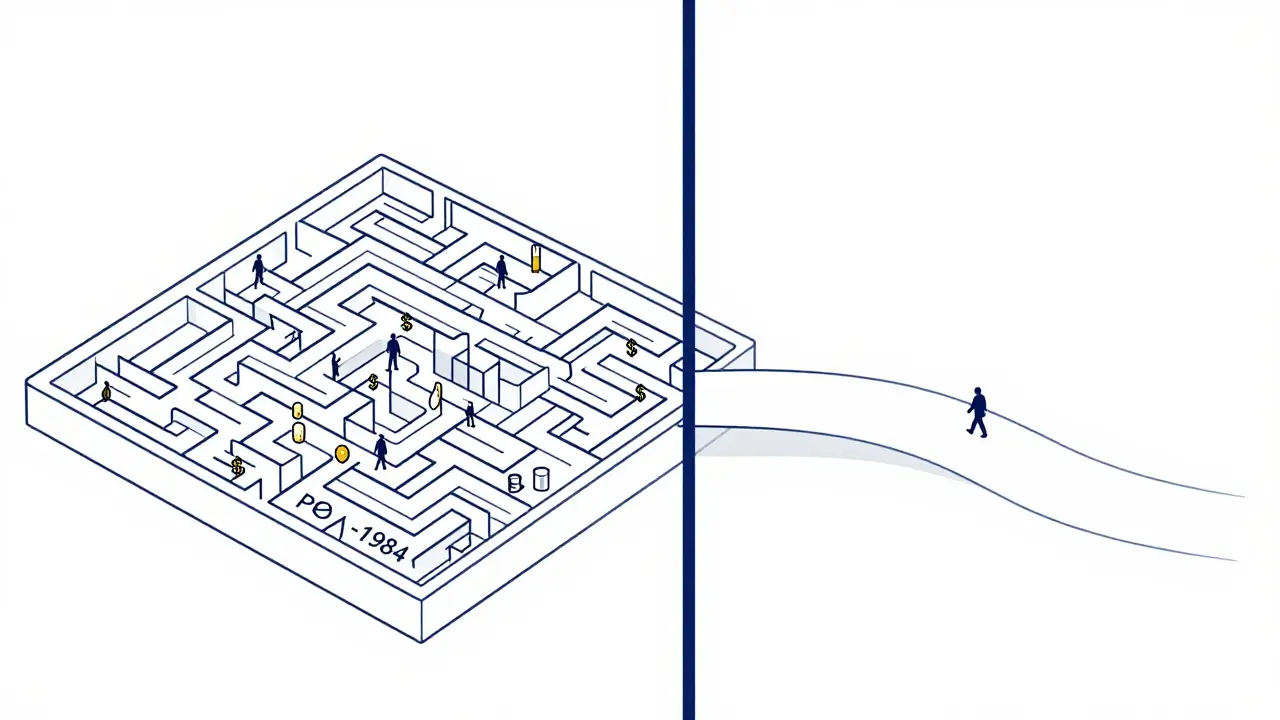
Imagine a world where every single generic drug company had to run their own full-scale clinical trials-thousands of patients, years of testing, and millions of dollars-just to prove that a copy of a drug worked exactly like the original. That was the reality before 1984. It made generic drugs incredibly rare and expensive to produce. Then came the Hatch-Waxman amendments is a landmark piece of U.S. legislation officially known as the Drug Price Competition and Patent Term Restoration Act of 1984. It didn't just change a few rules; it created the entire modern system for how we get affordable medication in the United States.
The Great Compromise of 1984
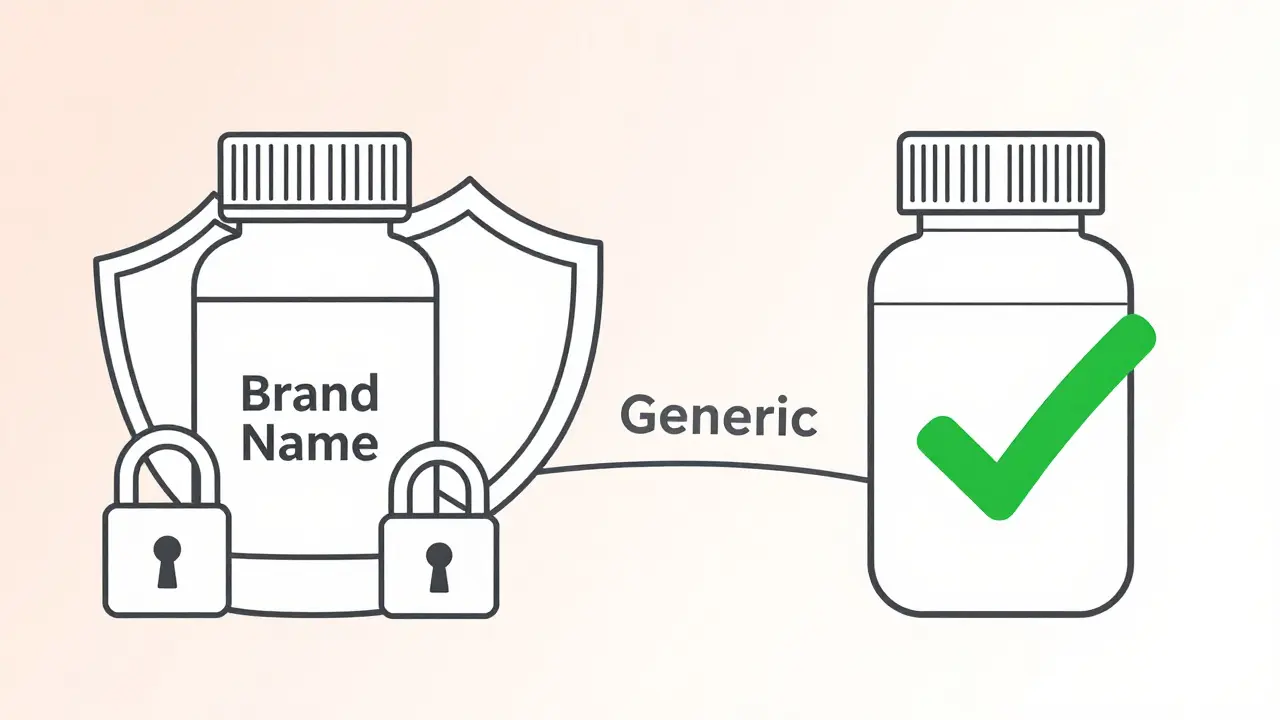
The law wasn't the result of a simple agreement. It was a hard-fought deal between two very different politicians: Senator Orrin Hatch, a conservative, and Representative Henry Waxman, a liberal. They had to balance two opposite needs. On one side, brand-name pharmaceutical companies argued that if they couldn't protect their patents, they'd stop spending money on research and development. On the other side, generic manufacturers and the public wanted cheaper medicines to save lives and money.
Before this law, the generic market was tiny. In 1983, generics held less than 19% of the market. The hurdle wasn't just the patents; it was the Food and Drug Administration the federal agency responsible for protecting public health by ensuring the safety, efficacy, and security of human drugs (FDA). The FDA required generic makers to prove safety and efficacy from scratch, even if the drug was chemically identical to one already on the market. It was a massive waste of time and resources.
The ANDA Shortcut: Speeding Up Market Entry
The most critical change brought by the Act was the creation of the Abbreviated New Drug Application a streamlined regulatory pathway (section 505(j)) that allows generic drugs to be approved without repeating the original clinical trials, or ANDA. Instead of repeating years of safety tests, a generic company only has to prove bioequivalence. This means they just need to show that the drug delivers the same amount of active ingredient into the bloodstream at the same rate as the brand-name version.
This shift slashed development costs by roughly 80% to 90%. Because the barrier to entry dropped, the floodgates opened. By 2023, generics made up about 90% of all prescriptions dispensed in the U.S. For the average person, this meant the difference between paying a premium for a brand-name pill or getting the same medicine for 80-85% less.
The Patent Game: The Orange Book and Paragraph IV
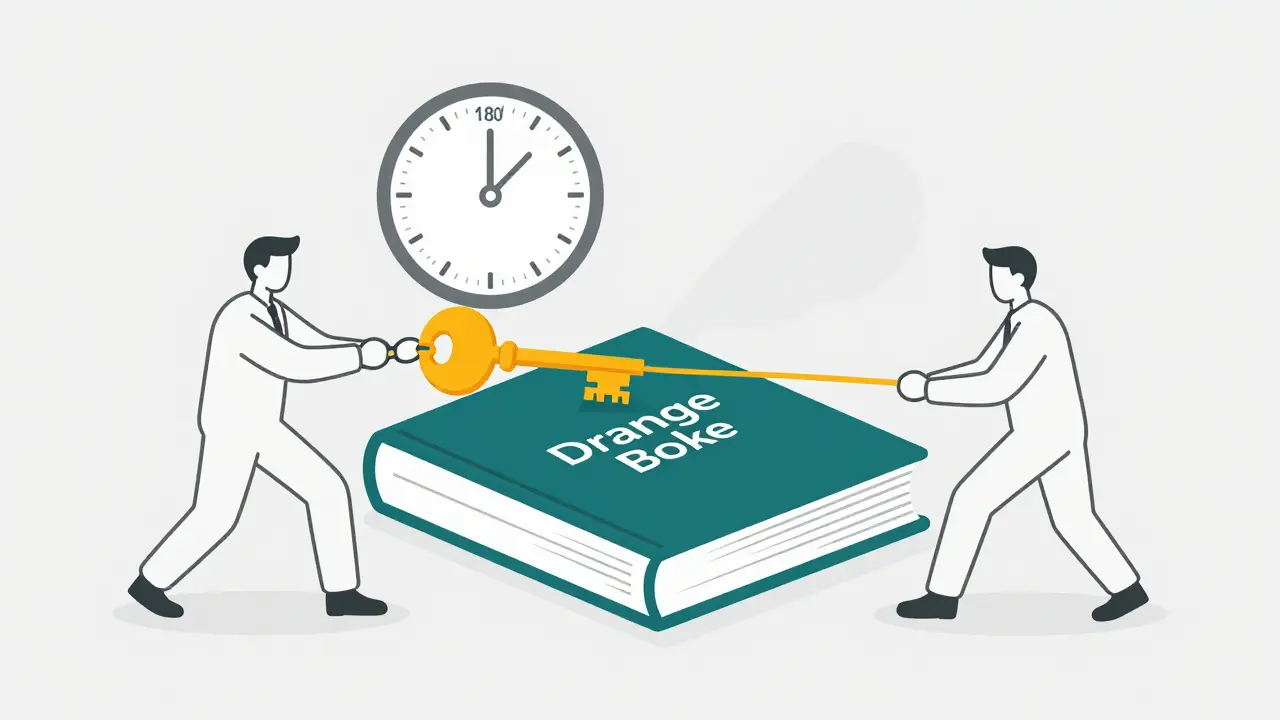
While the ANDA made it easier to get approval, the law had to handle the patents. To do this, the FDA created the Orange Book the official FDA publication that lists all approved drug products and their associated patents. If you're a brand-name company, you list your patents here. If you're a generic company, you have to "certify" your way into the market.
The most famous of these is the Paragraph IV certification a legal claim by a generic manufacturer that the brand-name drug's patent is either invalid or not infringed by the generic version. This is where the real legal battles happen. If a generic company files a Paragraph IV, they are essentially challenging the brand-name company in court. To reward this bravery (and encourage competition), the first generic company to successfully file a Paragraph IV certification gets 180 days of market exclusivity. For those six months, they are the only generic version available, which can be a massive financial windfall.
| Feature | Brand-Name (NDA) | Generic (ANDA) |
|---|---|---|
| Clinical Trials | Full safety/efficacy trials required | Bioequivalence only |
| Development Cost | Very high (full R&D) | 80-90% lower |
| Patent Protection | Original patent + extensions | Must certify against Orange Book |
| FDA Approval Path | New Drug Application (NDA) | Abbreviated New Drug Application (ANDA) |
Fair Trade: Giving Back to the Innovators
The law didn't just help generics; it gave brand-name companies a way to recoup their losses. Because the FDA takes a long time to review a drug, a company might lose several years of their 20-year patent life while waiting for approval. The Hatch-Waxman Act allows for patent term restoration a provision allowing brand-name drug makers to extend their patent life by up to five years to compensate for regulatory delays.
Additionally, it established regulatory exclusivity periods. For example, a new chemical entity gets five years of exclusivity, while orphan drugs (for rare diseases) get seven years. This ensures that even after a patent expires, there's a small window where the innovator has a head start.
The Legal Safety Net: The Bolar Provision
Before 1984, a court case called Roche Products, Inc. v. Bolar Pharmaceutical Co. basically said generic companies couldn't even test their drugs for the FDA if the patent was still active. This meant generics couldn't even start their work until the very day the patent expired, effectively extending the monopoly.
Hatch-Waxman fixed this with the Safe Harbor a statutory exemption (35 U.S.C. § 271(e)(1)) that allows companies to use patented inventions if the use is reasonably related to developing information for FDA submission. Now, generic firms can do all their prep work, testing, and filing while the patent is still live, so they can hit the market the moment the patent dies.
The Dark Side: Evergreening and Pay-for-Delay
No compromise is perfect. Over the years, brand-name companies found loopholes to keep their monopolies alive. One common tactic is "evergreening," where a company makes a tiny change to a drug (like a slow-release version) to get a new patent and reset the clock. Other times, they use "citizen petitions" to flood the FDA with complaints about a generic competitor's application, delaying the approval process.
The most controversial move is the "pay-for-delay" settlement. This happens when a brand-name company literally pays a generic company to stay out of the market for a few years. The Federal Trade Commission (FTC) has noted hundreds of these deals, estimating they cost consumers billions of dollars every year in higher drug prices. This has led to newer laws, like the Preserve Access to Affordable Generics and Biosimilars Act, which tries to shut down these secret payments.
What is the main difference between an NDA and an ANDA?
An NDA (New Drug Application) is for original drugs and requires full clinical trials to prove the drug is safe and effective. An ANDA (Abbreviated New Drug Application) is for generics and only requires the company to prove the drug is bioequivalent to the original, meaning it works the same way in the body. This makes ANDAs much cheaper and faster to approve.
How does the 180-day exclusivity work?
When a generic company is the first to successfully challenge a brand-name patent via a Paragraph IV certification, the FDA grants them 180 days of exclusivity. During this window, no other generic versions of that drug can enter the market, allowing the first filer to capture a huge share of the market and earn a high profit.
What is the Orange Book?
The Orange Book is an official FDA list that catalogs all approved drug products and their associated patents. Generic companies use it to identify which patents they need to certify against or challenge before they can launch their version of a drug.
Why do brand-name companies get patent extensions?
Developing a drug is incredibly expensive. Because the FDA review process can take years, brand-name companies lose a significant portion of their 20-year patent life before they even sell a single pill. Patent term restoration helps them recover some of that lost time to make their investment worthwhile.
What is a "pay-for-delay" agreement?
This is a legal settlement where a brand-name drug manufacturer pays a generic competitor to delay the launch of their cheaper version. This keeps prices high for consumers and is a major point of contention for the FTC and consumer advocacy groups.
Next Steps for the Industry
If you're a pharmaceutical professional, the focus now is on GDUFA (Generic Drug User Fee Amendments), which help the FDA clear the application backlog. For the average patient, the goal is to see a decrease in "evergreening" so that patents don't last forever. Whether you're looking at the legal side of patent law or the medical side of pharmacy, the Hatch-Waxman framework remains the rulebook that decides how much you pay for your medicine.