You've probably seen them in every supplement aisle: amber-colored softgels promising to clear your arteries and protect your heart. For decades, Omega-3 fatty acids is a group of essential polyunsaturated fats that the body cannot make on its own, primarily consisting of EPA and DHA. Commonly known as fish oil, these nutrients have been the gold standard for heart health advice for nearly twenty years. But if you look at the recent headlines, the story is confusing. One study says they're a lifesaver; another says they do almost nothing. So, should you actually spend your money on them?
The Great Omega-3 Debate: Why the Mixed Signals?
The confusion stems from the fact that not all fish oils are created equal. If you're buying a generic bottle from a grocery store, you're likely getting a mix of EPA (eicosapentaenoic acid) and DHA (docosahexaenoic acid). For a long time, we assumed more was better. However, recent high-level evidence has split the scientific community in two.
On one side, the 2023 Cochrane review-which is essentially the "gold standard" of medical meta-analysis-looked at 79 trials involving over 112,000 people. Their conclusion? Long-chain omega-3s have little to no significant effect on cardiovascular outcomes for the general population. On the other side, the REDUCE-IT trial showed a massive 25% reduction in cardiovascular events, but there was a catch: they used a massive dose of purified EPA, not a standard supplement.
This tells us that omega-3 fatty acids aren't a one-size-fits-all miracle. The benefit seems to depend heavily on who you are, what your blood markers look like, and exactly which type of omega-3 you're taking.
EPA vs. DHA: Does the Type Matter?
If you've ever wondered why some doctors prescribe a specific brand while others tell you to just eat more salmon, it's because of the difference between purified EPA and combined EPA/DHA formulations. This is where the science gets concrete.
Purified EPA, such as the prescription drug Vascepa, is designed to target high triglycerides and inflammation. In the REDUCE-IT trial, 4 grams of this purified EPA daily significantly lowered the risk of heart attack and stroke in high-risk patients. Conversely, the STRENGTH trial used a combination of EPA and DHA at the same dose and was stopped early because it simply wasn't working.
| Feature | Over-the-Counter (OTC) Fish Oil | Prescription Purified EPA (Vascepa) | Combination EPA/DHA (Epanova) |
|---|---|---|---|
| Primary Components | Mixed EPA & DHA | Pure EPA (Icosapent Ethyl) | EPA & DHA |
| Typical Dose | 300-1,000mg | 4,000mg (4g) | 4,000mg (4g) |
| Heart Evidence | Minimal for general population | Strong for high-risk/high triglycerides | Low/Inconclusive |
| FDA Approval | Dietary Supplement | CV Risk Reduction (High Risk) | Severe Hypertriglyceridemia |
How Omega-3s Actually Affect Your Heart
Even though the debate continues, we do know how these fats interact with your biology. They aren't just "healthy fats"; they act like signaling molecules in your body. One of the most consistent values found by the NHLBI (National Heart, Lung, and Blood Institute) is that high doses (2-4 grams daily) can lower serum triglycerides by 25-30%. This is a big deal because high triglycerides can contribute to the hardening of arteries.
Beyond triglycerides, omega-3s help stabilize the electrical activity of the heart. This means they may reduce the likelihood of fatal arrhythmias (irregular heartbeats) after a heart attack. They also have a mild anti-inflammatory effect, which is why some people with rheumatoid arthritis swear by them for joint pain, even if the heart benefits are more debated.
Who Actually Benefits from Supplementation?
If you are a healthy adult with no history of heart disease, taking a daily fish oil pill might be a waste of money. The VITAL trial found that 1 gram of omega-3s didn't significantly lower overall cardiovascular risk for the general public. However, it did show a 28% reduction in heart attacks, with an even more striking 77% reduction among African American participants. This suggests that genetics-specifically how our bodies metabolize fats via the FADS1 and FADS2 genes-play a huge role in who benefits.
You are more likely to see a real-world benefit if you fall into these categories:
- You have severe hypertriglyceridemia (triglycerides over 500 mg/dL).
- You have existing coronary heart disease and are already taking a statin.
- You struggle to eat fatty fish at least twice a week.
The Pitfalls: Quality, Oxidation, and Side Effects
Not all fish oil is safe or effective. The biggest issue is oxidation. When fish oil oxidizes, it becomes rancid. This doesn't just make the pills smell like a wet pier; it can actually make the oil harmful. A 2023 Consumer Reports test found that 12 out of 35 popular products exceeded international oxidation limits.
Then there are the "fish burps." About 32% of users report a fishy aftertaste, and nearly 27% experience gastrointestinal upset. If you're dealing with this, look for "enteric-coated" capsules, which dissolve in the small intestine rather than the stomach. More seriously, very high doses of omega-3s have been linked to a slight increase in the risk of atrial fibrillation (Afib), with a 0.4% absolute risk increase in some meta-analyses.
Practical Steps: Food First, Supplements Second
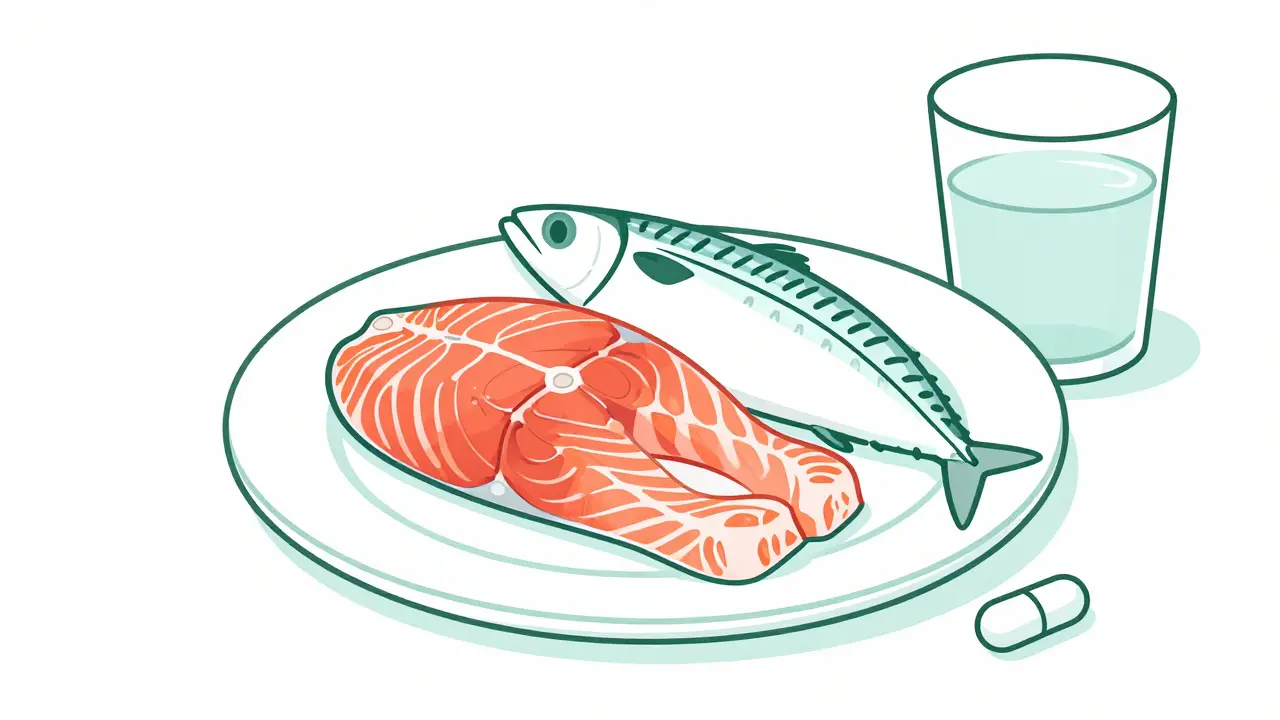
The American Heart Association (AHA) generally recommends getting your omega-3s from food. Why? Because salmon, mackerel, and sardines provide more than just EPA and DHA; they provide protein, selenium, and vitamin D in a package your body knows how to process.
If you can't eat fish, and you're considering a supplement, follow these rules of thumb:
- Check the label for the actual EPA/DHA amount, not the total "fish oil" weight. A 1,000mg pill might only have 300mg of active omega-3s.
- Avoid the cheap stuff. Look for third-party certifications (like IFOS or USP) to ensure there's no mercury contamination and the oil isn't rancid.
- Consult a doctor if you're on blood thinners. While omega-3s don't have a strong anticoagulant effect at low doses, very high doses can increase bleeding risk.
Do I need fish oil if I already eat salmon?
Generally, no. Eating two 3.5-ounce servings of fatty fish per week provides about 500 mg of EPA/DHA daily, which meets the general population's needs. Unless you have very high triglycerides, food is the preferred source.
Is EPA better than DHA for the heart?
Recent evidence suggests yes, specifically for high-risk cardiovascular patients. High-dose purified EPA (like Vascepa) has shown a significant reduction in heart events, while combined EPA/DHA supplements have shown much weaker or nonexistent results in similar trials.
Can omega-3s replace statins?
No. Statins are much more effective at lowering LDL (bad) cholesterol and reducing overall cardiovascular events. Omega-3s are best used as a complementary therapy, especially for those who also have high triglycerides.
How can I tell if my fish oil has gone bad?
The most obvious sign is a strong, foul, or "rotten fish" smell when you open the bottle. If the capsules look cloudy or smell intensely fishy, the oil has likely oxidized and should be discarded.
What is the risk of taking too much fish oil?
Excessively high doses (usually over 3-4 grams) can increase the risk of atrial fibrillation (an irregular heart rhythm) and may interfere with blood clotting, increasing the risk of bruising or bleeding.