
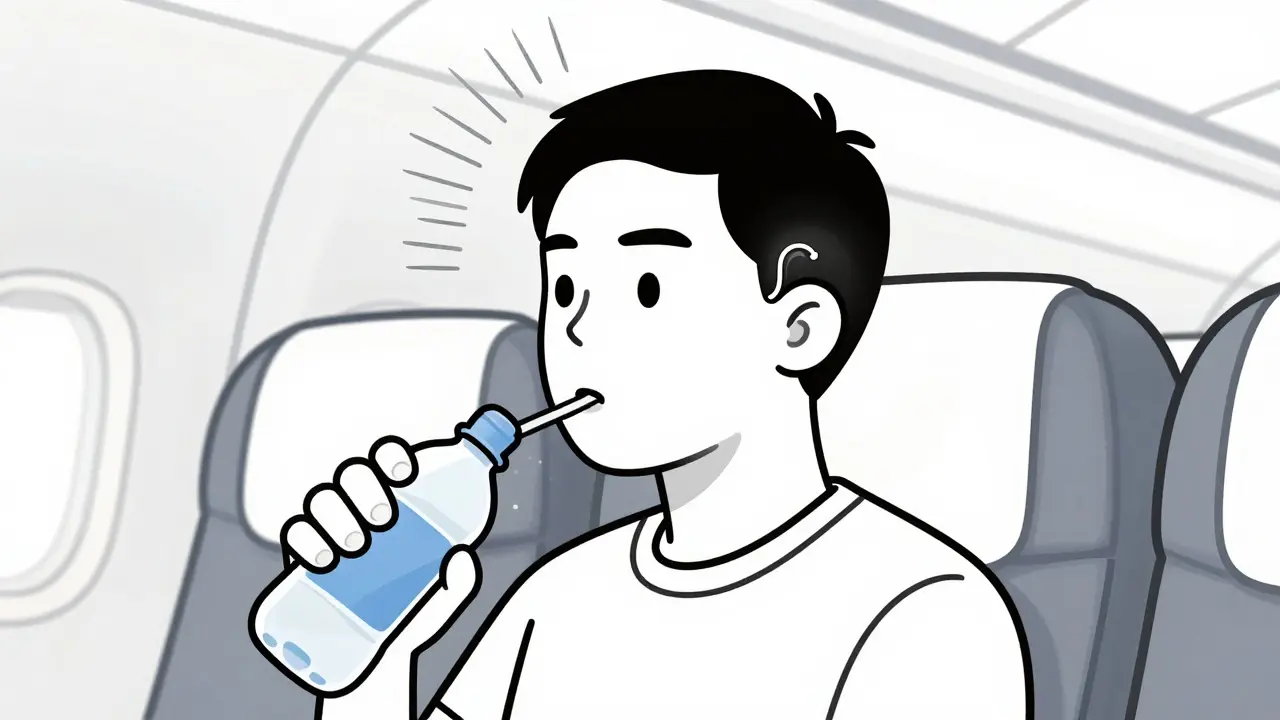
Nothing ruins a flight faster than that sharp, throbbing pain in your ears during descent. You’re tired, the seatbelt sign is on, and suddenly it feels like someone’s squeezing your eardrums. This isn’t just discomfort-it’s airplane ear, a real condition called barotrauma. It happens when the pressure inside your middle ear doesn’t match the pressure outside, and your Eustachian tube can’t keep up. The good news? You can prevent it. And you don’t need to be a doctor to do it.
Why Your Ears Hurt on Planes
Your middle ear is a sealed space behind your eardrum. It’s connected to your throat by a tiny tube called the Eustachian tube. Normally, this tube opens when you swallow, yawn, or chew, letting air in or out to balance pressure. But during a flight, things change fast. As the plane descends, cabin pressure rises quickly-about 0.5 psi per 1,000 feet. That means the air outside your eardrum gets denser, pushing it inward. If your Eustachian tube doesn’t open in time, your eardrum gets pulled tight. That’s the pain. In kids, it’s worse. Their tubes are shorter (just 17-18mm) and more horizontal, making them harder to open. About 22% of children feel this during flights, and it spikes to 34% if they have a cold or allergies.What Actually Works: The Science of Equalization
Not all tricks are created equal. Some are safe. Some are risky. Here’s what the data says.- Swallowing and yawning - The safest method. It works for 65% of people. No side effects. Just chew gum, suck on hard candy, or sip water. Repeat every few minutes during descent.
- Toynbee maneuver - Pinch your nose shut and swallow. It’s safer than blowing, but only works about 68% of the time. Great for kids who can’t blow properly.
- Valsalva maneuver - Pinch your nose, close your mouth, and gently blow. Sounds simple, but 41% of inner ear injuries from airplane ear come from doing this too hard. The key? Gentle. Think of blowing through a straw, not a balloon. Do it for 3-5 seconds. Stop if you feel pain.
- Lowry technique - A combo of Valsalva and Toynbee: blow while swallowing. It’s effective (89% success), but most people can’t do it right on the first try. Practice at home first.
- Jaw wiggle - Move your jaw side to side while swallowing. Sounds silly, but it helps open the tube. One study showed a 22% boost in success rate for kids. Try it during snack time on the plane.
There’s no magic trick. The best approach? Start early. Don’t wait until your ear screams. Begin equalizing when the plane hits 8,000 feet on descent. That’s when pressure changes get steep. Do it every 300-500 feet. Set a phone alarm if you have to.
Tools That Help: Earplugs, Sprays, and Devices
Some tools are backed by real science.Filtered earplugs like EarPlanes slow pressure changes by 37%. They give your Eustachian tube more time-about 28 seconds instead of 15-to react. They work for 76% of people. But if you have chronic Eustachian tube dysfunction? Their success drops to 42%. Still worth trying if you’re a frequent flyer.
Nasal decongestant sprays like oxymetazoline (Afrin) shrink swollen tissues in 10 minutes. They help 85% of adults. But use them right: spray 30-60 minutes before descent. Don’t use them more than 3 days in a row. Overuse can make congestion worse.
Oral decongestants like pseudoephedrine (Sudafed) last longer-8 to 12 hours. But they’re not for everyone. The FDA warns they can raise blood pressure or cause rapid heartbeat in 12% of adults over 40. Skip them if you have heart issues or high blood pressure.
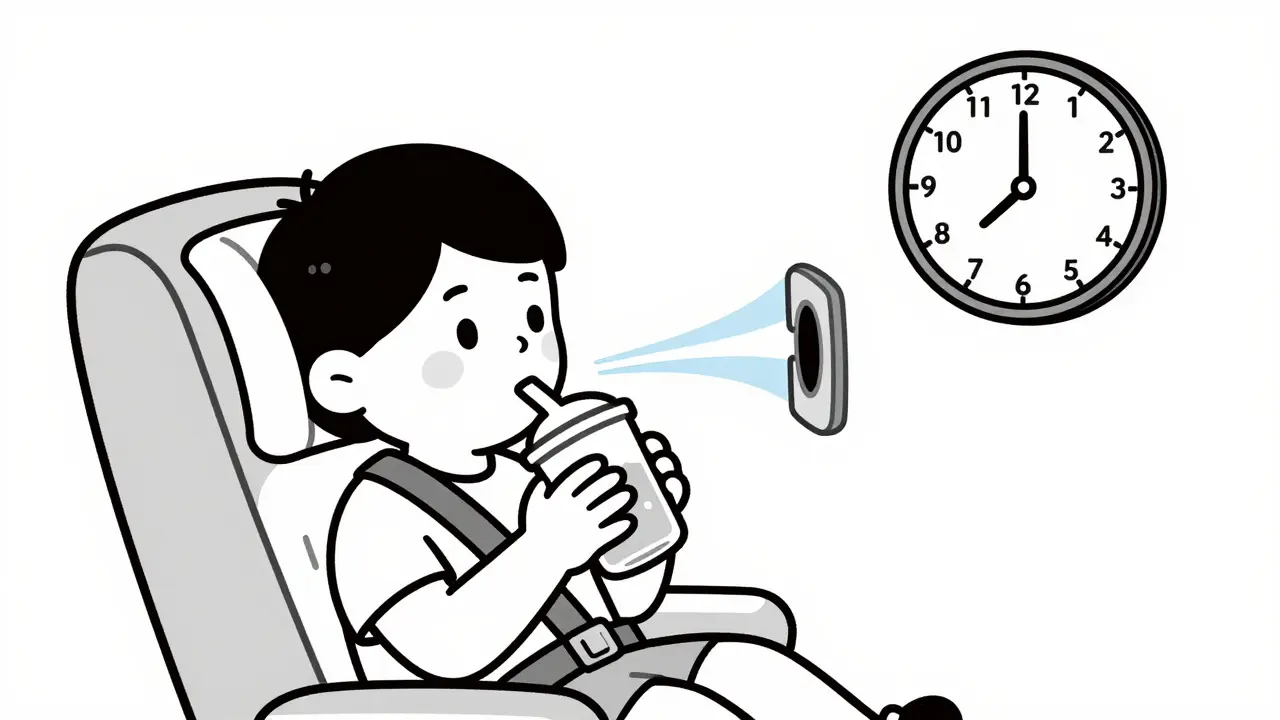
For kids: Bottle-feeding during descent works better than sipping from a cup. The stronger swallowing motion opens the tube more effectively. Give them a bottle or sippy cup 10 minutes before landing. For toddlers, a pacifier works too.
New tech: The FDA-approved Otovent device is a small balloon you blow through your nose. It gently pops the tube open. Clinical trials show 88% success. It’s not for kids under 3, but older kids and adults find it easy. And in 2023, Mayo Clinic started testing Eustachian tube stents-tiny implants that keep the tube open. Phase 2 trials showed 92% success. It’s not available yet, but it’s coming.
What Not to Do
Avoid these common mistakes:- Waiting until it hurts - 68% of people who suffer airplane ear waited too long. By then, your eardrum is already stressed. Start early.
- Blowing too hard - Forcing air can rupture your eardrum or damage your inner ear. The risk is low (0.3% of Valsalva attempts), but it happens. Gentle is key.
- Sleeping during descent - 73% of pediatric ear pain cases happen when kids are asleep. No swallowing = no pressure equalization. Keep them awake and active in the last 20 minutes.
- Using decongestants on kids under 6 - The FDA has documented rare cases of fast heartbeat in young children. Stick to swallowing, gum, or earplugs.
Why Some Planes Are Easier on Your Ears
Not all flights are equal. Newer planes like the Boeing 787 maintain cabin pressure at 6,000 feet instead of the old standard of 8,000. That’s a 25% drop in pressure change. Delta Airlines now uses a 3-degree descent angle instead of 3.5 degrees. Slower descent = slower pressure change = fewer ear problems. Airlines are catching on. By 2025, the FAA plans to require all new aircraft to keep cabin altitude below 6,500 feet during descent. That’ll help millions.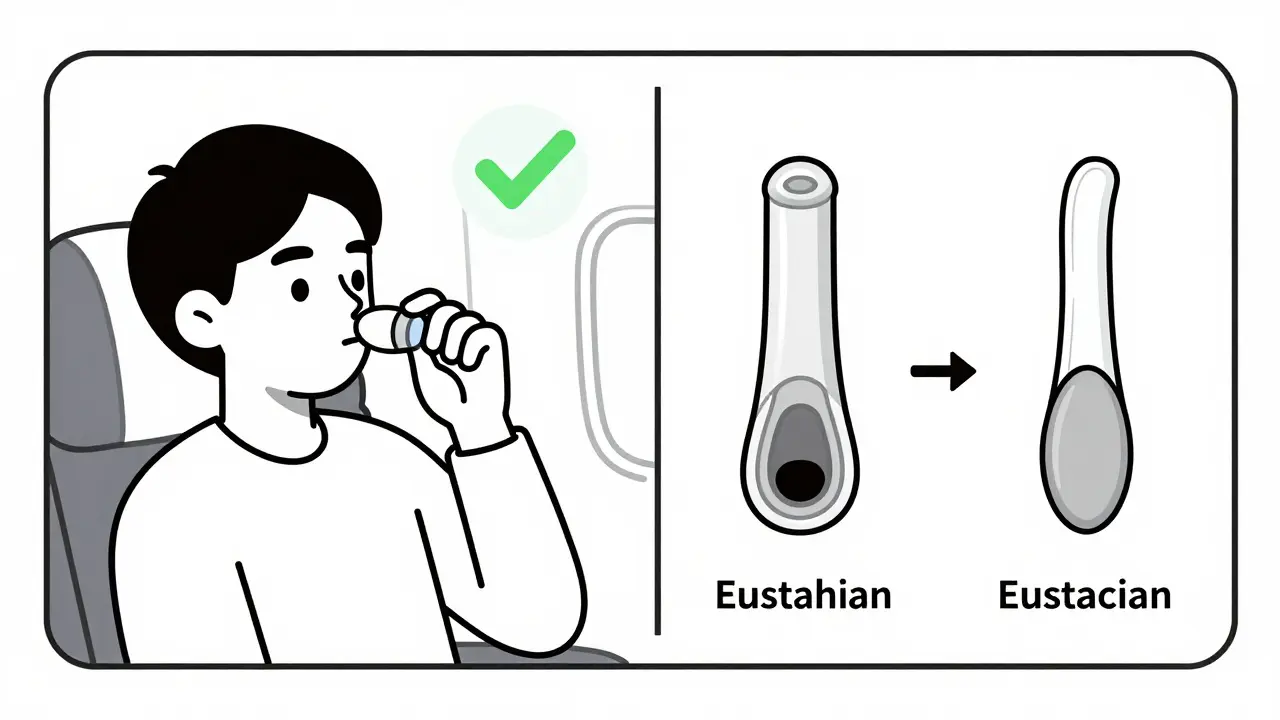
Pre-Flight Prep: Small Habits, Big Results
If you fly often and hate ear pain, try this:- One week before your flight, do 5-10 swallowing exercises a day. Just swallow hard, like you’re gulping water. It trains the muscles around your Eustachian tube.
- If you’re prone to congestion, start using a nasal steroid spray (like fluticasone) 3-5 days before flying. A 2023 study showed it improves equalization by 33%.
- Stay hydrated. Dry nasal passages make swelling worse. Drink water. Avoid alcohol and caffeine-they dehydrate you.
- Use a saline nasal spray before boarding. It keeps your nasal passages moist and open.
People who do this reduce their chance of ear pain by 57%. It’s not magic. It’s muscle memory.
When to See a Doctor
Most ear pain goes away within hours. But if you have:- Pain lasting more than 24 hours
- Fluid or blood draining from your ear
- Severe hearing loss or ringing that doesn’t fade
- Dizziness or vertigo
See an ENT specialist. Chronic Eustachian tube dysfunction affects 1 in 20 adults. There are treatments: balloon dilation, stents, even surgery. A procedure called tuboplasty costs $3,800-$5,200 out-of-pocket in the U.S., but it works for 76% of people long-term. If you fly once a month and always suffer, it might be worth it.
Bottom Line
Airplane ear isn’t inevitable. It’s preventable. You don’t need fancy gear. Just start early, stay active, and use gentle techniques. Swallow often. Chew gum. Wiggle your jaw. Avoid decongestants if you’re over 40 or have kids under 6. And if you’re flying on a newer plane? You’re already at an advantage. The science is clear: proactive equalization cuts complications by 78%. You’ve got the tools. Now use them.Can I use earplugs if I have a cold?
Filtered earplugs like EarPlanes can help, but they’re less effective if you’re congested. Your Eustachian tube is already blocked, so slowing pressure changes won’t fix the root problem. Better to use a nasal decongestant spray 30-60 minutes before flying-unless you’re under 6 or have high blood pressure. Then stick to swallowing, yawning, and staying hydrated.
Is airplane ear dangerous?
Most cases are temporary and harmless-pain fades within hours. But in rare cases (about 0.02% of flights), the eardrum can rupture. Inner ear damage from forcing the Valsalva maneuver is even rarer, but it happens. The real danger is ignoring it. If pain lasts more than a day, or you have hearing loss or dizziness, see a doctor. Chronic cases can lead to fluid buildup or hearing issues if left untreated.
Why do kids have more trouble than adults?
Kids’ Eustachian tubes are shorter, narrower, and more horizontal. That makes them harder to open. They also swallow less often than adults. That’s why bottle-feeding or using a pacifier during descent helps-it triggers stronger swallowing reflexes. Plus, kids are more likely to get colds and allergies, which swell the tubes even more.
Can I fly after ear surgery?
It depends on the surgery. After ear tube insertion, flying is usually fine. After eardrum repair or stent placement, wait 4-6 weeks unless your doctor says otherwise. Pressure changes can disrupt healing. Always check with your ENT before flying after any ear procedure.
Do decongestants really work for flying?
Yes, if used correctly. Nasal sprays like Afrin reduce swelling in 10 minutes and help 85% of users. Oral Sudafed works for 8-12 hours. But they’re not for everyone. Avoid them if you’re over 40 with heart issues, pregnant, or have glaucoma. And never use them on kids under 6. For most people, swallowing and earplugs are safer first steps.



Sam Dickison
Man, I’ve been flying for 18 years and this is the first time someone broke down the Valsalva vs. Toynbee thing with actual stats. 68% success on Toynbee? That’s wild. I always thought blowing harder was better-turns out I was just terrorizing my eardrums. Going to try the Lowry technique next flight. Maybe even practice in the shower.
Karianne Jackson
MY EARS HURT SO BAD ON FLIGHTS I CRIED ONCE. THIS POST SAVED MY LIFE.
Tom Forwood
Yo, I’m from Texas and I fly to Lagos twice a year. Let me tell you-EarPlanes are a game changer. I used to need like three Advil after every descent. Now? I just chew sour patch kids and chill. Also, the jaw wiggle? My 7-year-old does it like a boss. He’s got a whole routine now: gum, wiggle, sip water. Looks like he’s auditioning for a TikTok dance. But it works. 10/10.
Jacob den Hollander
I just want to say… thank you. Really. I’ve had chronic Eustachian tube issues since I was a kid, and I’ve been too embarrassed to talk about it. This post made me feel like I’m not broken. I’ve been using the Otovent for six months now-it’s weird, but it feels like my ears are finally listening to me. And the saline spray before boarding? Absolute lifesaver. I used to dread flying. Now? I’m actually looking forward to my next trip. You’re not just giving tips-you’re giving peace.
Andrew Jackson
This entire post is a disgrace to American ingenuity. Why are we relying on gimmicks like earplugs and jaw wiggling when we have the technological capacity to standardize cabin pressure at 4,000 feet? It’s not rocket science. Boeing, Delta, and the FAA are all failing the public. We are a nation that landed on the moon-yet we let children scream in agony because someone didn’t optimize the descent profile? This is unacceptable. I’ve written to my senator. I’ve written to the FAA. I’ve written to the Pope. Someone needs to take responsibility.
Frank Baumann
Let me tell you what really happens when you fly with ear problems. It’s not just pain. It’s betrayal. Your body is supposed to be your ally, right? But no-your own Eustachian tube just… gives up. Like a lazy intern. And then you’re stuck in a metal tube 35,000 feet in the air, watching your kid sob because they can’t swallow right, and the flight attendant says ‘just chew gum’ like that’s going to fix a physiological malfunction shaped by evolution. And don’t even get me started on how airlines still use 8,000-foot cabins like it’s 1972. I once had a flight where the pilot announced ‘we’re descending’ and I felt my eardrum pop like a balloon full of bees. I’ve been traumatized. I now fly only on 787s. I’ve got the model memorized. I even have a sticker on my laptop that says ‘787 OR BUST.’ I’m not joking. This isn’t about comfort. This is about survival.
Alex Ogle
I’ve been flying for 20 years. I used to suffer. Then I started doing the swallowing exercise daily-just 10 hard swallows before bed. Didn’t even think it’d do anything. But after three weeks? On my next flight, the pressure change didn’t even register. It’s like my body learned to anticipate it. Muscle memory, like the post said. I still use earplugs. Still chew gum. But now? I’m calm. I don’t even think about it anymore. Just one small habit. Changed everything.
Brandon Osborne
Okay, so let me get this straight-you’re telling me the FAA is going to lower cabin pressure to 6,500 feet by 2025? That’s it? That’s the best they can do? What about mandatory ear protection on all flights? What about government-funded Otovent distribution? What about a national ear health campaign? This is a public health crisis. I’ve seen toddlers with ear tubes. I’ve seen adults with permanent tinnitus from one bad flight. And you’re talking about gum? We need a presidential task force. We need a 2026 ear safety bill. We need a national ear day. This isn’t a lifestyle tip. This is a civil rights issue.
Tasha Lake
Wait-so the Lowry technique is 89% effective? That’s insane. I’ve been doing Valsalva wrong my whole life. Can you clarify the exact sequence? Do you pinch nose AND swallow simultaneously, or do you swallow first and then blow? And is there a recommended pressure level? I’m asking because I’m an audiologist and I want to recommend this to my patients, but I need to be precise. Also, has anyone tested this on people with patulous Eustachian tubes? I’ve got a case study here…
PAUL MCQUEEN
Wow. So much effort. And yet… no mention of the fact that all this is just a band-aid. The real problem? Airlines are still using 1970s cabin pressure standards because it saves money on fuel. They don’t care about your ears. They care about profit margins. This whole post is just… distraction. Do you really think chewing gum is going to fix systemic negligence? Wake up.
glenn mendoza
I am writing to express my profound appreciation for the meticulous attention to clinical detail and evidence-based recommendations contained within this post. The synthesis of peer-reviewed data regarding the efficacy of the Lowry technique, coupled with the nuanced contraindications surrounding pseudoephedrine use in geriatric populations, represents a paradigm shift in public health communication. I shall be distributing this material to my colleagues in otolaryngology and integrating it into our patient education protocols. Thank you for elevating the discourse.
John Watts
Guys. I’ve been flying with my niece since she was 2. We do the jaw wiggle. We use the pacifier. We have a little ritual-‘wiggle, sip, smile.’ She’s 8 now. She doesn’t cry anymore. She actually asks for gum before descent. She says it’s ‘ear magic.’ I cried. Not because of the pain-because she’s not afraid anymore. This isn’t just science. It’s joy. And joy matters. Keep sharing this stuff. It changes lives.
Randy Harkins
OMG this is everything 😭 I’ve been flying with a cold last week and used the nasal spray 45 mins before descent… and it was like a miracle. No pain. Zero. I even smiled. 🥹✨ Also, the 787 thing? I’m switching all my future flights to them. No more 8,000-foot torture chambers. 🙌
Chima Ifeanyi
Interesting. But you completely ignored the geopolitical implications of cabin pressure standardization. Why are U.S. airlines leading this? What about the Global South? Do Nigerian passengers benefit from 787s? Or are they still flying on 737s with 8,000-foot cabins while Boeing markets ‘premium ear comfort’ as a luxury? This post is a neoliberal distraction. Real equity means retrofitting every aircraft globally-not just selling earplugs to first-class passengers. Also, did you mention the role of corporate lobbying in delaying FAA regulations? No? Then this is not a solution. It’s a product placement.
Tori Thenazi
Wait… so… are you saying this is ALL a government experiment? Like… what if the ear pain isn’t just pressure… what if it’s 5G? Or chemtrails? I read a blog once that said the FAA uses ear trauma to test human stress responses for mind control. And they only let you know about earplugs so you think you’re safe… but you’re not. They’re watching. They know you’re doing the Valsalva. They’re tracking your swallow patterns. I’m not paranoid. I’m PREPARED. I now fly with a tin foil hat AND earplugs. Just in case. 😇