Relative Risk: What It Means and How It Affects Your Health Decisions
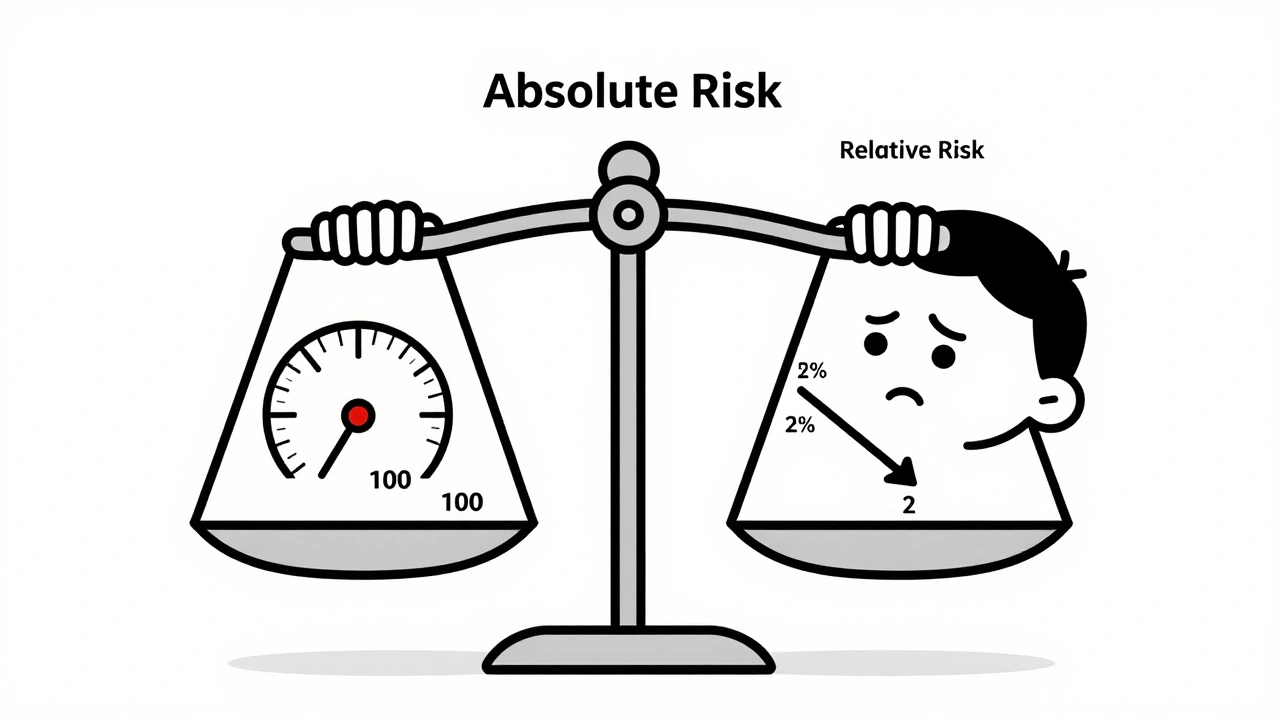
When you hear that a drug increases relative risk by 50%, it sounds scary—until you realize that might mean going from 2 in 1,000 to 3 in 1,000. Relative risk, a comparison of how likely an event is in one group versus another. Also known as risk ratio, it’s a tool doctors and researchers use to measure how much a treatment, behavior, or condition changes your chances of getting sick or having a side effect. But here’s the catch: relative risk alone tells you almost nothing about your actual danger. That’s where absolute risk, the real-world chance of something happening to you comes in. If a study says a medication cuts your relative risk of heart attack by 30%, but your baseline risk is only 1%, you’re now at 0.7%—a tiny change that might not justify side effects or cost.
These numbers show up everywhere: in drug labels, cancer screenings, and supplement ads. Take PSA screening—it reduces relative risk of dying from prostate cancer by a small percentage, but most men who get screened never benefit, and many end up with unnecessary treatments. Or cyclosporine monitoring: doctors track drug levels because even small changes in relative risk can mean kidney damage over time. Hazard ratio, a more advanced form of relative risk used in long-term studies is often what you’ll see in clinical trials for drugs like tolvaptan or pirfenidone. But unless you know the starting point, you can’t tell if the benefit is meaningful.
And then there’s statistical significance, a measure of whether a result is likely real or just random noise. A study might say a supplement reduces relative risk of hair loss by 25%—but if only 20 people were studied, that number means little. Real-world impact matters more than p-values. That’s why posts here break down actual outcomes: how many people truly benefit, how many face harm, and what alternatives exist. You’ll find clear comparisons between Samsca and its alternatives, how opioids affect seniors, and why black cohosh might hurt your liver even if it helps hot flashes. No fluff. Just what the numbers really mean for your body.
What you’ll see below isn’t just a list of articles—it’s a toolkit to stop being misled by scary percentages and start making decisions based on what actually affects you. Whether you’re managing diabetes, choosing a painkiller, or deciding on a screening test, you’ll learn how to ask the right question: "Compared to what?" And that’s the difference between being informed and being manipulated.