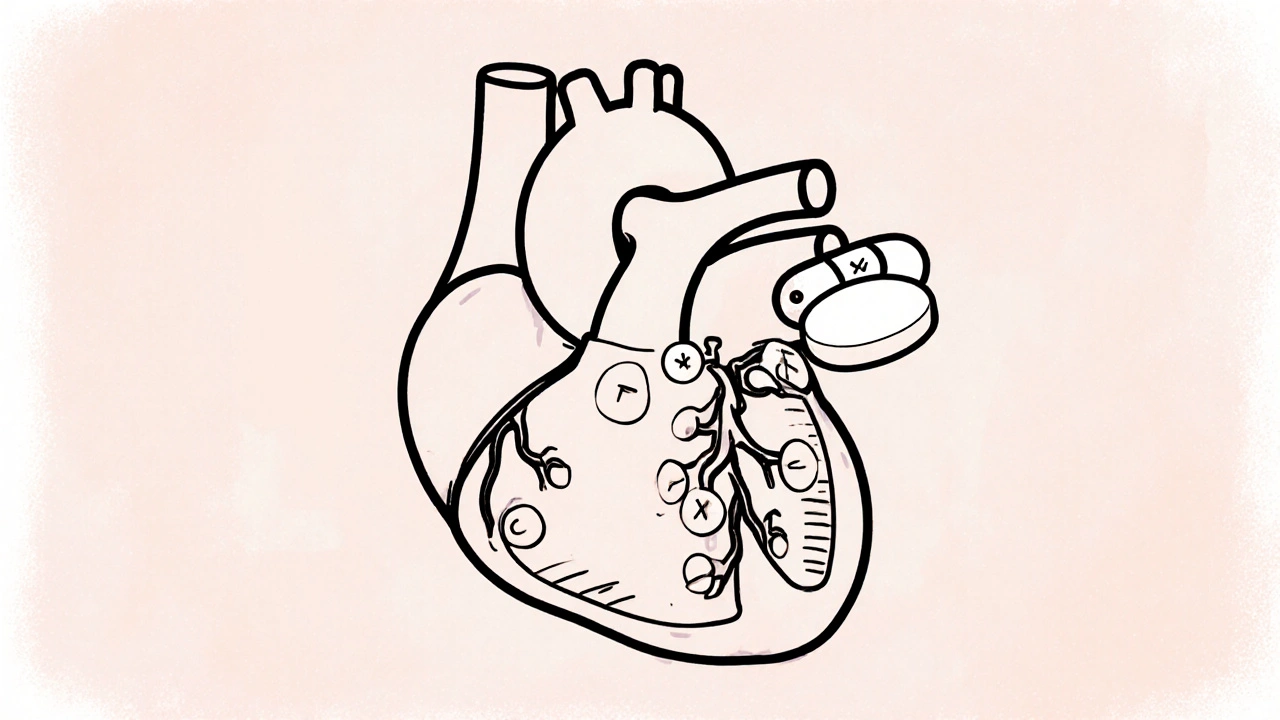
Zebeta (Bisoprolol) vs Other Beta‑Blockers: Detailed Comparison
A clear, detailed comparison of Zebeta (bisoprolol) with other beta‑blockers, covering efficacy, dosing, side effects, and how to choose the right option.
View more
When your heart is working too hard, Bisoprolol, a selective beta-1 blocker used to treat high blood pressure and heart conditions. Also known as a cardioselective beta blocker, it helps slow your heart rate and reduce the force of each beat, making it easier for your heart to pump blood without extra strain. Unlike older beta blockers that affect the whole body, Bisoprolol mostly targets the heart, which means fewer side effects like fatigue or cold hands for most people.
Bisoprolol doesn’t cure high blood pressure or heart disease—but it gives your heart a break. It’s often prescribed when lifestyle changes alone aren’t enough, or when you’ve had a heart attack and need to lower your risk of another. It’s also used for chronic heart failure, where it helps the heart pump more efficiently over time. Studies show people who take Bisoprolol regularly have fewer hospital visits and live longer compared to those who don’t. It’s not a quick fix—you won’t feel different right away—but the benefits build up over weeks.
It’s often paired with other medications like diuretics or ACE inhibitors, especially in older adults. You might see it mentioned alongside metoprolol, another beta blocker used for similar heart conditions, but Bisoprolol has a longer half-life, so it’s usually taken just once a day. It’s also less likely to cause breathing issues than non-selective beta blockers, which makes it safer for people with mild asthma or COPD. But it still isn’t for everyone—people with very slow heart rates, severe heart failure, or certain types of heart block should avoid it.
If you’re on Bisoprolol, you’ll need regular checkups to monitor your heart rate and blood pressure. Don’t stop it suddenly—it can trigger chest pain or even a heart attack. Your doctor will help you taper off safely if needed. Side effects like dizziness or tiredness are common at first, but they usually fade as your body adjusts. If you feel your heart is beating too slow or you get short of breath easily, call your doctor. Most people tolerate it well, and many stay on it for years without issues.
The posts below cover real-world situations where Bisoprolol comes up—like how it interacts with other heart meds, what to do if you miss a dose, how it fits into managing hypertension alongside diet changes like the DASH plan, and why consistency matters more than dose size. You’ll also find related info on other cardiovascular drugs, how to spot dangerous interactions, and what to ask your doctor when a beta blocker is suggested. Whether you’re new to this medication or have been taking it for years, these guides give you the practical details you won’t get from a pharmacy label.
A clear, detailed comparison of Zebeta (bisoprolol) with other beta‑blockers, covering efficacy, dosing, side effects, and how to choose the right option.
View more