
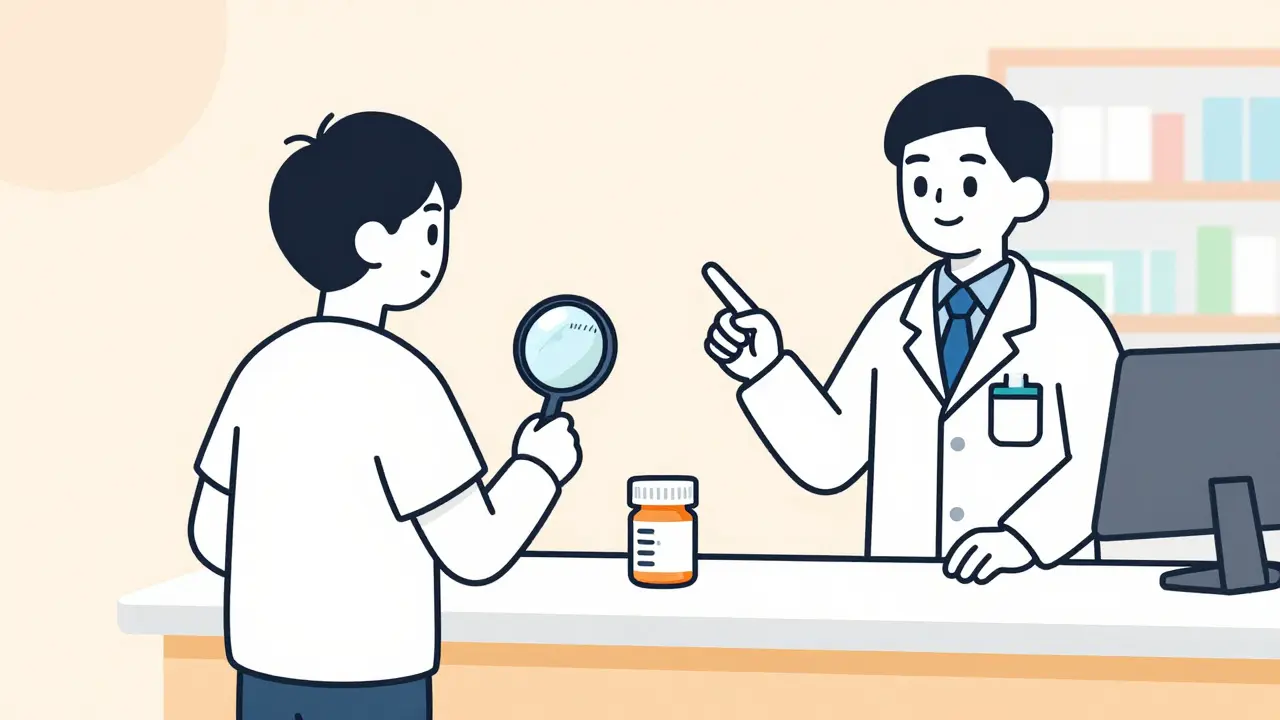
Every time you pick up a prescription, you’re holding a document that could mean the difference between healing and harm. Prescription labels aren’t just small pieces of paper with tiny print-they’re your first line of defense against dangerous mistakes. Yet most people grab their meds, glance at the name, and walk out without asking a single question. That’s a risky habit. In 2023, over 1.3 million medication errors occurred in the U.S., and nearly 22% of them came from misunderstandings on the prescription label itself.
What’s on Your Prescription Label (And Why It Matters)
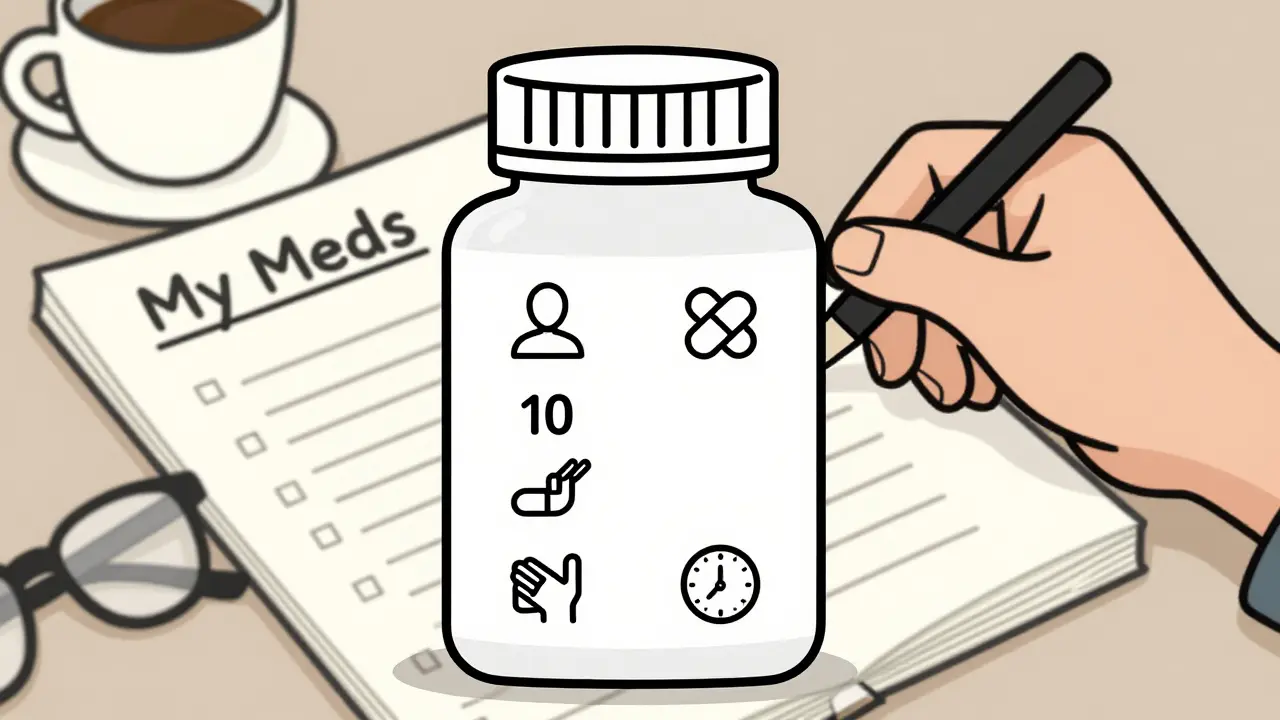
Your prescription label isn’t random. It’s legally required to include nine key pieces of information, set by the National Association of Boards of Pharmacy:- Your full name
- The prescriber’s name
- The drug’s brand and generic name
- The strength (like 10 mg, 500 mg)
- The dosage form (tablet, capsule, liquid)
- The quantity dispensed
- How and when to take it
- Number of refills allowed
- The pharmacy’s contact info
9 Questions to Ask Before You Leave the Counter
Don’t assume the pharmacist knows you understand everything. They’re busy. You’re the one who has to live with the consequences. Here’s what to ask:- Is this the same medicine I was taking before? Brand names change. Generic names confuse people. If your new pill looks different than last time, ask: "Is this the same drug?" Some people stop taking meds because they think the new pill isn’t "real"-and that’s how relapses happen.
- What’s the generic name? Your doctor might say "Lipitor," but the label says "atorvastatin." Knowing both helps you compare prices and avoid duplicates. If you’re on multiple prescriptions, mixing up brand and generic names can lead to double dosing.
- How exactly should I take this? "Take one daily" sounds simple-but what time? With food? On an empty stomach? Can you crush it? Some pills lose effectiveness if chewed. Others must be taken with water, not juice. Antibiotics like doxycycline can’t be taken with dairy-it blocks absorption.
- What happens if I miss a dose? Skipping a pill is common. But the fix isn’t always "take two next time." For blood pressure meds, doubling up can crash your pressure. For antidepressants, it can trigger serotonin syndrome. Ask what to do if you forget.
- How should I store this? About 15% of prescriptions need refrigeration. If you leave insulin, certain antibiotics, or thyroid meds on the counter, they can go bad in days. One patient in Perth left their blood thinner in the bathroom cabinet for weeks-heat destroyed it. Always check: "Does this need to be cold?"
- Are there foods, drinks, or other meds I should avoid? Grapefruit ruins dozens of common drugs. Alcohol clashes with painkillers and anxiety meds. Even OTC stuff like ibuprofen or antacids can interfere. Ask: "What should I not mix with this?"
- What side effects are normal? What’s dangerous? Nausea? Drowsiness? Dizziness? Those might be mild. But chest pain, swelling, trouble breathing? That’s an emergency. Ask for a clear list: "What’s a normal reaction, and what means I need to call 000?"
- How many refills do I have left? Running out of meds is dangerous. If you’re on a long-term drug like statins or insulin, you need to plan ahead. Don’t wait until the last pill to ask.
- Can I get this in large print or a different language? Over 25 million Americans have limited English skills. Many seniors struggle with small text. Pharmacies are legally required to offer large-print labels and translation services. Just ask.
The "5 Rights" Check-Your Personal Safety Routine
The Institute for Safe Medication Practices created the "5 Rights" system for a reason: it works. Before you swallow any pill, run through this checklist:- Right Patient - Is your name on the bottle? Not your spouse’s, not your kid’s.
- Right Medicine - Does the name match what your doctor prescribed? If you’re unsure, compare it to your prescription slip or e-record.
- Right Amount - Is the dose correct? A 10 mg tablet isn’t the same as a 50 mg one. Double-check the number.
- Right Way - Are you supposed to swallow it? Apply it? Inject it? Don’t guess.
- Right Time - Morning? Night? With meals? Every 8 hours? Timing affects how well the drug works.
Why Labels Vary-And What That Means for You
Not all pharmacies label the same way. In Alabama, generic names are required. In California, labels must include Spanish if you ask. Some use QR codes that link to video instructions. Others still print tiny, cramped text. A 2023 study found that patients using pharmacies with QR codes linking to video explanations made 31% fewer errors. If your pharmacy doesn’t offer this, ask if they can set it up. Many now do-at no extra cost. Also, don’t assume your next refill will look identical. Pharmacies switch suppliers. A pill that was blue last time might be white now. That doesn’t mean it’s wrong-but it does mean you should verify.What to Do If Something Doesn’t Look Right
If your label says "take once daily" but your doctor said twice, speak up. If the expiration date is last month, don’t take it. If the pharmacy gave you 30 pills but your refill says "100," call them back. Mistakes happen-but they’re fixable if caught early. If you’re still unsure, don’t be shy. Ask to speak with the pharmacist directly. Independent pharmacies are more likely to take time with you than big chains. In fact, independent pharmacies scored 4.3/5 for labeling clarity on Trustpilot, while CVS and Walgreens hovered around 3.1-3.2.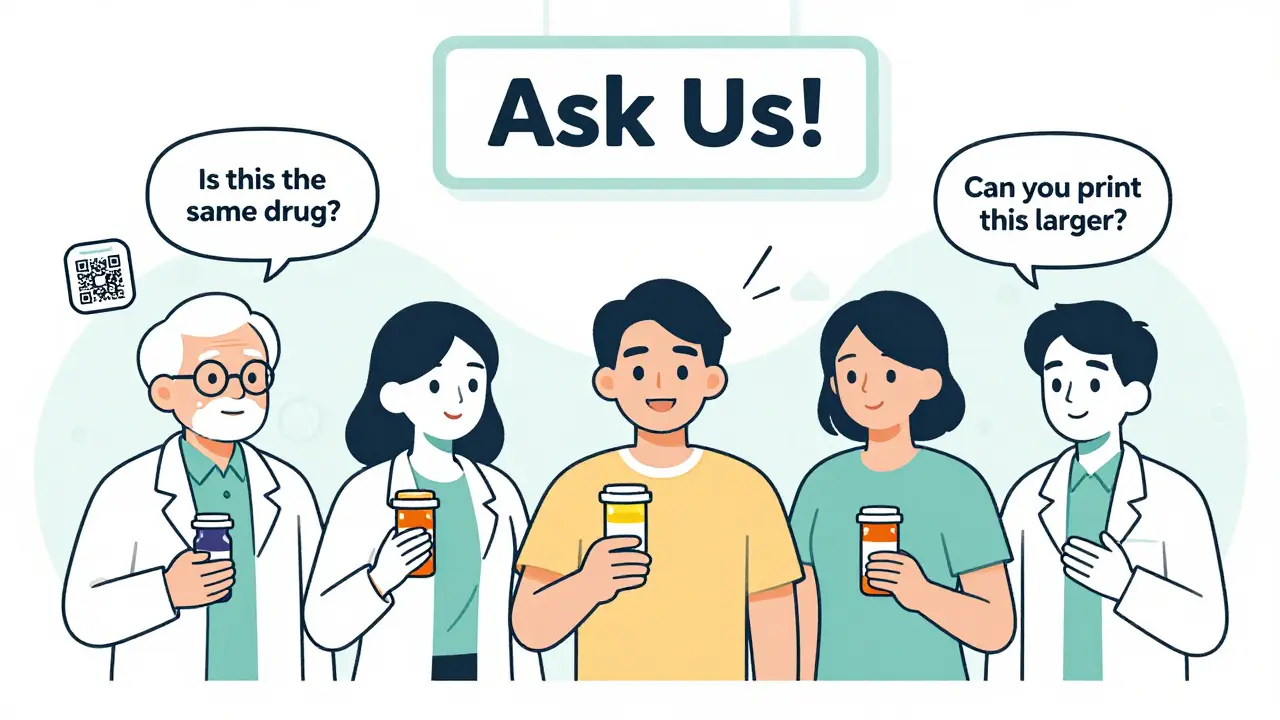
Technology Is Changing Labels-But You Still Need to Ask
The FDA just approved its first augmented reality label system. Point your phone at the bottle, and dosage instructions pop up on your screen. That’s cool. But it’s only available in 150 Walgreens stores right now. Digital tools help-but they don’t replace human verification. A 2023 survey found that even with AI-powered label checks, 41% of errors were still caught by patients asking questions. Technology can’t know if you’re allergic to sulfa. It can’t tell if you’ve been drinking more alcohol lately. Only you can.Bottom Line: Two Minutes Can Save Your Life
Spending two minutes at the pharmacy counter asking these questions isn’t being difficult. It’s being smart. Patients who actively verify their labels reduce adverse events by up to 47%, according to the American Association of Colleges of Pharmacy. You wouldn’t drive a car without checking the brakes. Don’t take a drug without checking the label. Your body doesn’t come with a manual. But your prescription label? That’s your manual. Read it. Ask about it. Make sure you understand it.What should I do if I can’t read the label?
Ask the pharmacist for a large-print version. All U.S. pharmacies are required to provide this at no cost. You can also request the label in another language if you’re not fluent in English. Many pharmacies offer translation services through phone interpreters or printed multilingual sheets. Don’t guess-get help.
Can I trust the pharmacy’s label if it looks different from my last refill?
Not always. Pills can change color, shape, or size when a different manufacturer supplies the generic drug. That doesn’t mean it’s wrong-but it does mean you should double-check the name and strength. If you’re unsure, call the pharmacy or your doctor. Never assume it’s the same just because it’s the same drug.
Why does my label say "take on an empty stomach" but my doctor said with food?
This happens when there’s a mismatch between what the prescriber wrote and what the pharmacy interpreted. Some drugs are absorbed better with food, others cause nausea if taken with it. Always clarify with your pharmacist. They can check the prescribing info and confirm the correct instructions. If there’s a conflict, ask them to contact your doctor.
What if I think my prescription label has a mistake?
Don’t take it. Call the pharmacy immediately. If they say it’s correct but you still feel uneasy, call your doctor. Keep a record of what the label says and what your doctor prescribed. Medication errors are more common than people admit, and catching them early saves lives. Pharmacies are required to review and correct errors-no questions asked.
Are there free resources to help me understand my prescription label?
Yes. The FDA’s "Medication Check-Up" program offers free label reviews at over 8,400 pharmacies nationwide. Many community health centers and senior centers also provide one-on-one help with medication labels. Ask your pharmacist where to find these services. You don’t need insurance or a referral-just show up.
Jay Ara
i used to just grab my script and go till my grandma nearly died from mixing her blood thinner with grapefruit juice. now i ask everything. its not awkward its lifesaving.
Michael Bond
this is spot on. simple questions save lives.
Kuldipsinh Rathod
my mom cant read small print and the pharmacy never offered her big text till i made a scene. they were shocked. why is this even a thing we have to fight for?
SHAKTI BHARDWAJ
pharmacies are run by robots who dont care if you live or die. theyll give you poison and smile while doing it. why do we still trust them? the system is broken and you know it.
Matthew Ingersoll
in india we have a phrase: "dawa ka naam sunke hi darr lagta hai". hearing the drug name alone makes you scared. this guide should be translated into every language in the world.
carissa projo
medication isn't just chemistry-it's a conversation between your body, your doctor, your pharmacist, and your own courage to say "wait, i dont understand." every question you ask is a quiet act of rebellion against a system that wants you passive. keep asking. your life is worth the discomfort.
josue robert figueroa salazar
you think this is a problem? try being on 12 meds and having your label say "take 2x daily" but your script says 1x. they dont care. you're just another number.
david jackson
i spent three hours at the pharmacy last week because the label said "take with food" but the pharmacist said "take before breakfast" and my doctor said "take after" and the bottle said "take at bedtime" and i just sat there holding the pill like it was a bomb and wondered if my body was a warzone and if any of this was real anymore. someone please tell me if i'm the only one who feels this way.
Jody Kennedy
i started printing out the 5 rights checklist and taping it to my fridge. now my whole family checks meds together. it’s become our Sunday ritual. weird? maybe. life-saving? absolutely.
christian ebongue
congrats you read a label. now go fix the system that makes you need to.
jesse chen
I just want to say... thank you... for writing this... it's so important... and I hope everyone reads it... because... people die from this... and it's preventable... and we can do better...
Alex Ragen
The very notion that a layperson must perform a clinical audit on a pharmaceutical label is not a testament to patient empowerment-it is an indictment of a medical-industrial complex that has outsourced liability to the vulnerable. The label is not a manual; it is a legal loophole dressed in Helvetica.