Safe Medicine Storage: How to Keep Pills Secure and Effective
When it comes to safe medicine storage, the practice of keeping medications in conditions that prevent misuse, degradation, or accidental ingestion. Also known as medication safety, it’s not just about locking up pills—it’s about protecting your family, your health, and your wallet. Every year, thousands of children end up in emergency rooms because they found pills in an open cabinet. Older adults mix up medications because labels faded or bottles were left on the counter. And many drugs lose their power when stored in hot, humid places like bathrooms. Safe medicine storage isn’t optional—it’s basic home safety, like having smoke detectors.
childproof medicine, containers designed to resist opening by young children. Also known as pediatric-resistant packaging, it’s required by law for most prescription drugs—but it’s not foolproof. Kids can still get into them with time and patience. That’s why the best practice is to store all meds out of reach and sight, even if the bottle says "child-resistant." The same goes for medicine expiration, the date after which a drug may no longer be effective or safe. Many people assume expired pills are harmless, but some can break down into toxic compounds. Others simply stop working. Antibiotics that don’t kill bacteria can lead to resistant infections. Insulin that’s gone bad won’t control blood sugar. Always check expiration dates and toss anything old.
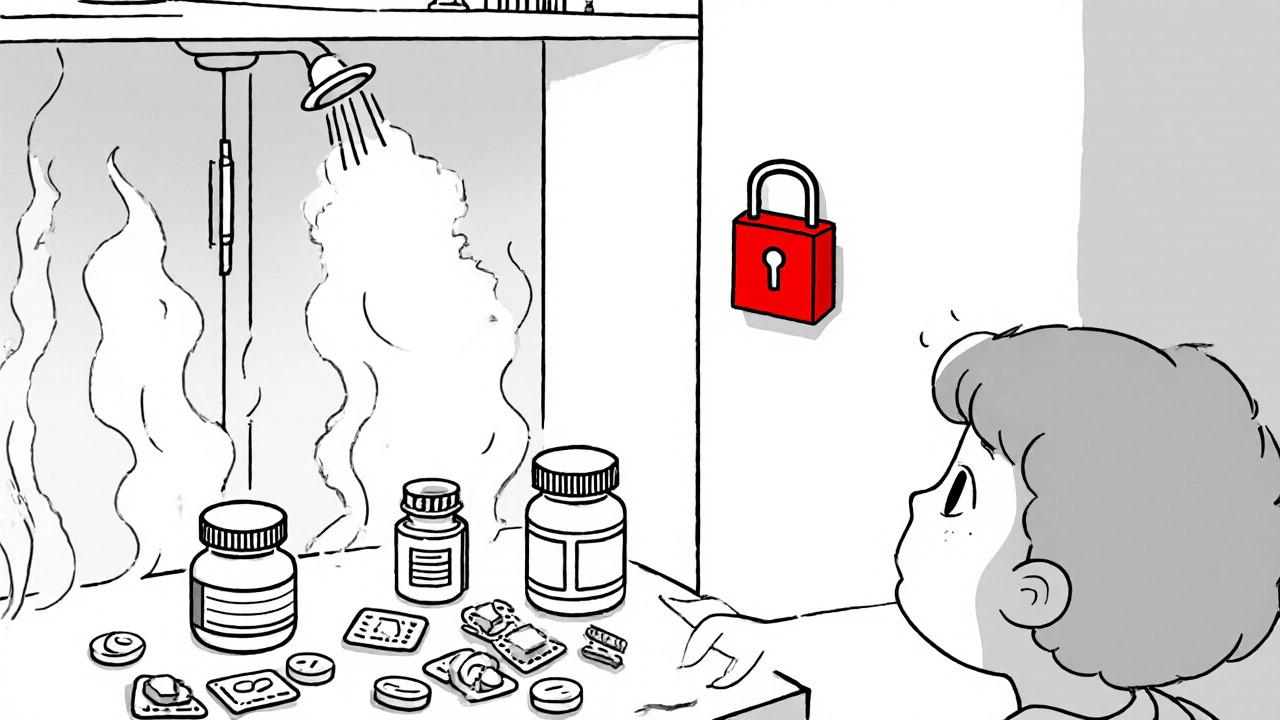
Where you store your meds matters more than you think. The bathroom isn’t a good spot—heat and moisture from showers ruin tablets and capsules. The kitchen cabinet near the stove? Same problem. A cool, dry drawer in a bedroom or a locked cabinet in a hallway works better. If you have kids, pets, or visitors who might be at risk, use a lockbox or a medicine safe. These cost less than $20 and can prevent tragedies. Keep a list of all your meds, including dosages and why you take them. If someone else needs to help you—like a caregiver or family member—they’ll know what’s what.
Don’t forget about disposal. Flushing pills down the toilet used to be common advice, but now most drugs should go in a take-back program or a drug disposal bag. If neither is available, mix them with coffee grounds or cat litter, seal them in a container, and throw them in the trash. Never leave empty pill bottles lying around—someone could reuse them or find personal info on the label. Remove or scratch off your name and prescription number.
What you’ll find below are real, practical guides from people who’ve dealt with these issues firsthand. You’ll learn how to store insulin for travel, how to keep opioids away from teens, why some meds need refrigeration, and how to spot fake pills disguised as real ones. These aren’t theoretical tips—they’re the kind of advice that keeps families safe. Whether you’re managing chronic pain, diabetes, mental health meds, or just a few over-the-counter bottles, the rules are the same: keep them locked, dry, labeled, and out of reach. This isn’t about being paranoid. It’s about being smart.