PSA Test: What It Is, When It’s Needed, and What the Numbers Really Mean
When your doctor mentions a PSA test, a blood test that measures prostate-specific antigen, a protein made by the prostate gland. Also known as prostate-specific antigen test, it’s one of the most common tools used to check for prostate problems — but it’s far from perfect. High PSA levels don’t always mean cancer. They can also come from an enlarged prostate, an infection, or even riding a bike the day before. That’s why understanding what the test actually tells you matters more than the number itself.
The prostate, a small gland in men that surrounds the urethra and helps make semen isn’t always a silent organ. When it’s inflamed, enlarged, or cancerous, it releases more PSA into the blood. But here’s the catch: prostate cancer, a slow-growing cancer that often shows no symptoms until it’s advanced doesn’t always raise PSA levels, and many men with high PSA never develop cancer. That’s why doctors don’t just look at one number. They track changes over time — a rising PSA year after year is more telling than a single high result. Age, race, and family history also play a role. A 70-year-old man with a PSA of 6 might be fine, while a 50-year-old with the same number could need further testing.
What happens after a high PSA? Your doctor might suggest a prostate biopsy, a procedure where small tissue samples are taken from the prostate to check for cancer cells. But not everyone needs one. Some men opt for active surveillance — regular PSA tests, MRIs, and checkups — instead of jumping straight to treatment. That’s because many prostate cancers grow so slowly they never cause harm. The real goal isn’t to find every single cancer. It’s to find the ones that could become dangerous and miss the ones that won’t.
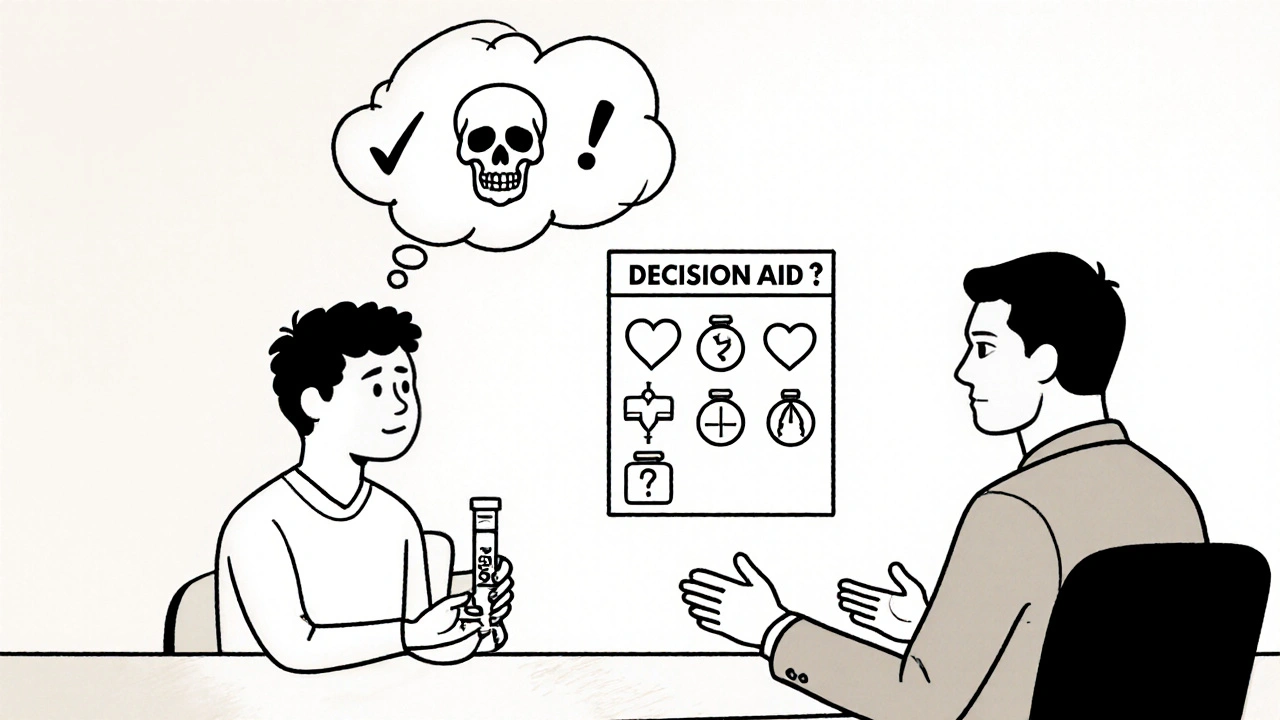
There’s no one-size-fits-all answer. Some guidelines say men over 50 should talk to their doctor about PSA testing. Others say men with a family history or Black men — who are at higher risk — should start at 45. The key isn’t just getting the test. It’s knowing why you’re getting it, what the results could mean, and what your next steps might be. Below, you’ll find real-world stories and data from men who’ve been through this — from those who caught cancer early to those who avoided unnecessary treatment. You’ll see how PSA fits into bigger pictures like prostate health, medication choices, and long-term decisions. This isn’t about fear. It’s about clarity.