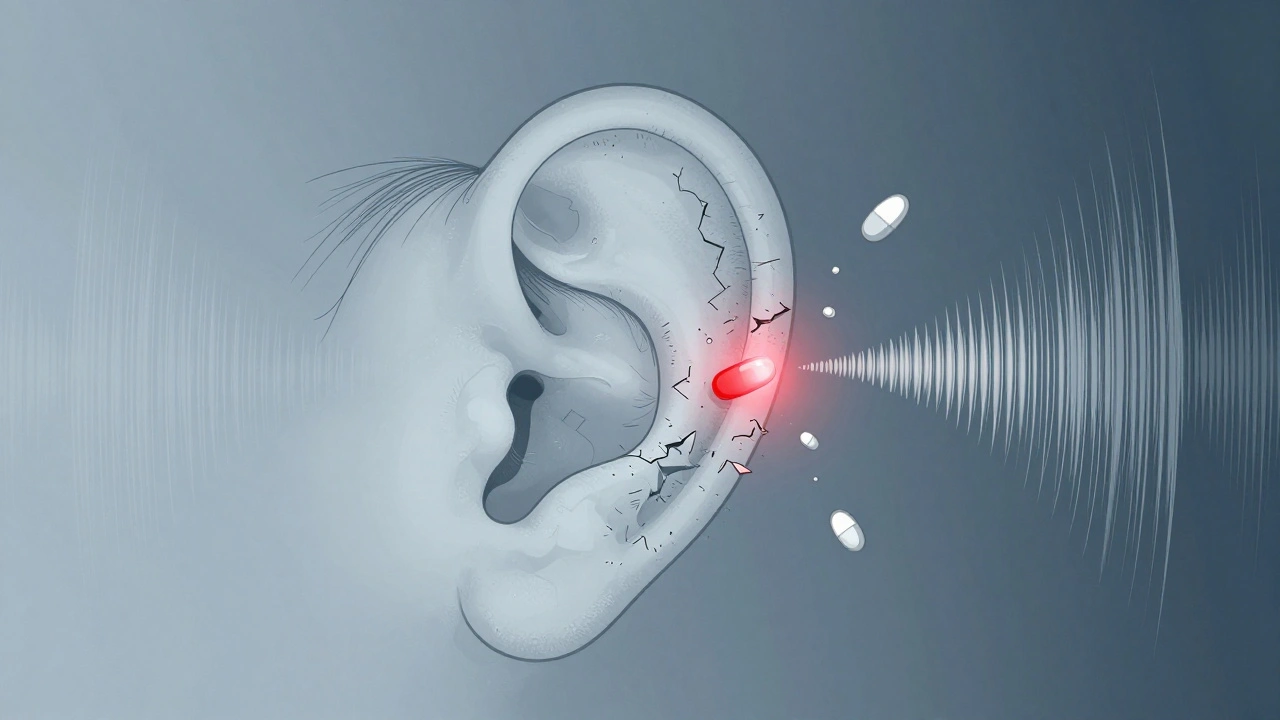
Aminoglycoside Ototoxicity: Risks, Signs, and How to Stay Safe
When you take an aminoglycoside, a class of powerful antibiotics used for serious bacterial infections like sepsis or pneumonia. Also known as gentamicin-type drugs, they’re often lifesavers—but they can quietly damage your ears. This damage, called aminoglycoside ototoxicity, the toxic effect of these antibiotics on the inner ear, isn’t rare. It happens in up to 20% of people who get prolonged treatment, and once the hearing or balance loss occurs, it’s often permanent.
These drugs don’t just hurt your hearing—they can wreck your balance system too. The vestibular system, the part of your inner ear that controls balance gets hit just as hard as the cochlea. People might feel dizzy, nauseous, or unsteady without realizing it’s the antibiotic causing it. That’s why doctors monitor kidney function closely: if your kidneys can’t clear the drug fast enough, it builds up and starts poisoning your ears. Older adults, people with existing kidney problems, or those on multiple ototoxic drugs like loop diuretics or chemotherapy agents are at highest risk.
There’s no magic way to reverse the damage, but there are ways to stop it before it starts. Doctors now use lower doses, shorter courses, and check blood levels of the drug to keep them in the safe zone. Newer research shows that genetic testing might soon help identify who’s most likely to suffer ear damage before they even start treatment. If you’re on an aminoglycoside, pay attention to ringing in your ears, trouble hearing high pitches, or feeling off-balance when standing up. Tell your doctor right away—early action can sometimes limit the damage.
You’ll find real cases in the posts below: how people caught the warning signs too late, how clinicians use drug monitoring to avoid disaster, and what alternatives exist when the risk is too high. Some posts dig into how these drugs interact with other meds you might be taking—like those for diabetes or high blood pressure—that can make ototoxicity worse. Others show how patients and doctors are learning to spot early symptoms before hearing loss becomes permanent. This isn’t theoretical. It’s happening in hospitals, clinics, and homes every day. What you learn here could help you—or someone you care about—avoid a life-changing side effect.