
When you walk into a doctor’s office, emergency room, or hospital, the most important thing you can bring isn’t your insurance card or ID-it’s your medical history. Not just a list of diagnoses, but the full picture: every pill you take, every supplement, every herbal tea, every over-the-counter painkiller you grab without a prescription. Missing even one detail can lead to a dangerous mistake. In fact, nearly half of all medication errors happen because providers don’t have the complete picture of what a patient is taking. And those errors? They cause hospitalizations, organ damage, and sometimes death.
Why Your Medication List Matters More Than You Think
Medication reconciliation isn’t just a bureaucratic step. It’s a life-saving process. Every time you switch care settings-whether you’re admitted to the hospital, moved to a rehab unit, or discharged back home-your medications should be reviewed, compared, and corrected. The goal? To make sure no drug is accidentally stopped, duplicated, or given in a harmful combination.
Here’s what happens when it goes wrong: A patient on blood thinners gets prescribed a new antibiotic. The doctor doesn’t know about the patient’s daily aspirin or the fish oil supplement they take for joint pain. The result? A dangerous spike in bleeding risk. Or worse-a patient with kidney disease is given a common painkiller like ibuprofen, which can cause sudden kidney failure. These aren’t rare cases. Studies show that over 20% of medication discrepancies during care transitions lead to potential harm. And 88% of those errors happen to people taking five or more medications.
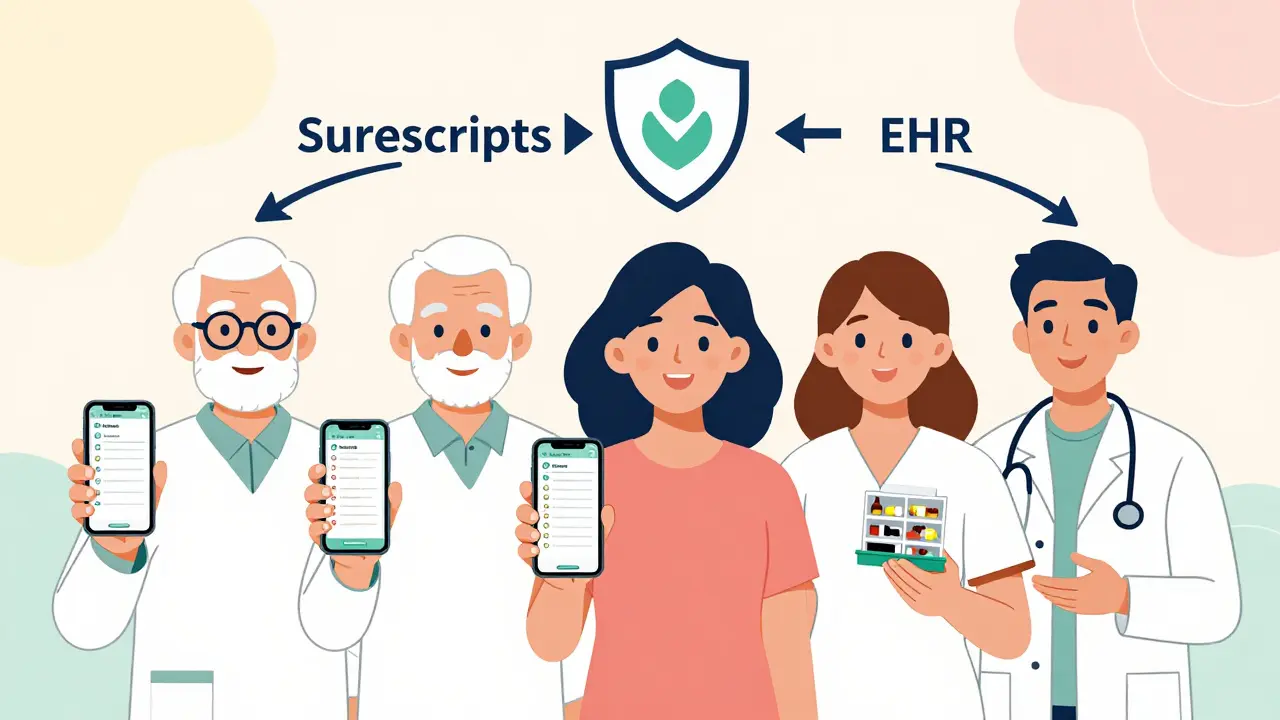
Electronic systems help. Surescripts, the largest medication history network in the U.S., pulls data from 98% of pharmacies and all major pharmacy benefit managers. In 2024 alone, it delivered over 3.3 billion medication histories. But here’s the catch: it still misses things. Cash-pay prescriptions. Over-the-counter meds. Supplements. Herbal remedies. If you don’t tell your provider, even the smartest system won’t know.
What You Need to Track (And How)
Don’t rely on memory. Memory fails. Stress, fatigue, aging-it all makes recalling doses and names harder. Instead, build a real, updated list. Every time your meds change, update it. Include:
- Brand and generic names of all prescription drugs
- Dosage and frequency (e.g., 10 mg once daily)
- Over-the-counter medications: pain relievers, antacids, sleep aids
- Vitamins, minerals, and supplements: fish oil, magnesium, vitamin D
- Herbal products: St. John’s wort, echinacea, ginkgo
- Topical creams, patches, inhalers, eye drops
- Any allergies or past reactions (even if you think it’s "just a rash")
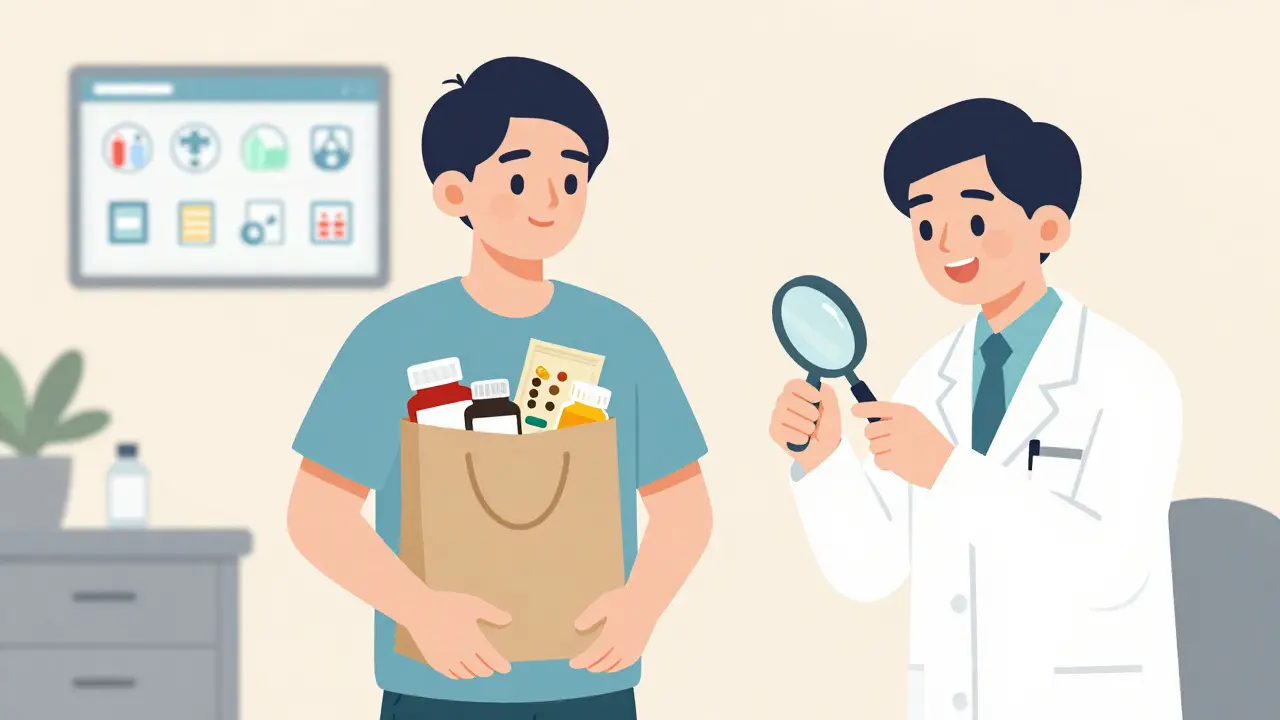
The best way to do this? The brown bag method. Before every appointment, gather everything you take-pills, liquids, patches-and bring them in a bag. Your provider can see the actual bottles, check labels, spot duplicates, and notice if you’re taking expired meds. Studies show this cuts medication discrepancies by 40% compared to just telling them verbally.
And don’t forget: some supplements interact with common drugs. St. John’s wort can make birth control, antidepressants, and blood thinners less effective. Grapefruit juice can turn cholesterol meds into toxic doses. Your pharmacist knows this. So do your doctors. But only if you tell them.
How Providers Use Your Information
Modern systems help, but they’re not magic. Electronic health records (EHRs) now integrate with pharmacy databases, flagging potential drug interactions in real time. High-alert medications-like insulin, anticoagulants, and IV opioids-are automatically highlighted. Systems can even check for kidney or liver issues that affect dosing.
But here’s the problem: alerts get ignored. Clinicians see so many warnings that many become "alert fatigue." One study found nearly half of all interaction alerts are overridden because they’re too vague. "Avoid with NSAIDs" doesn’t help if you don’t know which NSAIDs you’re taking. That’s why your input matters. You’re the only one who knows what’s actually in your medicine cabinet.
At top hospitals, teams use structured communication tools like SBAR (Situation, Background, Assessment, Recommendation) to hand off patient info during shifts. A nurse says: "Patient is on warfarin, recently started amiodarone, and reports dizziness. INR was 5.2 yesterday. Recommend holding warfarin and checking repeat INR." That kind of clarity saves lives. But it starts with you giving accurate, complete info.
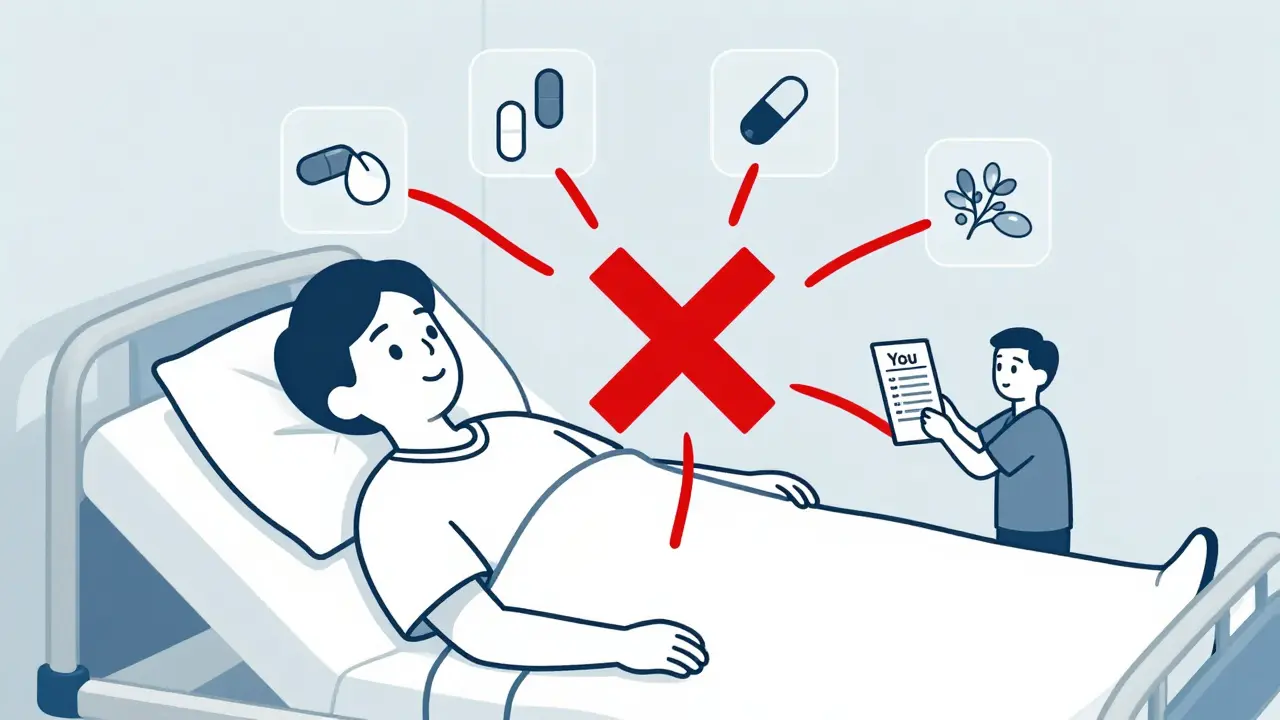
What If You Can’t Remember Everything?
You’re not alone. Over half of Americans struggle to understand medication instructions. Elderly patients, caregivers, and people with chronic conditions often juggle 10+ pills a day. If you’re overwhelmed, here’s what works:
- Use a pill organizer with labeled compartments
- Take a photo of your medicine cabinet each month
- Ask your pharmacist to print a current list-they’re required to keep accurate records
- Use your patient portal: most U.S. hospitals now let you view and edit your medication list online
One study at Johns Hopkins found that when patients reviewed and confirmed their own medication lists before discharge, anticoagulant errors dropped by 62%. That’s not luck. That’s control.
Common Mistakes (And How to Avoid Them)
People make the same mistakes over and over:
- "I don’t take anything serious." → But what about your daily aspirin? Your melatonin? Your turmeric capsules?
- "My pharmacy told me it’s fine." → Pharmacists don’t know your full history unless you tell them.
- "I didn’t think it mattered." → OTC meds are drugs too. They can interact.
- "I forgot." → Write it down. Keep it in your wallet. Set a phone reminder.
Also, don’t assume your provider already knows. Even if you saw a doctor last month, things change. A new painkiller. A new supplement. A new allergy. Update them every visit.
The Bigger Picture: Safety Is a Team Effort
Medication safety isn’t just about technology. It’s about communication. The U.S. spends over $4 billion a year on medication safety systems. Hospitals face financial penalties if they have too many errors. But none of it works if you don’t speak up.
Think of it this way: your provider is a detective. Your medical history is the evidence. If you leave out key facts, they can’t solve the case. But if you give them the full story-accurate, detailed, honest-they can prevent harm before it happens.
And it’s getting better. New rules now require patients to access their health records online. By 2026, AI tools will help predict interactions before they occur. Google Health’s pilot system cut reconciliation time by 63%. But even the smartest AI can’t replace you. Only you know what you’re really taking.
Final Takeaway: Be Your Own Advocate
You don’t need to be a medical expert. You just need to be honest and prepared. Bring your list. Bring your bag. Ask questions. Say: "I take this every day-does it still work with what you’re prescribing?"
Every year, over a million adverse drug events could be prevented just by better communication. That’s not a guess. That’s the National Academy of Medicine’s projection. And it starts with you.
Why is it important to tell my doctor about over-the-counter meds and supplements?
Over-the-counter meds and supplements aren’t harmless. Many interact with prescription drugs. For example, St. John’s wort can reduce the effectiveness of birth control and antidepressants. Ibuprofen can harm kidney function in people with heart disease. Even common vitamins like vitamin K can interfere with blood thinners. Your doctor needs the full picture to avoid dangerous combinations.
What if I forget to bring my medications to my appointment?
If you can’t bring your pills, write down everything you take: name, dose, frequency, and reason. Use your phone to take a photo of your medicine cabinet. Most pharmacies can also print a current list-ask them. Even an incomplete list is better than nothing. Tell your provider exactly what you remember and what you’re unsure about. Honesty is more important than perfection.
Can my provider share my medication history with other doctors?
Yes, under HIPAA rules, your provider can share your medication information with other healthcare providers involved in your care-without your written consent-because it’s for treatment purposes. That’s why systems like Surescripts exist: to securely share medication data across pharmacies and clinics. But you still need to verify the information is accurate. Don’t assume it’s all correct.
How do I know if a medication interaction is serious?
High-alert medications carry the biggest risks: blood thinners (like warfarin), insulin, opioids, and IV antibiotics. If you’re taking any of these, even small changes can be dangerous. Signs of a bad interaction include unusual bruising, dizziness, confusion, nausea, or irregular heartbeat. If you notice anything new after starting a new drug, call your provider. Don’t wait.
Is it really necessary to update my list after every visit?
Yes. Medications change often. A doctor might add one, stop another, or change the dose. Even if you think it’s minor, it matters. A 2023 study found that 67% of patients failed to report changes to OTC meds or supplements. That’s why updating your list after every appointment-not just once a year-is critical. Keep it in your wallet or phone. Check it monthly.



Michelle Jackson
So let me get this straight-you’re telling me I have to carry a brown bag of my meds to every appointment like I’m bringing groceries? And if I forget, I’m just gonna die? I’ve been taking the same three pills for 12 years. My pharmacist knows me by name. Why am I the one holding the burden of your broken system?
Meanwhile, my doctor still prescribes me things that interact with my supplements because they didn’t check the damn database. It’s not my fault your EHR can’t talk to your pharmacy system. Stop putting the weight on patients. Fix the tech.
Suchi G.
I come from a country where we don’t have electronic health records, where doctors write prescriptions on napkins and patients travel three hours to get one pill. I’ve seen grandmothers take 17 different herbs because their cousin said it helped with blood pressure. No one checks. No one records. No one cares until someone collapses.
Here in India, we don’t have Surescripts. We have trust. We have memory. We have mothers who remember every pill their child took since birth. But even here, when my father was hospitalized after a stroke, they gave him a drug that killed his kidneys because they didn’t know he took ashwagandha daily. I cried in the hallway. No one listened.
So yes, I will bring my bag. I will list every drop. I will write it down. Because in a system that doesn’t care, the only thing that saves you is your own stubbornness to speak up. This isn’t about convenience. It’s about survival.
becca roberts
Oh wow. A whole essay on why you should tell your doctor you take vitamin D. Did we just get a TED Talk from a pharmacy brochure?
Let me guess-next you’ll be telling us not to breathe near people who smoke. I mean, sure, St. John’s wort messes with birth control. But let’s be real: if your doctor can’t look up a supplement interaction in 3 seconds, they shouldn’t be prescribing anything. And if you’re taking 12 different things and can’t remember them, maybe you’re not supposed to be taking them.
Also, ‘brown bag method’? That’s not a medical protocol. That’s a hoarder’s audition for Hoarders: Medical Edition.
Andrew Muchmore
I’ve been on 8 meds for 7 years. I update my list after every visit. I take a photo of my pillbox every Sunday. I don’t need a lecture. I need a system that doesn’t make me repeat this 10 times a year. Stop making patients do your job.
Paul Ratliff
my doc asked if i took creatine. i said yes. he said oh cool. then asked if i took zinc. i said yeah. he said oh. then asked about ashwagandha. i said i dont take that. he said ok. we moved on. no brown bag needed. just talk. its not that hard.
SNEHA GUPTA
There’s a deeper question here. Why do we treat the body like a machine with discrete inputs and outputs? We don’t just take pills-we live in a context. Stress. Sleep. Diet. Culture. Trauma. The supplement you take isn’t just a chemical-it’s a ritual. The tea you drink daily isn’t a drug-it’s comfort.
When we reduce medicine to a checklist, we lose the humanity. The system wants data. But healing needs stories. I don’t want to be a data point. I want to be heard. Maybe if doctors asked, ‘What does your daily routine look like?’ instead of ‘What are you taking?’ we’d get further.
Technology helps. But connection saves lives.
Gaurav Kumar
Let me tell you something about American healthcare. You think this is about safety? No. It’s about liability. Lawyers. Insurance. Bureaucrats. They don’t care if you live or die. They care if they get sued.
Meanwhile, in India, we don’t have 1000-page consent forms. We don’t have 12 forms to fill out just to get a Band-Aid. We have trust. We have family. We have doctors who know your name, your mother’s name, your uncle’s diabetes.
So don’t lecture me about brown bags. I’ve seen real medicine. It doesn’t need a smartphone app. It needs heart. And America? You’ve lost yours.
David Robinson
So let’s be real. Most people don’t know what they’re taking. Half the time, they’re taking expired pills they found in the back of the cabinet. Or they’re mixing OTCs like candy because they think ‘natural’ means ‘safe.’
I’ve seen a guy take 4 different painkillers at once because ‘they all say pain relief on the bottle.’ He ended up in the ER with liver failure. His wife said he didn’t think it mattered.
Yeah. It matters. And if you’re too lazy to write down what you take, you’re not just risking your life-you’re risking everyone else’s. Your pharmacist isn’t your therapist. Your doctor isn’t your psychic. Stop expecting magic.
Jeremy Van Veelen
Imagine this: You’re a poet. You write sonnets about moonlight and grief. Then one day, someone hands you a 17-page form that says, ‘List every emotion you’ve felt in the last 12 months, with timestamps and chemical correlates.’
That’s what this is. We’re turning human bodies into Excel sheets. We’ve replaced empathy with algorithms. We’ve turned trust into compliance.
Yes, I’ll bring my brown bag. But I’ll also bring my rage. Because this isn’t safety. It’s surveillance dressed in scrubs.
Laura Gabel
my mom died because they didn't know she was taking ginkgo with her blood thinner. i dont care how you do it just do it. dont make me write a novel.
jerome Reverdy
Here’s the real issue: the system is designed to fail. EHRs are built for billing, not care. Alerts are so noisy that clinicians disable them. Pharmacists are overworked. Doctors have 8-minute appointments.
So yes, patients need to advocate. But we’re asking the most vulnerable people to fix a broken system. That’s not justice. That’s exploitation.
Instead of telling people to bring their brown bags, let’s fund better integration. Let’s pay pharmacists to do med reconciliations. Let’s give doctors time to listen. Let’s stop pretending this is a patient problem. It’s a system problem. And until we fix that, no list will save anyone.