
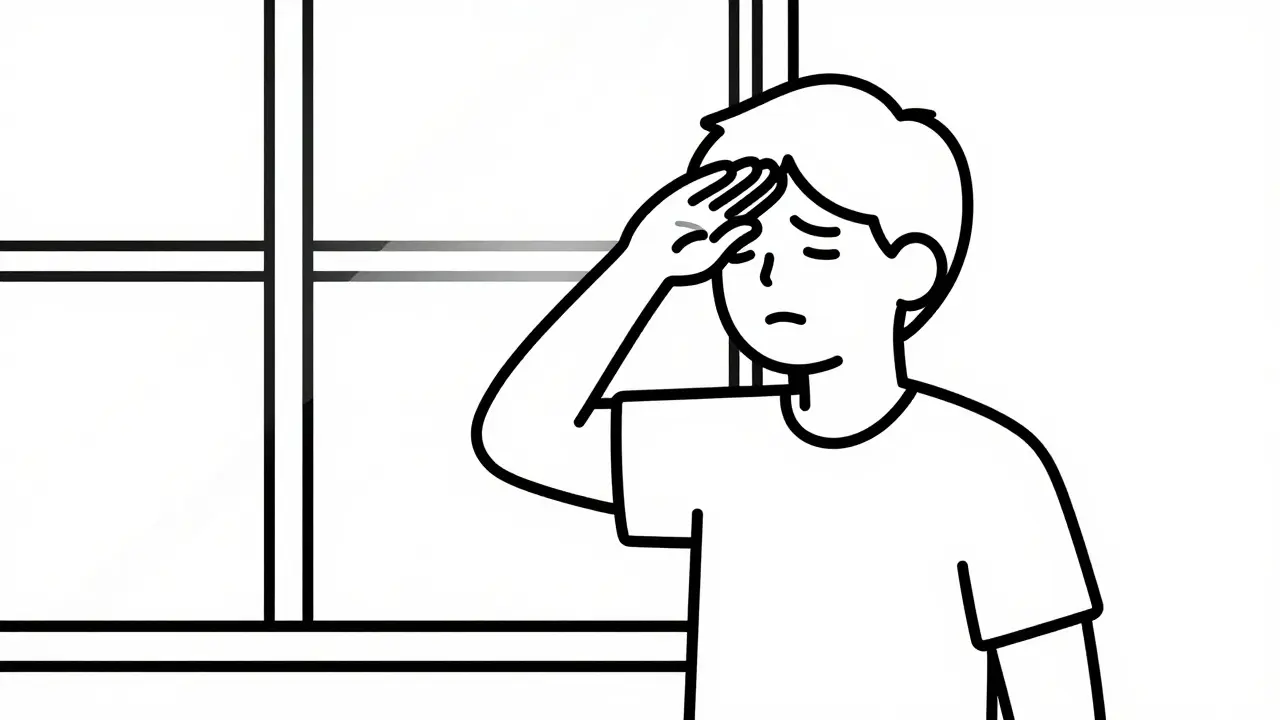
If you find yourself wincing at the brightness of an overcast day or squinting under office fluorescent lights, you might be dealing with more than just typical glare. You could be experiencing photophobia, medically defined as abnormal intolerance to visual perception of light. It sounds scary, but it’s surprisingly common. Data suggests around 35% of the general population deals with some level of light sensitivity at times. For many, it's not just about discomfort-it signals something deeper going on in your eyes or nervous system.
Understanding why your body reacts this way is the first step toward getting your life back to normal. This condition was formally documented over a century ago, yet modern technology and increased screen time have changed how we experience it today. While there isn't a single 'cure' that works for everyone because photophobia is usually a symptom rather than a standalone disease, managing the underlying cause can reduce disability significantly. Some studies show effective treatment can slash migraine-related disability by nearly 40%, giving you hours back in your week.
What Actually Is Photophobia?
Despite the name, this isn't a psychological fear of light. Think of it instead as a sensory processing error. Your brain and eyes are firing off alarm bells when they shouldn't. In a healthy visual system, your iris contracts to limit light entry, and your nerves regulate the signal sent to the thalamus, which acts as a relay station. When you have photophobia, that regulation breaks down.
Research indicates that people with this condition often experience neural activation that is roughly three times higher than normal individuals when exposed to standard office lighting. This isn't just 'stinging' eyes; it's a neurological response. You might notice your pupils aren't constricting properly, allowing too much light into the retina, which creates a cascading effect of pain and headache. The severity varies wildly. For some, it's mild and only happens in direct sun. For others, severe cases occur even in dim rooms with just 50-lux lighting, making basic tasks impossible.
The Three Main Categories of Causes
To fix the problem, you first need to know what type of photophobia you have. Medical guidelines generally split the causes into three distinct buckets. Knowing which bucket yours falls into helps you avoid dead-end treatments.
- Eye-Related Conditions: This accounts for nearly half of all cases. Issues like dry eye syndrome, corneal abrasions, uveitis, or even being missing your iris (aniridia) can trigger this. Uveitis is particularly tricky because light sensitivity is often the first sign, appearing before swelling or redness becomes obvious.
- Neurological Conditions: About 40% of cases stem from how your brain processes pain signals. Migraines are the biggest offender here, with up to 80% of sufferers reporting light sensitivity during attacks. Other conditions include meningitis, traumatic brain injury, or post-concussion syndrome.
- Medication Induced: Sometimes your prescription drug is the culprit. Certain antibiotics, diuretics, and acne medications are known to increase photosensitivity as a side effect. If you recently started a new pill and your light tolerance dropped, check the label.
It's also worth noting who gets it most often. Statistics show women report it more frequently than men, and it peaks between ages 25 and 55. This demographic data often correlates with hormonal changes or the onset of chronic migraine cycles common in early career years.
Diagnosis: Beyond Just "Sensitive Eyes"
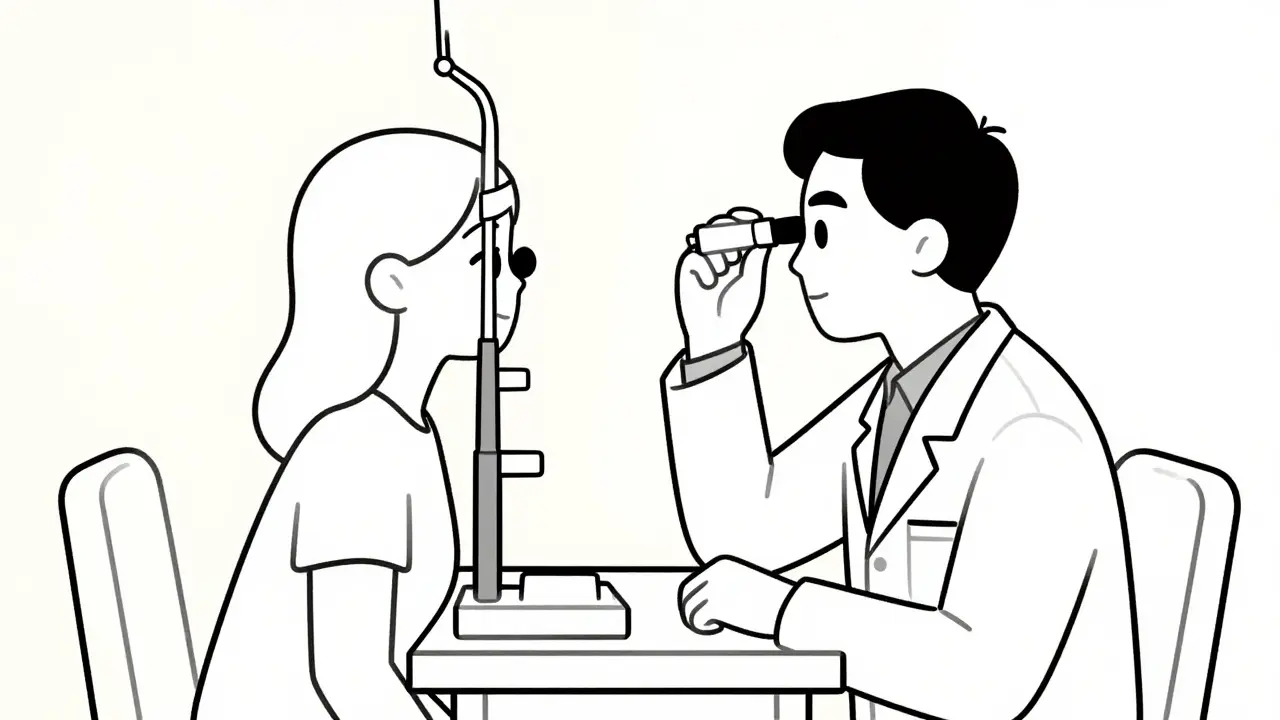
One of the biggest frustrations patients face is dismissal. Many report being told their symptoms are "normal" when they clearly aren't. A proper workup shouldn't just be a quick glance through a flashlight in a doctor's exam room. A comprehensive evaluation should cost anywhere between $300 and $1,200 depending on your region and insurance coverage, but it's an investment in your quality of life.
Doctors look for "red flags." If you have sudden onset sensitivity accompanied by a stiff neck or fever, that points toward infection like meningitis rather than a chronic issue. If the pain comes with headaches, nausea, and aura, it points toward migraines. Modern diagnostics are improving, too. New tools like the Photosensitivity Assessment Device (PAD-2000) can now measure your pupillary reflex with high accuracy, removing the guesswork from the equation.
You should track your own symptoms while waiting for that appointment. Use a journal to log when it happens. Is it specifically morning sun? Or computer screens? Tracking the lux levels-the unit of illumination-can help. Normal office lighting is usually around 500 lux. If you feel bad at 200 lux, that's clinically significant data for your specialist.
Immediate Relief Strategies
While you figure out the root cause, you need to survive the days. Ignoring the symptoms doesn't help, but neither does hiding in a dark cave forever. You want to control your environment. Start by modifying your lighting. Dimming overhead lights to 100-200 lux can provide instant relief. If you're working, switch to task lamps that focus light downward, away from your peripheral vision, which is often more sensitive than central vision.
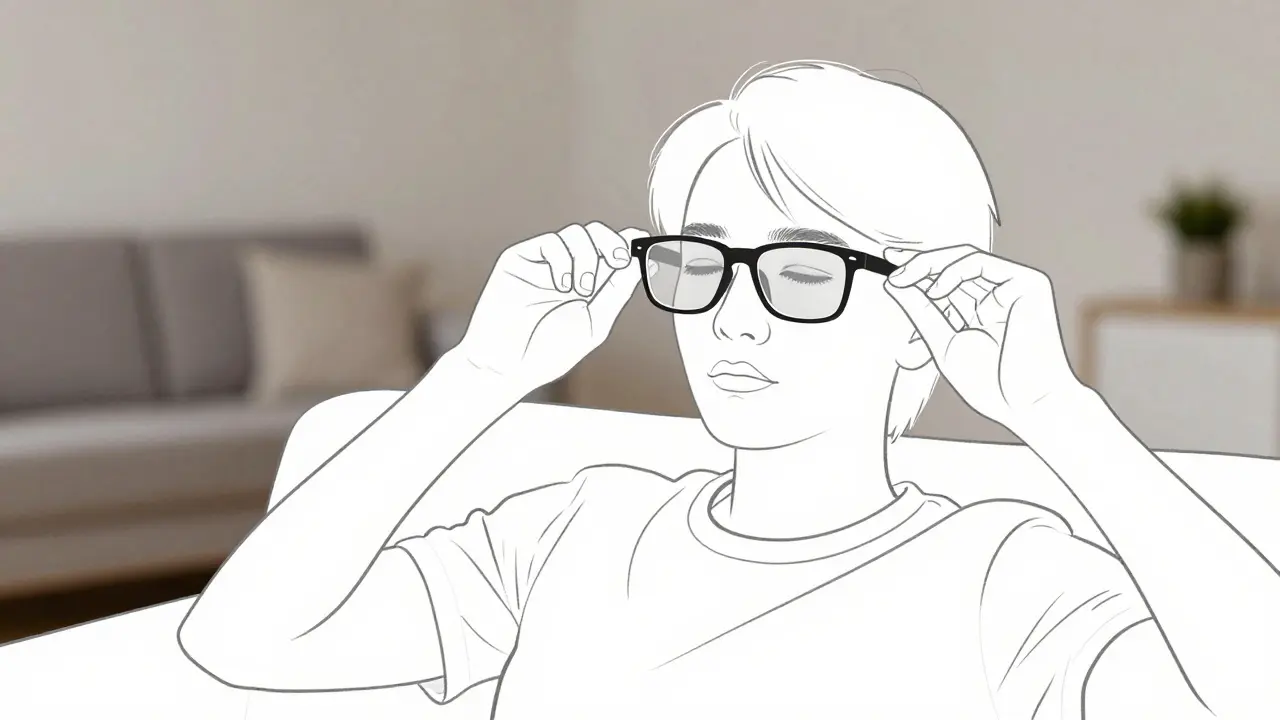
Sunglasses are your best friend, but not just any pair will do. Regular sunglasses often block UV rays but let through blue-green wavelengths, which are the specific frequencies that aggravate the trigeminal nerve pathway in migraine-related photophobia. That's why specialized lenses exist. They filter that specific problematic range.
| Option | Effectiveness | Cost Range | Best For |
|---|---|---|---|
| FL-41 Tinted Lenses | High (Reduces symptoms ~43%) | $100 - $200 | Migraine-associated light sensitivity |
| Standard Sunglasses | Moderate | $25 - $100 | Outdoor protection, non-migraine triggers |
| CGRP Inhibitors | Very High | $690 per month | Chronic preventive medication |
| Screen Filters | Low-Moderate | $20 - $50 | Digital device users |
Notice the difference in effectiveness. Blue-light blocking glasses sold online often target the wrong spectrum. Look for the FL-41 specification, which targets that blue-green sweet spot. People report adapting to these tints within two to three weeks. Initially, colors might look slightly warm or orange, but that distortion usually resolves as your brain recalibrates.
Long-Term Management and Lifestyle
Living with photophobia requires a sustainable strategy. Relying solely on tinted glasses can sometimes mask treatable conditions. We see cases where patients wear filters constantly but miss an autoimmune diagnosis like lupus, which can manifest as severe light sensitivity. Periodic re-evaluation is necessary.
Diet plays a role too. Some patients find that reducing caffeine intake or stabilizing blood sugar helps lower overall brain excitability. Hydration is another factor; dehydration can worsen dry eye symptoms, lowering your threshold for light pain. Since avoiding sunlight carries risks, such as Vitamin D deficiency, it's important to get your vitamin levels checked annually. You don't have to avoid the sun entirely; you just need to manage exposure intelligently.
Treating the underlying condition remains the priority. For example, if you have uveitis, steroids resolve the inflammation and the light sensitivity disappears. If it's migraine-based, newer drugs targeting the CGRP pathway have shown great promise in reducing both headache frequency and photophobia duration. These are preventative strategies, unlike the reactive approach of just putting on dark glasses when pain starts.
Is photophobia permanent?
Not necessarily. While some cases require lifelong management, studies show about 78% of patients see significant improvement within six months of treating the underlying cause. Acute cases like corneal scratches often resolve completely once healed.
Can digital screens cause photophobia?
Digital screens can exacerbate symptoms, especially due to flicker rates and blue light emission. However, ambient lighting is often a bigger trigger. Reducing screen brightness alone won't always fix the issue; you may need software filters or specialized glasses.
Do regular sunglasses help enough?
They offer partial relief. Standard sunglasses block UV, which protects the lens of the eye, but photophobia often stems from visible light sensitivity in the green/blue spectrum. Specialized medical-grade tints like FL-41 are more effective for neurological pain.
What is the best first step to take?
Book a comprehensive eye exam. Do not assume it is just migraines. An optometrist can rule out corneal issues, uveitis, or cataracts that need immediate medical intervention before you try lifestyle changes.
How do children develop photophobia?
Children can experience it due to similar causes, including migraines (even without head pain), congenital albinism, or eye strain from excessive device use. Parents should monitor school performance, as difficulty reading on whiteboards is a common complaint.



Shawn Sauve
Recent exposure to fluorescent lighting made the uveitis warning clear :)
kendra 0712
This info is so helpful!!! The part about the iris contraction mechanism was eye opening!!! Thanks for posting!!!
walker texaxsranger
big pharma pushes meds for symptoms instead of fixing environmental triggers like artificial blue spectra in offices and schools
Monique Louise Hill
You really should stop blaming corporations for everything 😤 Personal responsibility matters in health choices! 🙏👁️😡
Sarah Klingenberg
Hydration links were not obvious before reading this :)
Devon Riley
Hydration is definitely a huge factor that gets overlooked so easily 💧 Keep spreading awareness about wellness routines 👍
Jordan Marx
Neural activation variance requires further longitudinal study observation regarding the thalamus relay functions in migraine cohorts.
Eva Maes
Most people waste money on blue blockers instead of addressing core triggers because they seek quick fixes over deep analysis.
Rachael Hammond
Society often overlooks the sensory burden of daily life interactions and this creates isolation. I think its kinda wierd how our brains react to normal environments now. Modern life is full of triggers everywhere that we dont expect. We cant control the sun but we try anyway to manage exposure. Maybe we need more empathy for those hurting silently with this condition. Pain feels isolating sometimes when invisible to the naked eye. Reading about neurology helps understand the why behind the discomfort. But living day to day is still hard work for sufferers. We shouldnt judge people hiding from glare in public spaces. Everyone has their own threshold for comfort when it comes to light. Some lights hurt more than others obviously depending on the spectrum. Finding balance takes patience and time in these situations. Medication helps but isnt always the cure for the underlying issue. We need community support during these times of recovery and adjustment. Small changes can make a huge difference slowly over months. Hopefully new tech brings better solutions soon for everyone struggling. Until then kindness matters most of all when helping others navigate pain.