
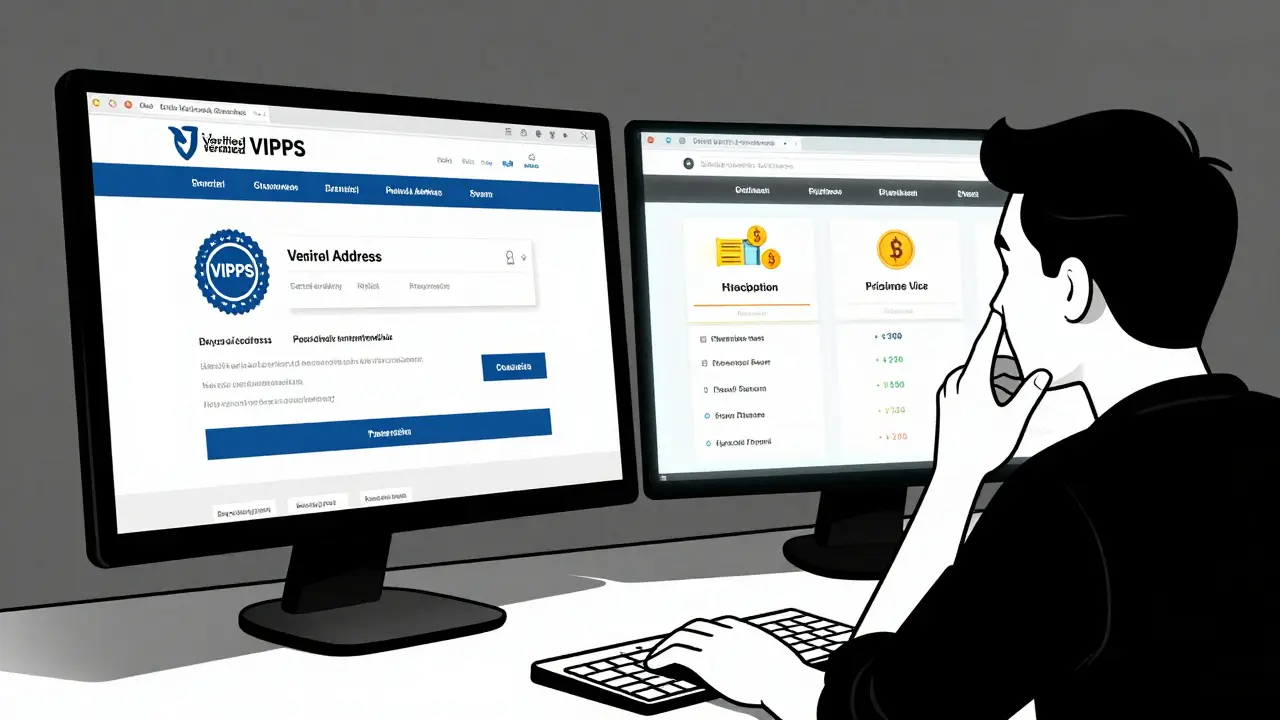
Buying medicine online sounds convenient-until you realize you might be ordering pills from a server in a country with zero drug safety rules. Every year, millions of people click on ads for cheap Viagra, weight-loss pills, or antibiotics without checking if the site is real. And every year, people end up with fake drugs that don’t work, or worse, make them sick. The truth? Most online pharmacies you find through Google are illegal. But not all. Here’s how to tell the difference-before you click "Buy Now."
Legit pharmacies require a prescription-no exceptions
If a website lets you buy prescription drugs like antibiotics, insulin, or Xanax without a prescription, it’s not a pharmacy. It’s a scam. Legitimate online pharmacies, whether in the U.S., UK, or Australia, are legally required to ask for a valid prescription from a licensed doctor. Period. No exceptions. No "online consultation" that takes 60 seconds and costs $20. Real pharmacists won’t dispense controlled substances without a proper prescription file. In fact, a 2023 study found that 98.2% of rogue pharmacies skip this step entirely. If you can buy Adderall without a doctor’s note, you’re not shopping-you’re risking your life.Check for a physical address-then verify it
A real pharmacy has a brick-and-mortar location. Not just a PO box. Not a vague address like "Suite 123, London, UK." Legit sites list a full street address, phone number, and even a map link. But here’s the catch: many fake pharmacies fake this too. They use real-looking addresses that don’t exist. The trick? Google the address. Look at Street View. If it shows a warehouse, a residential house, or nothing at all, walk away. A 2021 study found that 67.7% of rogue pharmacies list a physical location that doesn’t match their server’s real location. If the website claims to be in Canada but its server is in Ukraine, that’s a red flag.Look for the verified pharmacy seal-and click it
You’ll see logos on fake sites: "VIPPS Certified," "LegitScript Approved," "NABP Verified." They look real. But they’re fake too. Legit pharmacies get certified by trusted programs. In the U.S., that’s VIPPS (Verified Internet Pharmacy Practice Sites) run by the National Association of Boards of Pharmacy. In the UK, it’s the General Pharmaceutical Council (GPhC). In the EU, it’s the official EU common logo. Here’s how to check: click the seal. If it takes you to a page that says "This site is not verified," or if the link goes nowhere, it’s a scam. The 2023 JMIR study found that 41.8% of rogue pharmacies display counterfeit certification logos. Real seals link directly to official government or regulatory databases where you can search the pharmacy by name.Too good to be true? It is
A 30-day supply of Viagra for $15? Generic Cialis for $0.50 per pill? That’s not a deal. That’s a death sentence. Legitimate pharmacies don’t sell branded medications at 90% off. Why? Because they buy from licensed distributors at set prices. Rogue pharmacies buy counterfeit pills from unregulated factories-often in China, India, or Eastern Europe-where the active ingredient might be missing, or replaced with rat poison, chalk, or industrial dye. The FDA has documented cases of fake blood pressure meds containing no active drug at all. One study found 76.4% of rogue pharmacies use deep discounts to lure customers. If the price feels like a steal, you’re being stolen from.
They don’t have a licensed pharmacist on call
A real online pharmacy has a licensed pharmacist available to answer your questions. Not a chatbot. Not a pre-written FAQ. A real person with a pharmacy license you can verify. If you can’t find a phone number or email for a pharmacist, or if the contact page says "Contact us for questions" with no details, that’s a problem. In the same 2023 study, 93.1% of rogue pharmacies didn’t employ a licensed pharmacist. And here’s the scary part: even some legit-looking sites skip this. During the pandemic, some online pharmacies started offering "online consultations" that didn’t require prescriptions. That’s not convenience-it’s negligence.They ship worldwide-and use crypto
Legitimate pharmacies serve customers within their regulated country. A U.S.-based pharmacy doesn’t ship to Nigeria unless it’s licensed there. A UK pharmacy doesn’t ship to Brazil without local approval. Rogue pharmacies, however, ship everywhere. A 2021 report found that 84.6% of rogue pharmacies operate globally. And they often demand payment in Bitcoin or other cryptocurrencies. Why? Because it’s untraceable. You can’t dispute a crypto payment. You can’t get your money back. If the site only accepts crypto, walk away. That’s not modern-it’s criminal.They spam you with emails or pop-ups
Did you get an email saying, "Your prescription is ready! Click here to buy 50% off?" That’s not a pharmacy. That’s a bot farm. Legitimate pharmacies don’t cold-email you. They don’t blast ads on Facebook or YouTube. They don’t use clickbait headlines like "Lose 20 Pounds in 7 Days!" or "Doctor’s Secret Weight Loss Pill!" The FDA and FTC have repeatedly warned that spam email campaigns are the #1 way rogue pharmacies find customers. If you didn’t ask for it, don’t click it.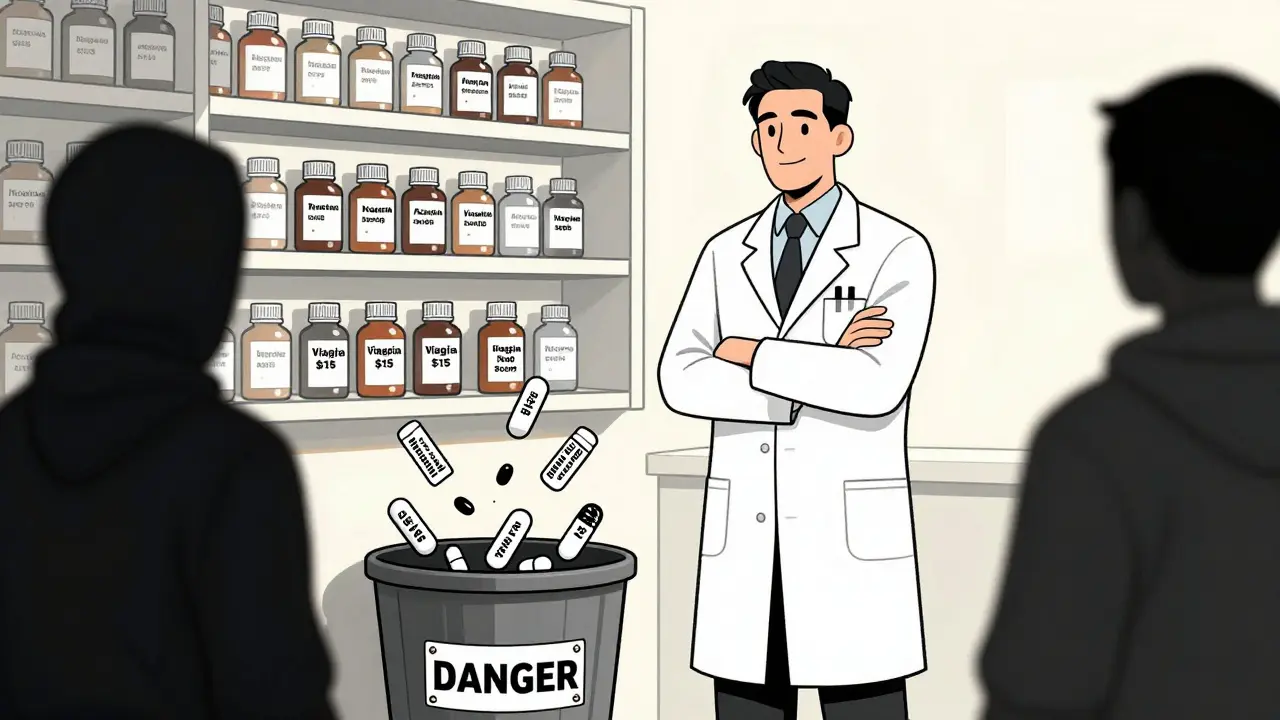
They don’t have a privacy policy or terms of service
Real pharmacies follow strict data rules. They have clear privacy policies explaining how they protect your medical info. They have terms of service that outline refund policies, shipping times, and liability. Rogue pharmacies? They skip it. Or they copy-paste a generic template from a website builder. If you can’t find a privacy policy, or if it’s written in broken English and says nothing about your prescription data, that’s a huge red flag. Your medical records aren’t something you want leaked to a server in Russia.They don’t show you the product’s manufacturer or batch number
Legit pharmacies list the drug’s manufacturer, generic name, dosage, and batch number. You can look up that batch number on the manufacturer’s website to confirm it’s real. Rogue pharmacies don’t. They just say "Viagra 100mg" and call it a day. If you can’t find the manufacturer’s name, the drug’s active ingredient, or the lot number, you’re buying a mystery pill. The NIH study found that 89% of rogue sites don’t provide this basic info. That’s not laziness. That’s intent.How to verify a pharmacy for real
Here’s what you actually do before you buy:- Check the pharmacy’s name on your country’s official pharmacy register. In the U.S., use the NABP’s VIPPS database. In the UK, use the GPhC’s online register. In Australia, check the Australian Health Practitioner Regulation Agency (AHPRA).
- Click every seal. If it doesn’t link to a real verification page, it’s fake.
- Call the phone number. If no one answers, or if it’s a voicemail with no name, walk away.
- Search the pharmacy’s address on Google Maps. If it’s a warehouse, a hotel, or a residential street with no pharmacy sign, it’s not legit.
- Never pay with crypto. Use a credit card so you can dispute charges if something goes wrong.
There are fewer than 70 VIPPS-accredited pharmacies in the entire U.S. That’s it. And yet, thousands of fake sites pop up every month. The system is broken. But you don’t have to be the victim.
What happens if you buy from a rogue pharmacy?
You might get nothing. Or you might get pills with no active ingredient. Or pills with too much active ingredient-like a fake Adderall with 10x the normal dose. The FDA has found counterfeit diabetes meds laced with rat poison. Fake antibiotics that don’t cure infections but cause deadly allergic reactions. Fake erectile dysfunction pills with hidden sildenafil analogs that crash blood pressure. And once you take it? There’s no way to trace it back. No recall. No refund. No justice.Real medicine saves lives. Fake medicine kills them. The difference isn’t subtle. It’s written in the details. Check the prescription rule. Check the address. Click the seal. If any of those are missing, you’re not saving money-you’re risking your life.
Can I trust online pharmacies that claim to be "international"?
No. Legitimate online pharmacies are regulated by the country they operate in. If a site claims to be "international," it’s likely avoiding local laws. A pharmacy based in India might be legal there, but it’s not allowed to ship prescription drugs to the U.S. or Australia without proper licensing. International doesn’t mean trustworthy-it often means unregulated.
Are online pharmacies cheaper than local ones?
Sometimes, but only if they’re legitimate and licensed to sell in your country. A U.S.-based VIPPS pharmacy might offer lower prices on generics than your local pharmacy. But if the price is 80% lower than the market rate, it’s fake. Real pharmacies don’t sell drugs below cost. If it’s too cheap, it’s not a deal-it’s a trap.
What should I do if I already bought medicine from a rogue site?
Stop taking the medication immediately. Contact your doctor and tell them what you took. Report the site to your country’s health authority-like the FDA in the U.S. or the TGA in Australia. If you paid with a credit card, dispute the charge. And never buy from that site again. Even if the pills seemed to work, they could contain dangerous contaminants that show up later.
Do legitimate online pharmacies offer free shipping?
Yes, some do. But not as a gimmick. Legit pharmacies may offer free shipping on orders over $50 or for repeat customers. Rogue pharmacies use "free shipping" as bait to get you to buy more. If free shipping is the main selling point, and the prices are suspiciously low, be skeptical. Real pharmacies don’t need to lure you with shipping deals.
Can I use a Canadian pharmacy to save money?
Some Canadian pharmacies are legitimate and licensed to sell to U.S. customers. But only if they’re registered with the Canadian International Pharmacy Association (CIPA) and display their license clearly. Most sites claiming to be "Canadian" are actually based in the U.S. or elsewhere, using fake Canadian addresses. Always verify the pharmacy’s license on Health Canada’s website before buying.
How do I know if a pharmacy is accredited in my country?
Go to your national pharmacy regulator’s website. In the U.S., use NABP’s VIPPS checker. In the UK, use the GPhC register. In Australia, check AHPRA. Type in the pharmacy’s name or address. If it doesn’t show up, it’s not licensed. Don’t trust logos. Don’t trust claims. Trust the official database.
Why do search engines show fake pharmacies at the top?
Because rogue pharmacies spend thousands on Google Ads and SEO tricks. They buy keywords like "buy Viagra cheap" and use fake reviews to boost rankings. Legitimate pharmacies don’t do this-they follow ethics, not algorithms. Google’s system favors ads over accuracy. That’s why you must verify every pharmacy yourself, even if it’s on page one.
Are generic drugs from online pharmacies safe?
Yes-if they come from a licensed pharmacy. Generic drugs are legally identical to brand-name drugs in active ingredients. But rogue pharmacies sell fake generics with no active ingredient, or with dangerous fillers. Always check the manufacturer name and batch number. If you can’t find them, don’t buy.
Can I get my money back if I bought from a rogue pharmacy?
Only if you used a credit card and filed a dispute quickly. Most rogue pharmacies disappear within weeks. If you paid with PayPal, Bitcoin, or wire transfer, you’re out of luck. There’s no consumer protection for illegal purchases. Prevention is the only real refund.
Is it safe to buy over-the-counter meds online?
It’s lower risk, but still dangerous. Even OTC meds like ibuprofen or allergy pills can be counterfeit. Fake painkillers have been found with toxic chemicals. Always buy from a verified pharmacy-even for non-prescription drugs. Your body doesn’t know the difference between "prescription" and "OTC"-it reacts to what’s in the pill.
If you’re unsure, go to your local pharmacy. Talk to a real pharmacist. They’ll tell you if an online deal is worth the risk. And they won’t charge you for it.

Gregory Parschauer
Let me get this straight-you’re telling me people still fall for these sketchy sites? I’ve seen a guy order 'Viagra' from a site that used a .xyz domain and ended up in the ER with a stroke because the 'pills' were just crushed aspirin and lead paint. This isn’t a shopping mistake. It’s a public health emergency. If you don’t verify the NABP seal, you’re not just dumb-you’re endangering everyone around you when you spread contaminated meds. Stop being lazy. Check the database. Or don’t. But don’t cry when your kidneys give out.
And yes, I’ve reported five of these sites to the FDA. No one thanked me. That’s the system.
Also, fake Canadian pharmacies? Please. Half of them are hosted on AWS servers in Virginia. I checked the WHOIS. Don’t be fooled by flags and maple leaf logos. It’s digital snake oil.
And if you paid in crypto? You’re already dead money. No one’s coming to save you. The only thing worse than buying fake pills is thinking you got away with it.
Stop being a statistic. Verify. Or shut up.
Damario Brown
bro i just bought 30mg adderall off a site for $12 and it worked?? like i was focused for 8 hours straight. i think ur just mad cause u dont know how to save money. also the site had a phone number and everything. maybe ur just scared ppl are smarter than u.
also why do u care if i buy online? i dont hurt nobody. ur just a scared old man with a laptop.
ps: i used paypal. so if it dosnt work i can get my money back. lol
Angel Molano
You’re not saving money. You’re gambling with your life. And you’re not ‘smart’-you’re just lucky. One batch of fake Adderall has enough fentanyl to kill ten people. You’re not a rebel. You’re a walking biohazard. And if you die, your family gets stuck cleaning up your corpse while the scammer buys a Lamborghini in Belarus. Wake up.
Clay .Haeber
Oh wow. A 12-point checklist to avoid dying from a pill you bought from a guy named ‘Dr. Zoltan’ who lives in a basement in Moldova. How revolutionary. Next you’ll tell us not to drink water from faucets labeled ‘not for human consumption.’
Let me guess-you also check the serial number on your toothpaste? The batch code on your shampoo? The manufacturing date on your socks?
Look, I get it. You’re the pharmacy police. The FDA’s personal knight in shining armor. But here’s the truth: 90% of people don’t care about VIPPS seals. They care about price, convenience, and not having to wait 3 weeks for a doctor’s appointment that costs $400.
So yes, some sites are scams. But some are lifesavers for people the system abandoned. You’re not protecting them-you’re punishing them for being poor.
Also, I paid with crypto. So? You think the IRS doesn’t know I buy Adderall? They’ve got bigger fish to fry. Like me. And you. And your 17-step verification ritual.
Let people choose their own risk. You can’t legislate stupidity. You can only make it more expensive.
And if I die? At least I died on my terms. Not on yours.
Priyanka Kumari
Thank you for writing this. I’m from India, and I’ve seen so many friends order meds online because they can’t afford prescriptions here. I’m not saying rogue sites are safe-but we need better access, not just warnings. Maybe instead of shaming people, we should push for affordable generic programs and telehealth access in underserved areas.
I’ve helped two friends verify pharmacies using the WHO’s list of approved online pharmacies. One found a legitimate Canadian site that shipped insulin at 1/3 the cost. The other avoided a fake antibiotic that had traces of arsenic.
Education > fear. Compassion > condemnation. Let’s build bridges, not just red flags.
And yes-I always check the batch number. Always. It’s the one thing that saves lives.
Thank you again for making this clear.
John Pope
Let’s deconstruct the epistemology of pharmaceutical trust. The very notion of a ‘legitimate’ online pharmacy is a modern myth constructed by bureaucratic hegemony. The state, through the NABP and GPhC, has monopolized access to medicine under the guise of safety-while simultaneously making it unaffordable and inaccessible. The rogue pharmacy is not a criminal-it’s a revolutionary actor in a broken system.
You speak of ‘verified seals,’ but these are corporate certifications, not moral imperatives. The seal is a sacrament of capitalism. The real verification is lived experience: Did the pill work? Did I survive? Did I get better?
The FDA’s ‘counterfeit’ narrative is a narrative of control. The people who buy from these sites aren’t fools-they’re epistemic rebels. They reject the authority of the gatekeepers. They are the new pharmacists of the digital age.
And yes-I paid in Bitcoin. Because trust should be decentralized. Just like the medicine.
What’s more dangerous? A pill with unknown origins… or a system that makes you beg for a prescription you can’t afford?
Freedom isn’t safe. But safety isn’t free.
And if you die? At least you died with dignity. Not in a waiting room.
-The Philosopher of the Pill
Randall Little
So let me get this straight-Google’s algorithm is rigged, the FDA is asleep, and the only people who can afford real meds are the ones with good insurance. Meanwhile, a guy in Ohio buys $15 ‘Viagra’ from a site that looks like it was coded in 2007… and it works.
Is he a victim? Or is he just outsmarting a broken system?
And why do we treat people like children? You wouldn’t tell someone not to buy a used car because it doesn’t have a Carfax report. You’d tell them how to check the engine.
Maybe instead of listing 10 red flags, we should teach people how to spot the green ones.
Like: Can you call a real pharmacist? Does the site have a live chat with someone who sounds like they’ve actually taken a chemistry class? Is the manufacturer name on the bottle the same as the one on the FDA’s database?
It’s not about avoiding risk. It’s about managing it.
And yes-I’ve bought from a site that looked sketchy. I called the pharmacist. He answered. I asked about the batch number. He sent me a PDF from the manufacturer’s site. It matched.
So maybe… not all rogue sites are rogue. Maybe some are just… underdog.
Nelly Oruko
My dad took fake blood pressure pills last year. He didn’t know. He thought he was saving money. He ended up in the hospital with a stroke. We never found out where he bought them. But we found the site-it’s gone now. Server shut down. No trace.
I’ll never buy online again. Not even for Advil.
Don’t be him.
Adam Vella
It is worth noting that the aggregate data presented in this article, while statistically compelling, is predicated upon a narrow sample set derived primarily from U.S.-based regulatory bodies. The global context of pharmaceutical distribution is far more complex, particularly in regions where state-sanctioned healthcare infrastructure is either non-existent or chronically underfunded. To assert that all unlicensed online pharmacies are inherently nefarious is to commit the fallacy of false dichotomy.
Moreover, the assertion that ‘real pharmacies don’t sell below cost’ ignores the economic reality of generic drug markets, where bulk procurement and direct-to-consumer models have demonstrably lowered prices without compromising efficacy. The Canadian pharmacy model, when properly vetted, has been shown to reduce pharmaceutical expenditures by up to 62% in peer-reviewed studies published in The Lancet.
Therefore, the real issue is not the existence of online pharmacies, but the systemic failure of domestic regulatory frameworks to provide equitable access. The ‘rogue’ pharmacy is a symptom-not the disease.
And while the use of cryptocurrency may be associated with illicit activity, it is also the only viable payment mechanism for individuals in nations with capital controls or hyperinflationary currencies.
Blame the system. Not the patient.